

Purpose of money management rules
Financial rules of thumb act as guardrails. They help you decide where to start, what to watch, and how to move toward your money management and financial goals. They aren’t strict laws, but they guide reliable money decisions.
These rules cover core ideas like saving, budgeting, and borrowing. They guide everyday choices such as key financial rules for budgeting and saving. budgeting, paying yourself first, and building an emergency fund. Following proven patterns reduces risk and builds consistency over time, helping you develop better money habits.
How these rules can impact your financial health
Applied wisely, these rules can clarify progress toward two main outcomes: financial stability and financial wellbeing. You’re less prone to impulse buys, save more for the future, and avoid debt spirals.
- Automation example: set up a 15 percent automatic transfer to a high‑yield savings account every payday so you don’t touch it.
- Budgeting bite size: track three categories this week (groceries, transport, small purchases) and cap each with a 10 percent buffer for surprises.
- Debt and investment review: quarterly check a debt payoff plan and compare your portfolio’s risk to your comfort level.
Below you’ll see how these ideas translate into practical steps you can take this week to improve your financial life.
Pay yourself first
Pay yourself first Means reserving a portion of your income for savings or investments before you pay other bills, which can include retirement savings. It shifts saving from a choice to a habit and treats your future self like a fixed monthly expense you can’t skip. This simple shift helps you build wealth steadily and curbs overspending.
Why it matters: when you commit money to savings upfront, you reinforce disciplined money management and create a cushion for emergencies or goals. It also nudges your mindset from instant gratification toward long term growth, supporting steady progress toward your financial goals.
How to automate savings and prioritize goals
- Set up automatic transfers from your checking to a savings or retirement account on payday. If you’re paid weekly, schedule several smaller transfers that total a comfortable monthly amount to aim to save for larger items such as a house.
- Start with a realistic amount and increase it as income grows, not as expenses rise. For example, raise from $50 to $75 after a raise, not after a rent hike.
- Identify priority goals like an emergency fund, retirement, and a home down payment, and assign each a dedicated account. Label them clearly, such as Emergency Fund, Retirement Nest Egg, and Home Pot.
- Use small, regular contributions to avoid noticeable changes in daily spending. Automate $5, $20 if you’re new to saving, then scale up gradually.
| Automatic saving pattern | Benefit | Best for achieving financial freedom through disciplined saving and investment strategies. |
|---|---|---|
| Fixed percentage | Stays aligned with income changes | Variable incomes |
| Fixed amount per month can help you manage your finances better and avoid using credit unnecessarily. | Predictable savings floor is essential for making informed decisions about your financial future. | Stable income |
Tip: label accounts clearly so you know what each savings bucket funds. This clarity helps you track progress toward goals and stay motivated, especially when you see balances grow after a few months of steady deposits. 💡 Understanding the rule of 72 can enhance your financial decisions.
Build and Maintain an emergency fund

What qualifies as an emergency fund
An emergency fund is money set aside to cover unexpected events that disrupt your income. It sits in an easily accessible place and is not tied up in long-term investments, providing flexibility for day-to-day financial needs. Think of it as a financial shock absorber for life’s surprises. 💡
- Job loss or reduced hours
- Medical emergencies not fully covered by insurance can significantly impact your finances, so it’s crucial to establish an emergency fund.
- Major car or home repairs
- Sudden big bills, like moving costs or a large deductible
Recommended fund size and accessibility
You should aim for 3 to 6 months of essential living expenses, but the right target varies with your situation. If you have a stable, salaried job and few dependents, start closer to 3 months. If you’re freelance or have a larger family, push toward 6 months and beyond.
Real‑world scenarios help you decide: a single person with a steady job may reach 3 months faster, while someone with irregular income should target 6 months to handle gaps between gigs.
| What to base the target on | How to measure | Where to keep it for optimal personal finance? |
|---|---|---|
| Essential living expenses | Rent or mortgage, utilities, groceries, transport, and spending habits can significantly impact your budget. | High‑yield savings or money market |
| Job stability | Stability signals like contract work vs full‑time | Liquid accounts with quick access |
Tip: automate monthly contributions to the emergency fund so growth happens without weekly decisions, ensuring you build savings effectively. For example, set up a split transfer right after payday to a separate account. 💡
Use the 50/30/20 budget rule
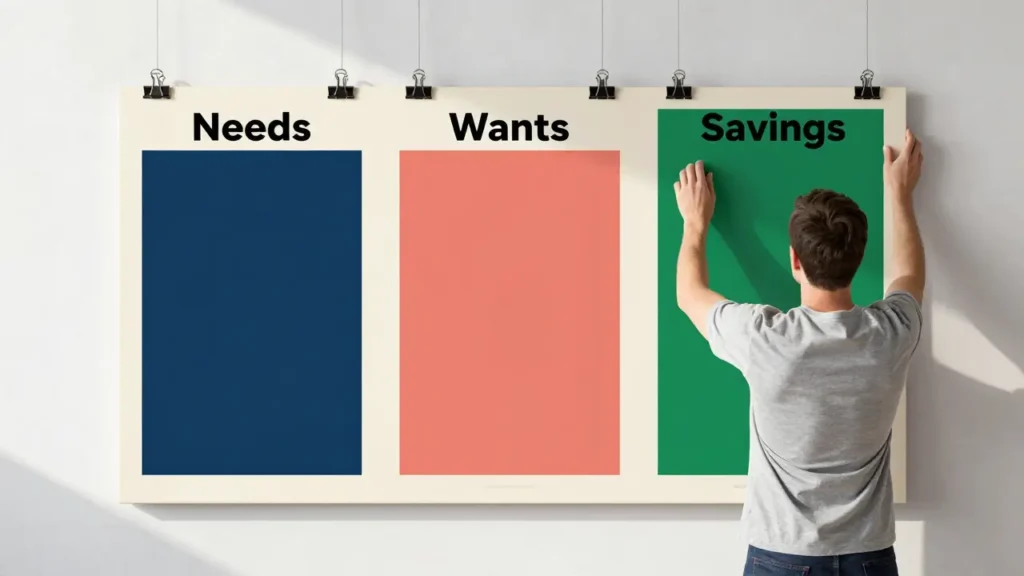
The 50/30/20 budget rule is a simple way to divide your income so you cover essentials, enjoy life, and save for the future. It helps you see where your money goes and where you can adjust. This section explains how to apply it and tailor it to your income to maximise your savings.
Allocating needs, wants, and savings effectively can lead to a better financial strategy and reduced debt management stress. splits your after‑tax pay into three buckets:
- Needs (50%) cover housing, utilities, groceries, transportation, and minimum debt payments. For example, a $3,000 monthly take-home would earmark about $1,500 for these essentials according to important rules in personal finance, allowing for better subscription management.
- Wants (30%) should be carefully considered alongside your needs and savings to avoid unnecessary credit card debt. include dining out, entertainment, hobbies, and nonessential shopping. If you split a night out, aim for $60, $90 rather than $120; you can still enjoy weekends with friends.
- Savings and debt repayment (20%) should be part of your overall money habits. go toward an emergency fund, retirement, investments, and paying down debt faster. Start with a $600/month automatic transfer into savings if you’re just beginning to aim to save for 3-6 months of expenses.
How to adapt the rule to different incomes and establish an emergency fund that suits your financial situation.
- If your income is tight, start with needs at a slightly higher share and trim wants first while preserving savings and maintaining good spending habits to avoid overspending. For instance, move to Needs 55%, Wants 25%, Savings 20% and automate the 20%.
- If you earn more, keep the 50/30/20 ratios but shift a portion of the 20% toward larger goals like a home down payment or retirement contributions, especially if your employer matches contributions. A $8,000 take home could allocate $1,200, $1,500 monthly to savings for a house or retirement fund.
- Use rounding to keep numbers simple and track changes monthly to stay on target. Record actuals in a notepad or app after each paycheck so you can adjust next month.
| Scenario | Baseline allocation | What to adjust to take control of your spending. |
|---|---|---|
| Low income can impact your financial decisions and savings. | Needs 55%, Wants 25%, Savings 20% | Trim wants, protect savings; set an automatic $100, $200 monthly transfer to avoid accumulating debt. |
| Middle income | Needs 50%, Wants 30%, Savings 20% to maximise your financial future. | Maintain balance, automate savings; increase emergency fund to 3, 6 months |
| High income can provide more opportunities for investment strategies and wealth building. | Needs 45%, Wants 35%, Savings 20%, and consider allocating some funds for a new car as part of your financial goals. | Increase savings for goals, max out retirement; consider a dedicated house fund |
Track spending with a budget or scarcity method
Tracking your money is the distinction between feeling in control and feeling overwhelmed. A simple budget or scarcity method helps you see where every dollar goes and keeps you from overspending before it starts, essentially free money if done correctly. Pick the approach that fits your life and stick with it, ensuring you don’t spend more than you make while aiming to build savings.
Choosing a tracking approach
Two practical paths work for most people. The budget method sets fixed categories and keeps you within limits. The scarcity method prioritizes saving and investing first, letting you live on what remains. The key is consistency and accessibility, not perfection. For example, if you’re paid on the 15th and 30th, a budget can reset mid month while scarcity locks in savings the moment you’re paid.
- Budget method ideas: align needs, wants, and savings; review weekly; adjust as prices shift to avoid overspending.
- Scarcity method ideas: automate transfers to savings and investments; use the remaining money for daily spending.
- Tools to consider: simple spreadsheets, budgeting apps, or a plain bank app with category labels.
Practical steps to implement and automate
Start with a single tracking routine to avoid distractions. Then add automation to maintain momentum without daily decisions. If you miss a week, rebaseline instead of quitting, reset a small portion of your budget rather than your entire plan.
- Set a monthly spending baseline for needs like housing, groceries, and transport.
- Automate at least a portion of income toward savings and bills.
- Review results once a week and adjust only what is necessary to stay on target.
| Tracking method | Best for | Potential drawback |
|---|---|---|
| Budget | Clear limits, visible gaps | Can feel restrictive |
| Scarcity | Automatic savings, less daily thinking | Requires discipline to adjust |
Manage debt strategically
Prioritizing high-interest debt
High-interest debt should be tackled first because it compounds quickly and can trap you in a cycle of slow progress. Start by listing all debts from highest rate to lowest, then allocate extra payments to the top item while making minimum payments on the rest. This approach reduces the total interest you pay over time and frees up money for emergencies or savings, including your retirement savings.
Real‑world example: if you owe 5,000 on a card at 24 percent and 2,000 on a card at 18 percent, directing extra payments to the 24 percent balance for six months can save hundreds in interest and shorten the payoff period. Practical move: set automatic extra payments right after you get paid, targeting the highest-rate balance first, to manage credit card debt efficiently and avoid spending more than you make. If you come into extra money, apply it to that top debt before filling a savings account.
Debt repayment plans (Snowball vs. Avalanche)
Two practical methods help you win the debt race, and both suit different mindsets. Here are concrete steps to implement each.
- Snowball: list debts from smallest balance to largest, pay minimums on all but the smallest, then throw everything you can at that one until it is gone, then move to the next. Real‑world cue: celebrate each payoff to stay motivated.
- Avalanche: list debts by interest rate, pay the minimum on all, then concentrate any extra on the highest-rate debt first, making informed decisions about your financial future. This saves the most money over time.
| Plan | Best for | Tradeoffs |
|---|---|---|
| Snowball | Want quick wins and motivation | May cost more in interest over time if you are borrowing money without a solid plan to manage your spending habits. |
| Avalanche | Focus on saving money long term to enhance your retirement savings. | Progress might feel slower at first, but following money rules can lead to financial success, better spending habits, and help you avoid overspending. |
Plan for retirement and investments

Starting early pays off, especially when you contribute at least a portion of your income to savings. The sooner you begin, the more time your money has to grow, thanks to compound interest. Delaying can make retirement goals harder to reach without extra effort later.
Starting early
Open a dedicated retirement or investment account as soon as you can. Automate regular contributions so you pay yourself first even when life gets busy. Small, steady amounts accumulate because compounding works best with time on your side.
- Set a realistic monthly contribution and increase it when your income grows.
- Review your plan annually to adjust for life changes without derailing progress.
- Balance growth potential with risk tolerance to stay consistent.
Asset allocation basics and the rule of thumb methods
Asset allocation splits your money between stocks, bonds, and other investments to fit your goals and risk comfort. A common approach uses age as a guide for stock versus safer assets, but there is no one-size-fits-all rule.
- Concrete example: A 30-year-old might target 80% stocks, 20% bonds, while a 60-year-old may shift toward 40% stocks, 60% bonds to reduce volatility.
- Consider job stability, family obligations, and retirement horizon when setting targets for financial freedom.
- Adjust gradually with market changes rather than reacting to every swing and avoid accumulating unnecessary expenses.
| Rule of thumb | What it suggests is to adjust as needed based on your financial situation and goals, especially regarding retirement savings. | Best for |
|---|---|---|
| The 60/40 mix | 60% stocks, 40% bonds for moderate growth and stability | Investors seeking balanced growth |
| Age in bonds to improve your rate of return and balance your portfolio effectively while making informed decisions. | Subtract your age from 100 to find stock allocation | Older investors needing more protection |
Set specific financial goals
Short-term and long-term goal setting
Set specific goals to guide your money choices with purpose. Short-term aims might include building an emergency fund or saving for a car down payment, while long-term aims cover retirement and a home purchase. Name each goal and set a realistic target date so you can map progress.
Treat goals as checkpoints you can actually hit. If you plan to save $5,000 in 12 months, break that into monthly targets and automate the transfers. This keeps momentum even when temptations creep in.
Creating actionable milestones
- Write each goal down with a clear amount and deadline, and place it where you’ll see it daily.
- Attach a monthly savings target to every goal so progress is steady, not just year-end.
- Review progress monthly and adjust dates or amounts if life changes, such as a raise or an unexpected expense.
| Goal type: determine if your goal is to save for big ticket items or establish an emergency fund. | Example target | Milestone approach |
|---|---|---|
| Short-term | Emergency fund to cover 3 months of living expenses | Monthly contributions, automatic transfers, monthly check-ins |
| Long-term | Home down payment in 5 years can be part of a broader investment strategy, enhancing your retirement savings. | Annual plan recalibration, tiered savings, explore related investment options |
FAQ
Here are quick answers to common questions about the money management rules in this article, including how to use credit wisely and avoid accumulating debt. If you want more detail, keep reading the sections above.
- What is pay yourself first? Set aside a portion of income for future goals before daily spending. For example, automate $50 from every paycheck into a savings account, so you grow savings even on busy weeks.
- How much should I keep in an emergency fund to ensure adequate savings?? Aim for 3 to 6 months of essential expenses. If you have irregular income, lean toward 6 months; if you’re solo with steady gigs, 3 months may work.
- What is the 50/30/20 rule in personal finance and how can it help you manage your money?? 50% needs, 30% wants, 20% savings or debt payoff. Use it as a flexible starting point, not a rigid law.
- Should I track every penny? Yes, but start simple. Record one category per week and review monthly to spot leaks in your day-to-day financial management.
- What if I have debt? Pay off high-interest debt first. Try the avalanche method, then consider a small, steady extra payment each month.
| Question: What are the important money habits of personal finance to follow? | Answer |
|---|---|
| Can automation help | Yes, automate transfers to savings so you pay yourself first without thinking about it. |
| Is retirement planning too early | No, it’s important to follow key financial rules to ensure sound financial health. Starting early leverages compound interest works and reduces stress later, particularly for retirement savings. |
| What counts as a budget that helps you take control of your spending. | Any system that tracks income and expenses and guides spending toward goals can provide valuable financial advice. |
Conclusion
Financial rules of money management offer a clear map to steadier finances and effective debt management. The core idea is simple: save first, plan ahead, and guide spending with sensible budgets. This approach helps you build momentum toward both short‑term stability and longer‑term security by establishing an emergency fund.
Start with small, repeatable steps that fit your life to improve your financial literacy and establish an emergency fund. Automate savings, keep an emergency fund, and follow a budget you can actually maintain. Paying yourself first creates a cushion that supports you during unexpected events. 💡
What practical steps fit real life?
Begin with a concrete habit: transfer a simple amount from each paycheck into savings within minutes of payday. For example, automate a portion to a high‑yield savings account and a separate contribution to retirement if possible. Track groceries for a month and find a way to trim 5 percent there to free up more for saving.
Remember these practical steps as you move forward to avoid overspending and build savings.
- Set aside income before daily spending to maximise your financial future.
- Keep 3 to 6 months of essential living expenses in an accessible fund.
- Use a simple framework like 50/30/20 to balance needs, wants, and savings.