

What is the 70-20-10 budget rule
The 70-20-10 budget is a straightforward way to divide your take-home pay into three parts. It helps you manage money with less tracking and a clear plan. The idea is to allocate your after-tax income into three categories: 70% for spending, 20% for savings and investments, and 10% for debt repayment or donations.
In practice, this framework guides how you allocate money each month. It assumes a monthly budget and a steady approach to budgeting for financial stability. savings account to support emergency funds and long-term goals.
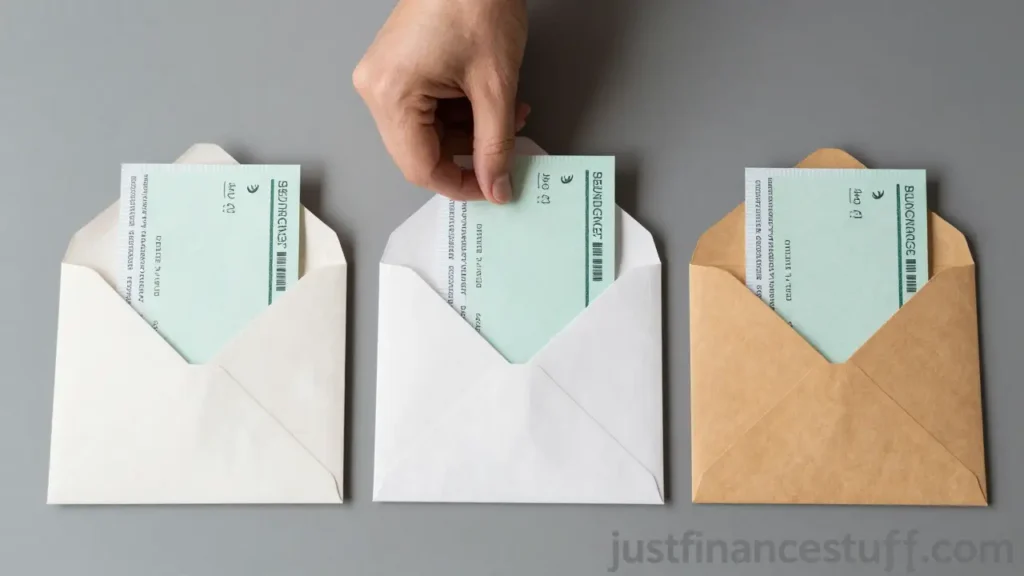
How the three categories work
The 70% portion covers essential living costs and other monthly spending that you actually use each month. Think rent, utilities, groceries, transportation, and small regular purchases like streaming or dining out.
The 20% is set aside for savings and investments. Split this into an emergency fund Consider both short and long term goals such as retirement, education, or growth accounts when you create a budget. A practical aim is to build 3, 6 months of essential expenses first, then continue investing for the future.
The 10% handles debt repayment or charitable giving. If you have balances, prioritize higher interest debts and create a simple payoff plan. You can also include a small, regular donation if you choose.
Benefits of the 70-20-10 budget
The 70-20-10 framework is simple to adopt, so you can start with confidence and see steady progress without micromanaging every dollar. It helps you build a clear path for today and tomorrow in personal finance.
By design, it guides how you balance spending, saving, and debt or giving. This clarity makes it easier to adjust when life changes, such as a raise or new expenses, without tearing apart your entire plan.
Limitations and when it may not fit
Using the 70% share for living costs can be tough when fixed expenses are high, such as a large mortgage or living in a pricey area. For example, a monthly housing cost of 1,800 plus 1,000 in local taxes can push the budget hard before groceries.
The 10% debt portion can also feel small if you carry several loans or high balances. If you have student loans, a car loan, and credit card debt, you may need to raise that share or adjust payment timing.
When this happens, tailor the percentages to your situation by first listing fixed expenses, then rebalancing discretionary spending and debt targets. Practical steps include negotiating lower interest rates, prioritizing higher‑interest debt, and setting up automated payments to avoid missed amounts.
Consider a quarterly review to reallocate 2, 3% from discretionary categories to debt if balances rise. Caveat: changing the plan too often can reduce long term payoff and create payment confusion, so make changes in small, deliberate steps.
Adjusting the percentages to fit your situation
You can adapt the 70-20-10 plan to suit your money needs. If debt is a bigger focus, a 60-25-15 split can work, with 60% for needs, 25% for debt payoff or savings, and 15% for investments. If your savings are already strong, you might shift more to investments in the 20% and trim the 70% spending to fund a debt snowball or a catch-up retirement contribution.
Keep three clear categories in mind: income into three categories, an emergency fund, and a path toward retirement savings. Label each paycheck by category, set automatic transfers, and review monthly to catch changes in expenses or income.
Practical steps to implement the 70-20-10 budgeting method
Follow these steps to set up a monthly budget using the 70-20-10 rule in a practical way that fits real life.
- Calculate your take-home pay each month after taxes and deductions, then note any irregular income.
- List all essential and nonessential expenses to understand what fits into the 70% needs and wants, and where you can trim.
- Assign 70% of take-home income to living expenses Include monthly costs like housing, utilities, transportation, and groceries in your budget that works.
- Allocate 20% to savings and investments, including an emergency fund and retirement accounts. Automate transfers when possible.
- Put 10% toward debt repayment or charitable giving, prioritizing high-interest debt if needed.
- Track progress monthly and adjust as your financial goals change, keeping the three categories clear.
How it compares with other methods
The 70-20-10 budget This budgeting strategy is often easier to follow than more detailed frameworks. It offers a straightforward path to see progress without tracking many tiny categories.
Compared with the 50-30-20 rule, the 70-20-10 puts more money toward needs and savings, and less toward wants. This can help you build an emergency fund and grow investments faster if your goal is early financial security.
For those who want tighter control over every dollar, you can blend ideas from both methods. For example, you might keep the 70% for essential spending but borrow a portion of the 10% toward a more structured debt payoff plan or a targeted retirement contribution. This hybrid approach keeps the rule flexible while offering closer alignment to personal goals.
In practice, choose the framework that matches your life stage and income stability. The right choice helps you stay consistent, not perfect, and moves you toward your financial goals with less stress.
Common mistakes to avoid
How to Use the 70-20-10 Budget Rule works best when you adapt it to real life. Some months will look different, but you can stay on track with practical checks and steady habits.
Practical steps to fix common gaps
- Double check that all expenses are counted in your budget to ensure effective money management. living expenses All irregular costs like car maintenance, medical copays, and seasonal bills are counted in your budgeting strategies.
- Set up a dedicated emergency fund entry and automate a monthly transfer, even if it is small, for example $25 or $50.
- Review your income and costs every quarter; adjust the 70, 20, 10 splits if you get a raise, side gig, or a new recurring subscription.
To implement, start a simple budget template Track your expenses in a notebook or spreadsheet with three lines: essentials, savings, and debt or investments, to enhance your approach to budgeting. Link the savings to a savings account you cannot easily access for daily spending to avoid impulse withdrawals.
Note how real numbers shape outcomes: a family of four with $4,000 take-home might allocate $2,800 essentials, $800 savings, and $400 debt payments, while a single person with $2,500 could shift $1,750 essentials, $500 savings, and $250 debt. Adjust as needed while keeping the ratios in mind.
Next action: list take-home pay and fixed essentials, then test the 70/20/10 split for two months as a practical budgeting strategy. If essential costs rise, temporarily lean on the 20% for savings and debt until ready to restore the balance.
Understand the 70-20-10 Framework
Definition of the 70% Spending, 20% Saving, 10% Debt/Donations Split
The 70-20-10 budget divides income into three clear parts. About 70% goes to living costs and discretionary spending, 20% to saving or investing, and 10% to debt repayment or charitable giving. This simple framework helps you balance today with tomorrow.
Example: If you take home $4,000 a month after taxes, aim for about $2,800 for needs and wants, $800 for savings, and $400 for debt or giving. Use this as a starting point and adjust as your situation changes.
After-Tax Income: Why Take-Home Pay Matters
Use take-home pay when applying the rule. This is the money you actually receive after taxes and other deductions. Focusing on take-home pay gives a realistic view of what you can allocate each month.
Practical step: check your latest pay stub or payroll app to calculate monthly take-home. If you have pre-tax benefits, add those back to reflect true discretionary potential.
Common Variations and Flexibility
You can adapt the percentages to fit your situation. If debt is a priority, you might shift more into the 10% debt area. If living costs are high, tighten the 70% portion and boost savings later. The framework is a guideline, not a strict rule.
Edge case: new graduates with student loans may start with 60-20-20 to accelerate payoff, then rebalance after balances drop. A two-person household with irregular income can average income over several months and park any surplus in an emergency fund before increasing debt payments.
Map Your Current Cash Flow
Track a Typical Month’s Income and Expenses
Start by listing all sources of take‑home income. Include regular pay, side gigs, and any steady gifts or refunds. Then write down every expense you incur in a month. Use simple categories to keep it clear. Track two weeks of spending first to spot patterns before a full month.
- Take-home income from all sources
- Fixed costs like rent, utilities, mortgage, insurance, and loan payments
- Variable costs like groceries, transportation, and entertainment
- Irregular costs such as annual subscriptions or repairs
Identify Where Your 70% Is Going
Group your current spending into needs, wants, and discretionary items within the 70% of living expenses. This helps you see what portion truly fits the rule. If a category blends needs and wants, split it into two lines for accuracy.
- Needs: housing, food, transportation
- Wants: dining out, hobbies, streaming services
- Discretionary: gifts, small luxuries, impulse buys
Spot Gaps Between Budgeted and Actual Spending
Compare what you planned to spend with what you actually spent. If you regularly overshoot, note which category causes the gap. A simple monthly check can prevent surprises.
- Underestimated groceries or utility bills
- Overspending on dining out
- Missed recurring payments or subscriptions
Use these insights to adjust your plan so the month stays aligned with your 70-20-10 budgeting framework. Set a small, concrete target for the next month, like reducing dining out by $15.
Design a 70-20-10 Budget Plan
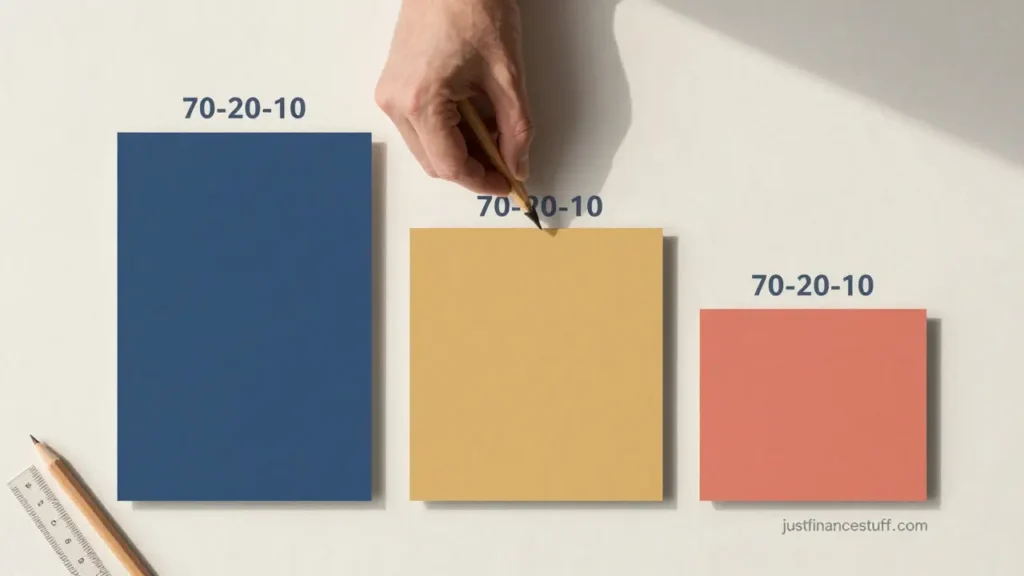
Allocating 70% to Living Expenses and Discretionary Spending
Allocate about 70% of your take‑home income to daily costs and the things you want. This covers housing, food, transport, utilities, and regular, smaller purchases.
- Needs: rent or mortgage, utilities, groceries, transit passes
- Discretionary: dining out, streaming services, small hobbies
- Buffer: a simple cushion for small, unexpected costs
Allocating 20% to Savings and Debt Repayment
Direct 20% of after‑tax income toward building savings and paying down debts. This strengthens finances over time and reduces balances gradually.
- Savings: emergency fund, high‑yield account, retirement plans
- Debt repayment: target high‑interest loans and credit card balances
- Automation: schedule transfers to avoid missing payments
Allocating 10% to Debt Paydown or Donations
Reserve 10% for extra debt payoff or charitable giving. Adjust this based on your priorities and timeline.
- Debt payoff: prioritize highest interest first
- Donations: set a regular, sustainable giving amount
- Flex: if debt is urgent, shift more here temporarily
Adjusting Percentages for Special Situations
Life changes may require a different split. You can adjust the percentages while keeping the rule in mind.
- High debt: raise the 10% debt payoff
- New job or raise: consider increasing savings or investments
- Irregular income: average income over several months to pick a stable plan
Implement Tools and Habits
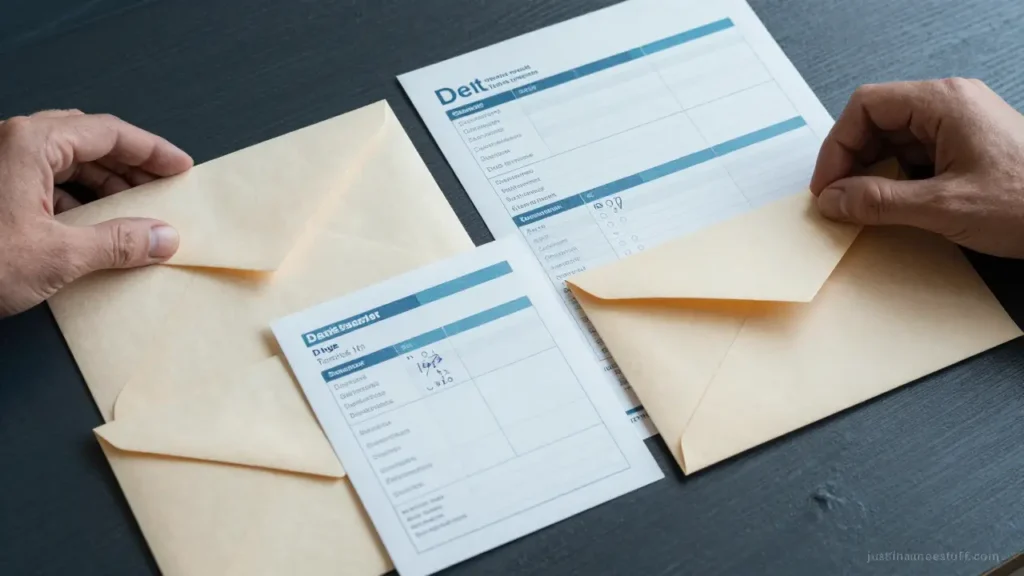
Simple Budget Templates and Spreadsheets
Use a basic template to capture income and expenses in one place so you can see where every dollar goes. This keeps the budget clear and easy to manage with real numbers from your day to day life.
- Pre fill repeating expenses like rent, utilities, and subscriptions to save time
- Include columns for take home pay and taxes to stay accurate
- Review weekly and adjust entries when a bill changes or you get a raise
Envelope or Digital Envelope Methods
Envelope methods allocate money to categories, so you spend only what you plan. Use physical envelopes or a digital version in apps or spreadsheets to track each category.
- Label envelopes as needs, wants, and savings, then put cash or digital funds into each as part of your money management strategy.
- If an envelope is empty, pause discretionary spending in that category until next period
- Aim to fund savings first, then cover essential needs, leaving room for small, intentional purchases as part of your money management plan.
Bill Payments, Automations, and Debt Snowball/Avalanche Options
Automations keep payments on time and stabilize monthly budget. For debt, choose a payoff method that fits your goals, like snowball or avalanche.
- Set up automatic transfers for bills, savings, and a buffer fund
- Snowball: pay the smallest debt first to build quick wins and motivation
- Avalanche: prioritize highest interest debt first to minimize total interest over time
Expert Insight
“Two classic debt-reduction pathways, the snowball (paying off the smallest balances first) and the avalanche (tackling the highest-interest debts first), are both valid; the best plan is the one you can stick with until you’re debt-free, because momentum and consistency beat perfection.” , Industry Analyst
Prioritize Debt within the 10% Channel
Choosing Debt Repayment Strategies (Snowball vs. Avalanche)
Within the 10% channel, pick a debt plan that fits your situation. The aim is to steadily reduce balances while keeping momentum. A practical approach is to focus on one debt at a time while you stay on track with the others.
- Snowball: pay the smallest balance first to gain quick wins and build motivation.
- Avalanche: pay the highest‑interest debt first to save more on interest over time.
Handling High-Interest vs. Low-Interest Debt
Not all debts are the same. High‑interest balances cost more each month and usually deserve attention first. For example, a $3,000 credit card balance at 19% APR will accumulate faster than a $3,000 loan at 6% APR if you do nothing, highlighting the importance of effective money habits.
- High‑interest debts: credit cards, most personal loans
- Low‑interest debts: certain student loans or secured loans
When to Reallocate Debt Dollars to Savings
There are times to shift money from debt paydown to savings, demonstrating a flexible approach to budgeting. A small safety cushion helps during emergencies. Plan ahead for predictable costs like vehicle maintenance or annual insurance.
- After paying off a high‑interest debt, move the freed amount to savings
- If an urgent expense appears, pause extra debt payments and use part of the 20% savings pool
Debt Repayment Decision Table
| Scenario | Recommended action |
|---|---|
| New high‑interest balance | Prioritize paying it down within the 10% channel |
| Stable emergency fund | Consider redirecting a portion to investments after debt |
| Small debt paid off can significantly improve your overall budgeting strategies. | Reallocate to savings or retirement, based on goals |
Keep the approach flexible. Your financial situation and goals guide how you balance debt, savings, and investments within the 70-20-10 framework.
Build a Savings and Emergency Fund Plan

Short-Term Savings Goals within the 20%
The 70-20-10 budget directs the 20% toward saving and debt repayment. For short-term goals, set concrete milestones like a $500 emergency fund, a $1,000 laptop fund, or a $200 travel fund. Make goals specific, measurable, and time-bound so you can stay on track.
- Choose 2-3 goals that fit your life this year
- Assign a monthly transfer amount to each goal
- Review progress monthly and adjust if needed
Emergency Fund Benchmarks and Progressive Targets
An emergency fund acts as a safety net. Start with a small target and grow it over time as your budget improves.
- Initial target: 1-2 months of essential living expenses
- Progressive target: 3-6 months for more security
- Keep funds in a savings account that is easy to access
Investing Basics Once Savings Are Solid
When savings are steady, you can start simple investing. Use the remaining 20% wisely to grow wealth over time by building a habit you can sustain.
- Learn the basics: risk, return, and time horizon
- Start with low-cost, diversified options like broad index funds
- Automate regular contributions and review yearly
| Area | Practical Tip |
|---|---|
| Emergency fund | Open a high-yield savings account and set monthly transfers |
| Short-term goals | Track progress with milestones and adjust as needed |
| Investing | Begin with broad index funds and small, regular contributions |
Customize for Your Life Stages

Students, New Professionals, Families, and Retirees
Everyone has different financial needs. The budget must fit your stage of life. You can adapt the 70-20-10 budget to match what you earn and spend.
- Students may use a higher essential expenses portion and smaller savings until they graduate.
- New professionals can start with steady take-home income and build an savings account for future goals.
- Families often need more living expenses and may add a sinking fund for big costs.
- Retirees focus on stable monthly income and preserving savings while supporting donations or gifts.
Adjusting for Income Variability and Bonuses
Some months bring more money. You can revise the percentages temporarily and then return to the baseline. Use a budget calculator to test different splits.
- Put any extra pay into savings and investments to build a cushion.
- If income drops, temporarily slow discretionary spending while keeping essential needs funded.
- Document changes so you stay on track over time.
Lifestyle Choices Without Violating the Rule
You can still live well while following the rule. Think in terms of needs from your wants and use smart planning to protect your emergency fund.
| Life Stage | Focus Area |
|---|---|
| Student | Basics, small savings, flexible needs |
| Professional | Focus on steady savings, debt planning, and retirement prep to create a budget that works. |
| Family | Large essential costs, sinking funds, long-term goals |
| Retiree | Income stability, withdrawals, cost of living adjustments |
Budgeting frameworks help you tailor the 70-20-10 approach so it fits real life without losing the structure.
Practical Steps and Real-World Examples
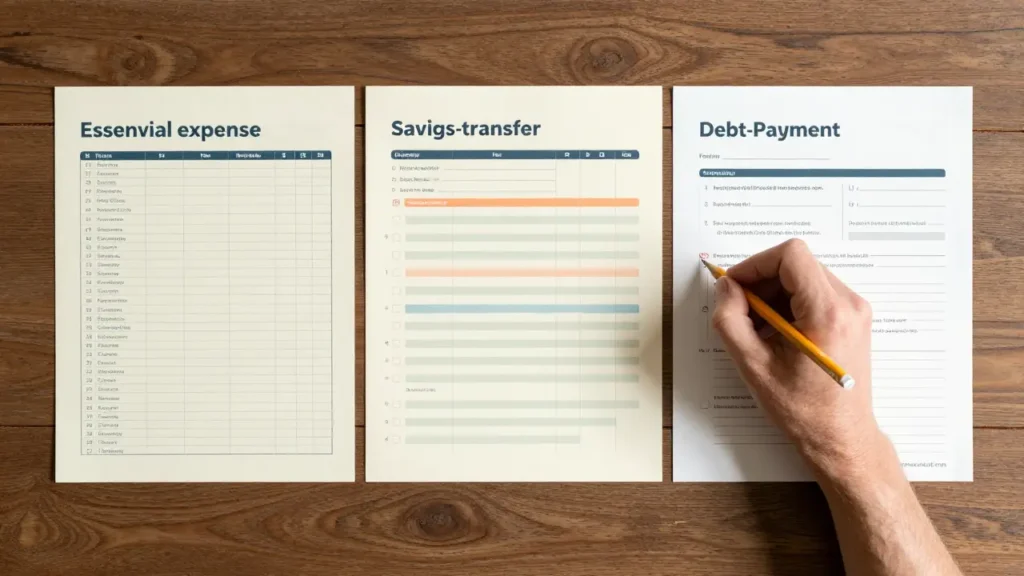
- Example: a college student earns 1200 per month. Allocate 840 to needs, 240 to savings, 120 to wants. If part-time hours rise to 1500, adjust to 1050 needs, 300 savings, 150 wants for that month.
- How-to: set up automatic transfers to savings on payday for different life stages. Use separate accounts for easy tracking.
- Edge case: a family faces a large car repair. Move funds from wants to a repair sinking fund rather than touching essential bills.
FAQ
Here are quick answers to common questions about the 70-20-10 budget and how it fits into personal finance.
- What is the 70-20-10 budget rule? It divides after-tax income into three categories: 70% for living costs, 20% for savings and debt repayment, and 10% for debt payoff or donations. This simple breakdown helps you manage money with less effort.
- What counts as take-home income? Take-home income is the amount left after taxes and other deductions. Use this number as the base for the three categories.
- Can I adjust the percentages? Yes. If you need more savings or faster debt paydown, you can shift the portions briefly, then return to the baseline.
- How do I start? Track one month of income and spending. Classify expenses into needs, savings, and debt or donations. Set up automatic transfers when possible.
- What about variable income? For irregular pay, base your plan on a conservative average take-home and adjust as income grows, making sure essential needs are funded first.
Tip: Use a simple monthly budget template to see how the rule fits your life and adjust as needed. For real results, link each category to concrete actions: set a date for debt payments, automate 60% of essentials, and schedule monthly donations if you want to keep that 10% steady.
Conclusion
The 70-20-10 budget rule provides a simple, adaptable way to manage money. It helps you understand where your take-home income goes and keeps monthly budget planning straightforward.
Practical application and steps
The rule splits money into three clear channels and fits real life:
- Allocate 70% of your after tax pay into living expenses like rent, groceries, and transport. For example, with a $3,000 take-home pay, about $2,100 goes to these costs each month.
- Put 20% into savings and future goals. Set up automatic transfers on payday to a savings or emergency fund to keep money growing even if you forget to save.
- Assign 10% to debt payments or donations Your budget is based on current needs and should adapt to changing money habits. If you have debt, target high-interest balances first; if not, use this for debt payoff or retirement contributions.
Key tips to make it work in real life:
- Track a full month of monthly income and monthly spending to spot where you can tighten or reallocate.
- Start with a simple budget template or budget calculator to simulate changes and see the impact on your emergency fund.
- Adjust the 70-20-10 split if you face big changes, like a raise, relocation, or new dependents. Recalculate after any shift.
With consistent tracking, your personal finance plan stays aligned with your financial goals and supports steady savings and investments.
Next action: review your current after-tax income, categorize expenses, and set up automatic transfers to your savings account and debt payments so the rule works for you.