 Skip to content
What the 70-20-10 rule is
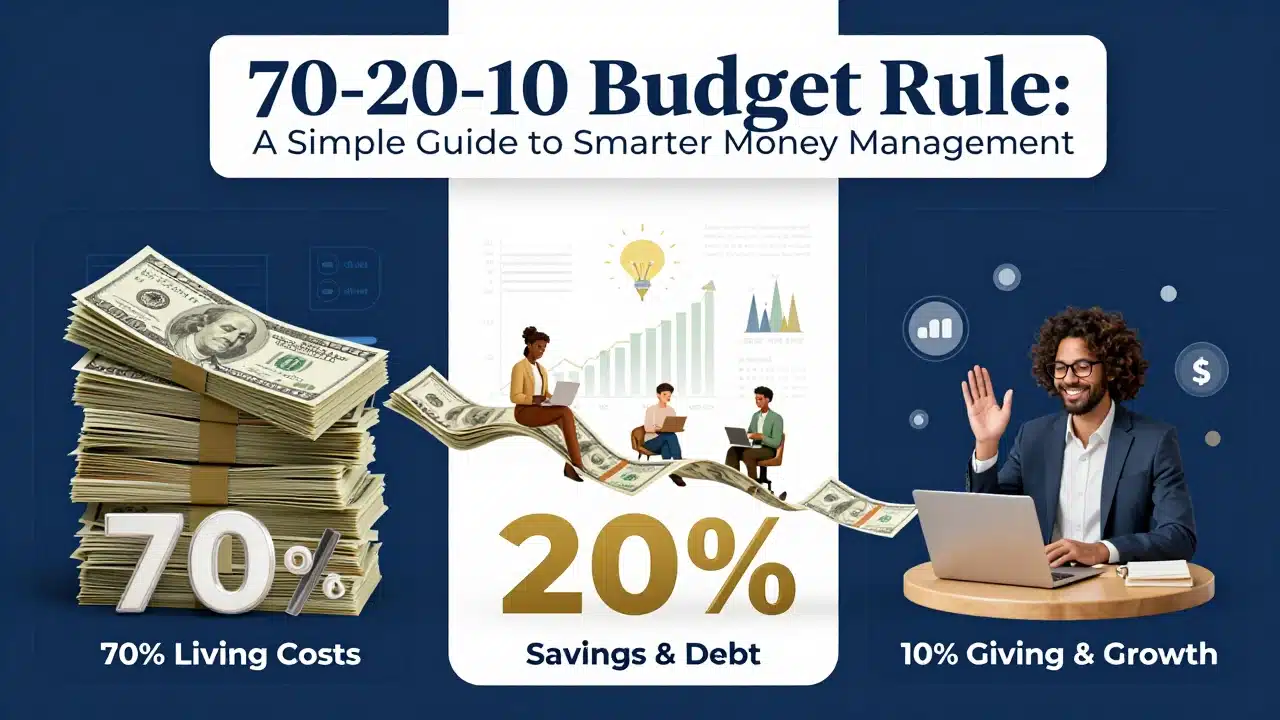
The 70-20-10 budget rule is a simple plan to split your money after taxes. It uses three buckets: 70% for living costs, 20% for saving and debt repayment, and 10% for giving or extras. This setup makes budgeting straightforward and helps you see where your money goes.
Think of it as three clear targets. You cover today, set aside some for future security, and reserve a small portion for giving or personal growth.
Why it remains relevant in modern personal finance
Money can feel big and confusing. The 70-20-10 rule offers a clear map that stays steady even when prices rise. It helps you progress toward goals without heavy tracking or countless charts, simplifying your money management.
People in many places use this rule. It fits different incomes and family sizes when you tweak the numbers a bit.
How this article will help you apply the rule
We break the rule into easy steps. You’ll learn what counts as needs, how to save and invest, and where the 10% can go for good causes or personal growth.
- Concrete, copyable examples from real life
- Practical tweaks to cut costs in housing, transport, and utilities
- Simple habits to track progress without burnout
By the end, you’ll know exactly how to start using the 70-20-10 budget in your personal finance plan.
What qualifies as needs vs. wants within the 70%
We split the 70% into needs and wants. Needs are things you must have to live and work. Wants are things that feel nice but aren’t essential. Think of it as a ladder from must-haves to nice-to-haves.
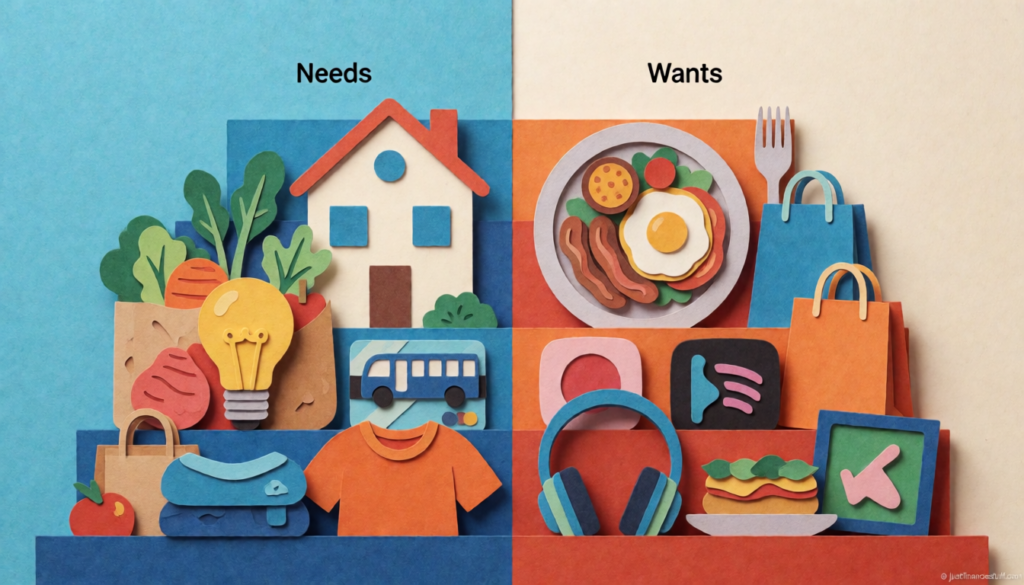
Needs include shelter, food, basic clothing, and essential transport. Wants include eating out, streaming services, or a new gadget. Keeping this simple helps you stay on target and avoid going past the 70%.
Strategies to optimize housing, utilities, and transport costs
- Shop for lower rent or a better mortgage rate if possible. For example, compare offers within a 15 mile radius and negotiate after a year of on-time payments.
- Use energy wisely with efficient lights and smart thermostats. Set schedules so lights and heat kick on only when you’re home.
- Carpool, use public transit, or bike to save on fuel and maintenance, thereby lowering your living expenses. Try a 2, 3 day weekly ride share to cut costs by up to 30%, positively impacting your savings and investments.
- Bundle services like internet and phone for discounts. Call your providers to request a bundled rate or loyalty credit.
- Set a monthly cap for big bills and review them every quarter. If a bill spikes, investigate usage and potential plan changes to improve your financial plan.
Handling recurring and irregular essential expenses
- List all monthly essentials and note irregular costs like car repairs. Create a simple spreadsheet with due dates.
- Build a small fund for surprises, even if it grows slowly. Start with a $25, $50 monthly automatic transfer.
- Set automatic transfers to cover predictable bills first each month. Treat this like a bill you must pay before other spending.
- Review spending monthly and adjust the 70% as prices change. If groceries spike, swap one pricey item for a cheaper alternative.
The 20%: Savings, Investments, and Debt Reduction

Prioritizing emergency fund, retirement, and investments
You set aside 20% of your after-tax income for future security. Start with an emergency fund that can cover 3 to 6 months of basic expenses. After that, focus on retirement savings and simple investments to grow your money over time.
- Build an emergency fund first
- Contribute to retirement accounts as available
- Keep investments gradual and steady
Debt payoff strategies within the 20% framework
Use part of the 20% to reduce debt. Clear high-interest debts first to save on interest costs over time. If debts are low, you can split the 20% between paying down debt and adding to savings.
- Target high-interest loans first
- Consider the snowball method for motivation
- Aim for consistent, small extra payments
Balancing short-term goals with long-term growth
Keep some money ready for quick wins, like a short-term goal or a small investment. The rest should quietly grow for the future. Regularly review your 20% to stay aligned with changes in income or debts as part of your budgeting strategies.
| Focus | Why it matters | Quick tip |
|---|---|---|
| Emergency fund | Provides a cash cushion | Auto-transfer monthly |
| Retirement | Builds long-term security through effective money management. | Maximize employer match if any |
| Debt payoff | Reduces interest cost | Pay more on high-rate debt first |
The 10%: Giving, Donations, and Optional Allocations

Allocating funds to philanthropy and social impact
You can set aside 10% to help others or causes you care about. This money spreads kindness and can feel good while you budget, enhancing your financial situation. It also shows that money can do more than just your needs and savings.
- Donations to local groups or charities you trust
- Support for causes you believe in
- Small gifts to friends or family in need
Alternative uses of the 10% (education, personal development)
If giving isn’t right for you right now, use the 10% for your growth. This helps you learn new skills or improve your life in practical ways, contributing to your financial plan.
- Courses or books to boost skills
- Workshops for career growth
- Memberships or apps that aid learning
Cultural and lifestyle considerations in the 10%
Your 10% can reflect your values and culture. It might mean supporting community groups or contributing to events that matter to you.
- Support for cultural programs or clubs
- Donations tied to community projects
- Volunteering time as a form of giving, when money is tight
| Focus | Why it matters | Quick tip |
|---|---|---|
| Philanthropy | Spreads good and builds trust | Start small with monthly giving |
| Education | Boosts skills for future earning | Choose one affordable course |
| Personal growth | Improves long-term financial health and encourages better savings and investments. | Set a simple learning goal |
Adapting the Rule to Different Incomes and Stages of Life
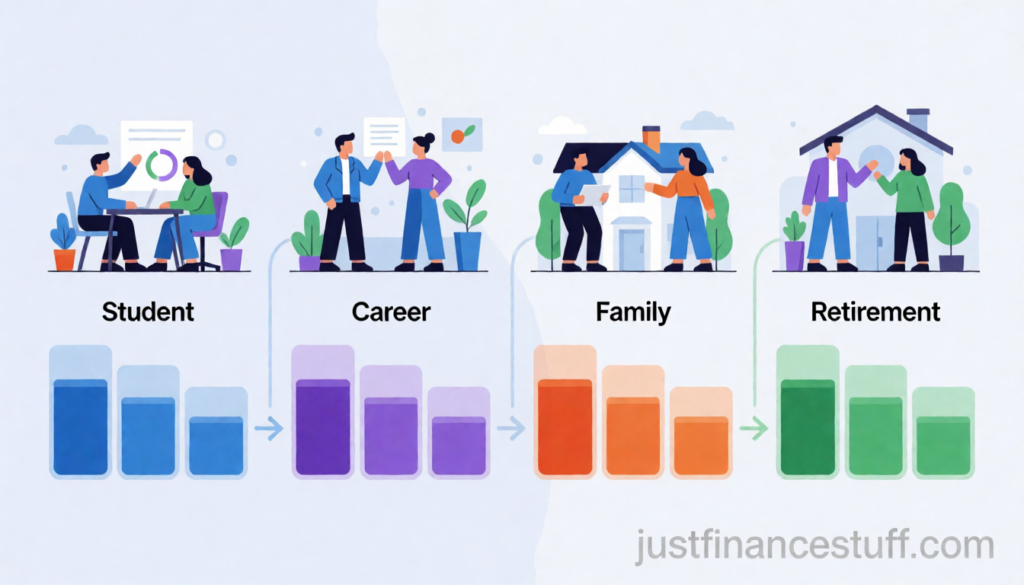
The 70-20-10 budget rule can fit many life paths. You can tweak it to match your income and goals. The idea stays simple: divide after-tax money into three parts and adjust as you grow or change.
Adjusting percentages for single earners, couples, and families
If you live alone, you may need more flexibility. If you share money with a partner, you can split more clearly. Families have kids, housing, and care costs. You can:
- Shift more to 70% for living costs if rent or mortgage rises, utility bills climb, or you start paying for childcare
- Increase 20% for savings when you land a raise, pay off a loan, or want a big goal like a home down payment
- Keep 10% for debt repayment or donations if you carry student loans or want to support a cause
Lifestyle choices: students, early career, and approaching retirement
Students may have variable pay, so averaging income over several months helps. Early career folks can push more into skills, networking, and debt payoff. Near retirement, you usually spend less and protect savings, with more focus on preserving capital.
Impact of taxes and benefits on take-home pay
Your take-home pay is after taxes. If benefits or tax credits change, recalc the three buckets. The rule is flexible: treat the percentages as a guide, not a fixed law.
| Situation | Suggested tweak | Why it helps |
|---|---|---|
| Single, high rent | 70% living, 25% savings, 5% debt | Keeps basics covered while building security |
| Couple, growing family | 65% living, 25% savings, 10% debt/donations | Supports kids and future planning |
| Early career, rising income | 75% living, 15% savings, 10% debt | Balances present needs with future growth |
Pros, Cons, and Real-World Effectiveness
Benefits: simplicity, discipline, and clarity
The 70-20-10 budget rule is easy to grasp and gives you a clear path for where money should go each month. You don’t juggle dozens of categories, so it saves time and reduces clutter. It also helps you build steady habits because the targets are simple and repeatable.
- Quick to set up, making it easier to start saving money.
- Encourages regular saving and debt repayment
- Makes it easy to see progress over time
Limitations: rigidity, edge cases, and lifestyle factors
- Less flexible in tight months
- May miss unique financial needs
- Doesn’t cover every small expense category, which may affect your discretionary spending.
When to modify or combine with other budgeting methods
- Shift 70% to cover rising costs
- Add a separate fund for irregular bills
- Use a cash flow tracker for timing
Practical Tools and Templates for the 70-20-10 Budget
Budget templates and calculators
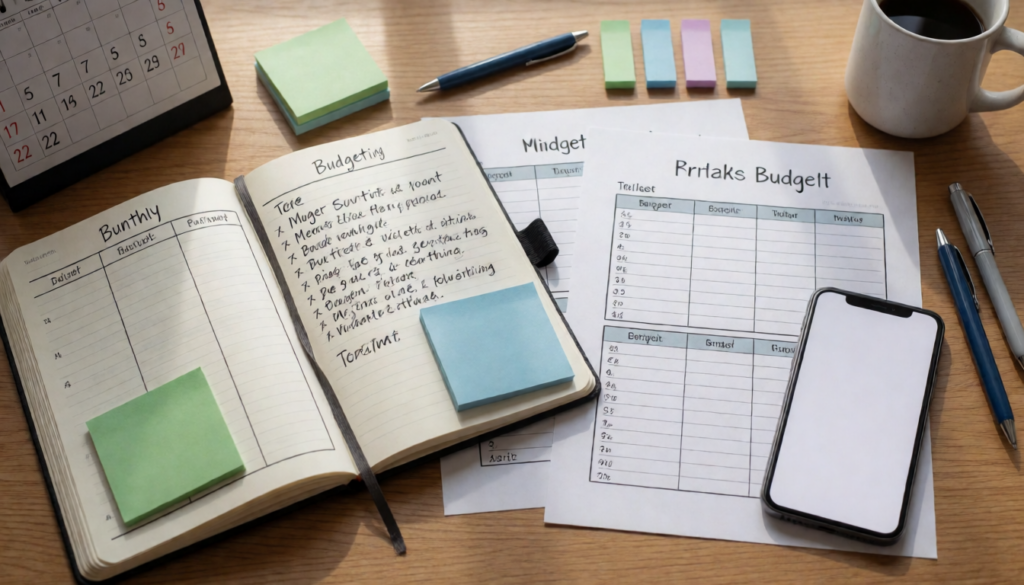
Templates can make the 70-20-10 plan feel approachable right from the start. They show where your money should go at a glance, and you can pick one that fits your monthly income and update it as you go.
- Printable or digital templates that split take-home pay into three buckets
- Simple calculators to determine 70%, 20%, and 10% amounts from your after-tax income
- Templates that adapt as income or family size changes
Cash flow tracking and automation ideas
Tracking helps you stay on target, and automation does the busy work for you. You’ll see where money lives each month and when to shift funds between buckets.
- Link bank accounts for a clear view of spending
- Set automatic transfers to savings and debt payoff within the 20% bucket
- Use alerts to flag when a category grows too large
Monthly review rituals to stay on target
Regular check-ins keep your plan accurate. A quick monthly review helps you adjust before small slips become big gaps.
- Compare actual spending to the 70% bucket and note overruns
- Confirm allocations for savings, debt repayment, and donations
- Plan for upcoming bills and any irregular expenses
| Tool type | What it helps with | Tip |
|---|---|---|
| Template | Quick start for the 70-20-10 budget | Choose one that matches your income frequency |
| Calculator | Precise bucket amounts | Recalculate after income changes |
| Automation | Debt payoff and savings momentum | Set it and forget it for 20% |
FAQ
You want a real world feel for the 70-20-10 budget rule. Here are concise, practical takes you can use today.
- What is the 70-20-10 budget rule? It’s a simple plan that splits take home pay into three buckets: 70% for living costs, 20% for saving and debt payoff, and 10% for giving or special uses.
- Who should use it? It works if you want a clean framework without tracking dozens of categories.
- Can it fit different incomes? Yes. You can nudge the percentages to cover big medical bills, housing costs, or growing families.
- What counts as living costs? Essentials like rent or mortgage, utilities, groceries, gas, and small recurring expenses.
- Where does debt payoff go? In the 20% bucket with savings, or you can carve out more to hit a payoff goal faster.
- Can I donate with the 10%? Absolutely. This bucket can cover charity, gifts to causes, or a rainy day fund earmark.
- How do I start? Note your after tax income, name three buckets, and automate transfers right after payday.
| Question | Simple answer | Tip |
|---|---|---|
| How to apply to irregular income? | Use a monthly average and adjust when pay changes to effectively manage your living expenses. | Rebalance at each major pay event if you can. |
| What if spending is higher than 70%? | Trim non essentials first, then adjust 20% and 10%. | Make one small cut, then reallocate to savings or debt to enhance your overall financial situation. |
Conclusion
Key takeaways
The 70-20-10 budget rule is a simple map for your money. It splits after-tax income into three parts: living costs, saving and debt payoff, and giving or special uses. This plan helps you see where every dollar goes and stay on a steady path toward your financial goals. You don’t need fancy tools to start; a quick plan works.
Using this rule can help you cover essentials, grow savings in your savings account, and reduce debt. It also leaves room for giving or personal growth, so money feels balanced and purposeful. The idea is to be practical, not perfect, and to adjust as life changes.