 Skip to content
The average FICO score in the United States dropped to 713 in 2025. This is a small dip from the record high of 715 seen back in 2023. At the same time, the average person now carries a total debt of $105,444.
These numbers act like a scoreboard for how people handle their money. They show that managing debt is a major part of life for most adults today.
A credit score is a three-digit number between 300 and 850. It helps banks decide if a person is good at paying back what they borrow. A credit report is like a school report card for money.
It lists every loan and credit card a person has used. This report tracks if payments were made on time or if they were late.
It is a strategic move to keep these records clean to get better deals on houses or cars later.
“Understanding how credit scores actually work is the best way to make smart money moves and avoid common myths.”- Rod Griffin, Senior Director at Experian
30% of a credit score comes from the total amount of money owed. Lenders look at how much of a credit limit is being used. This is called a credit utilization ratio. If a person has a $10,000 limit and spends $3,000, their ratio is 30%.
Keeping this number low helps the score stay high. It is like a game of chess where every move affects the next turn.
This guide explains how different choices change a credit report. The reader will learn about these key areas:
- The difference between private debt and credit.
- How debt settlement and consolidation change a score.
- The way medical bills and debt collectors show up on reports.
- How to use debit and credit rules in basic accounting.
- Smart ways to pay off credit card balances faster.
Learning these rules helps the reader build a strong financial base. It turns a confusing system into a clear set of steps. By watching the data and making careful plays, anyone can improve their financial standing over time.
Are Private Debt and Private Credit the Same?
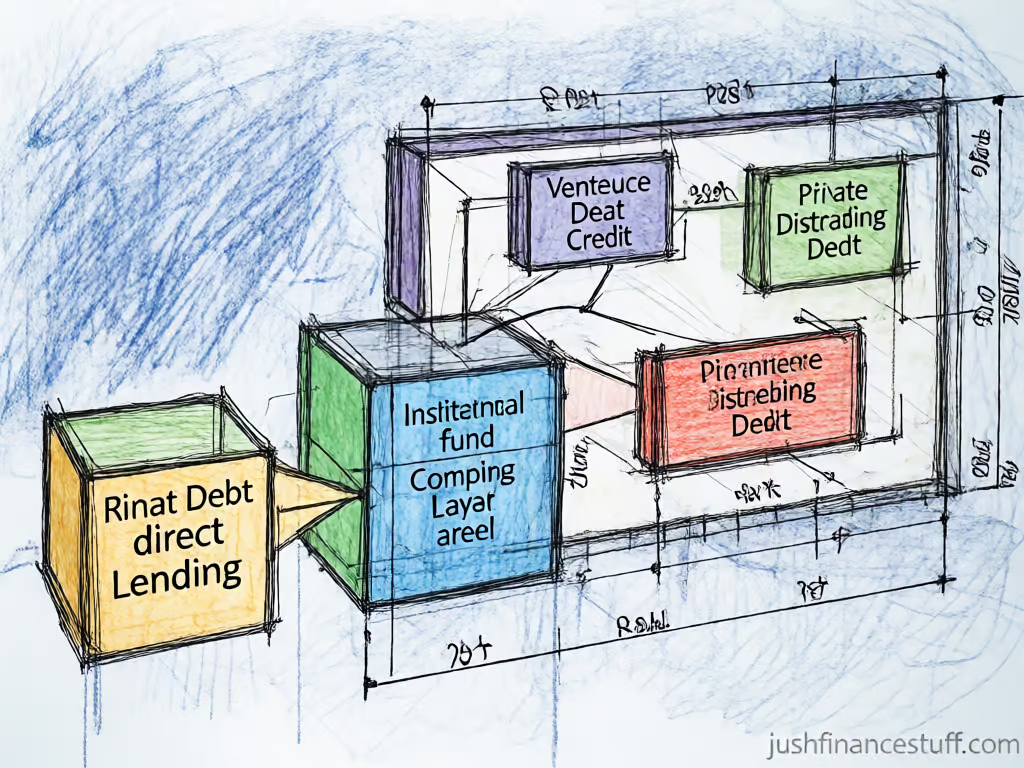
In 2024, the landscape of non-bank financing underwent a massive shift as traditional lenders tightened their requirements. This change pushed many companies toward alternative funding sources, making the terms private debt and private credit common in financial news. While people often use these terms to mean the same thing, they represent slightly different layers of the financial chessboard. Understanding these nuances is the first step in seeing how debt functions as a broad spectrum of financial instruments rather than a single, monolithic concept.
Private debt specifically refers to the act of non-bank institutions lending money directly to companies. These are often mid-sized businesses that might not have the high credit ratings needed for public bond markets but are too large for simple small-business loans. Private debt is a direct “play” where a fund provides capital to a borrower, usually with a specific repayment schedule and interest rate. It is a focused subset of the larger alternative lending market.
Private credit, meanwhile, serves as a broader umbrella term that encompasses various non-bank financing solutions beyond just direct loans. It includes complex instruments like distressed debt, where investors buy the debt of struggling companies, or venture debt for startups. According to market data, the DeFi Credit Sector-a digital version of this market-increased 400% year-over-year by Q2 2024, with $1.2 billion in on-chain loans processed through protocols like Credix and Centrifuge. This growth shows that private credit is expanding into new, high-tech territories that bypass the old-school banking system entirely.
“The rise of private credit represents a fundamental shift in how capital is allocated, moving away from centralized banks toward more specialized, data-driven lending funds.”- Financial Market Analysis Report, 2024
While these concepts might seem distant from a person’s individual credit score, they establish the foundation for how all debt is viewed by the financial world. Whether a loan comes from a local bank or a private credit fund, the underlying mechanics of risk and repayment remain the same. This variety in debt sources foreshadows why different types of debt, from mortgages to personal loans, carry different weights on a credit report. Here are the primary ways these modern financing terms differ from traditional bank lending:
- Source of Funds: Banks use customer deposits to fund loans, whereas private credit uses capital from institutional investors like pension funds.
- Speed of Execution: Private debt moves faster than traditional banks because the funds aren’t tied up in the same level of federal “red tape” or regulatory hurdles.
- Customization: Private credit deals are often “bespoke,” meaning the lender and borrower can negotiate unique terms that a standard bank computer wouldn’t allow.
- Risk Tolerance: Private lenders often take on higher-risk moves that traditional banks avoid, though they charge higher interest rates to compensate for that risk.
The direct answer is that private debt is a specific type of loan, while private credit is the entire category of non-bank lending. For the reader, recognizing that debt can come from many different sources is vital. It highlights that the financial system is a vast ecosystem where every move, whether by a giant corporation or an individual, is tracked and measured to determine future creditworthiness.
Average total debt balances increased by 0.4% to $105,444 in 2025. This rising tide of liability makes managing multiple monthly payments a complex game of financial chess for many households. Debt consolidation serves as a strategic move to simplify this board by merging various high-interest obligations into a single, more manageable loan. By combining credit card balances or medical bills, a borrower can often secure a lower interest rate, which reduces the “Amounts Owed” portion of their credit profile over time.
Top Methods for Consolidating Debt

Lenders typically offer three primary paths for consolidation, each with distinct trade-offs. The most common route is a personal loan, which provides a lump sum of cash to pay off creditors, leaving the borrower with one fixed monthly payment. For those with high-interest revolving debt, a balance transfer credit card can offer a 0% introductory APR for 12 to 21 months. Finally, homeowners might use a home equity loan, which often carries the lowest interest rates because the house serves as collateral, though this increases the risk to one’s primary asset.
| Consolidation Type | Typical Interest Rate | Best For | Impact on Risk |
|---|---|---|---|
| Personal Loan | 6% – 36% | Fixed monthly budget | Low (Unsecured) |
| Balance Transfer | 0% (Intro period) | Short-term payoff | Moderate (Credit Score) |
| Home Equity | 7% – 10% | Large debt amounts | High (Asset-backed) |
Leading Companies and Selection Criteria
Choosing a reputable partner is a critical play. Companies like LightStream are often cited by analysts for offering low rates to those with excellent credit, while Upgrade or LendingPoint cater to individuals in the “Fair” credit tier (580-669). A borrower should prioritize lenders that offer “soft” credit inquiries for pre-qualification, as this allows them to shop for rates without a temporary dip in their score. It is also wise to avoid companies that charge high origination fees, which can eat into the savings gained from a lower interest rate.
“The goal of consolidation isn’t just to move debt around, but to lower the cost of carrying it while protecting your payment history.”- Financial Market Analysis Report, 2024
While these loans can provide immediate relief, they are not a cure-all for deep-seated financial habits. If a person uses a loan to clear their credit cards but continues to spend beyond their means, they risk doubling their total liability. This reality raises a difficult question for many: if a new loan isn’t enough to stop the cycle, what is the most aggressive way to actually eliminate the underlying balances for good?
What Is the Best Way to Get Out of Credit Card Debt?

A homeowner discovers that their monthly interest charges now exceed the cost of their groceries, creating a financial trap that feels impossible to escape. This scenario is increasingly common as credit card utilization remained stuck at 29.1% in September 2025. When balances hover near this level, the pressure on a credit score becomes immense because the “Amounts Owed” category accounts for 30% of a FICO calculation. Taking immediate action is the only way to stop the bleeding before late fees begin to mount.
The most effective “play” for many is the debt avalanche method, which targets the balance with the highest interest rate first. By focusing every extra dollar on the most expensive debt while paying minimums on others, a person minimizes the total interest paid over time. It is a mathematically superior strategy for those who can stay disciplined. However, others prefer the debt snowball, which involves paying off the smallest balances first to build psychological momentum through quick wins.
“The math of the avalanche is undeniable, but the psychology of the snowball is what keeps people in the game when they feel overwhelmed.”- Rod Griffin, Senior Director of Consumer Education at Experian
Keeping utilization under 10% can boost scores significantly. While many experts suggest staying under a 30% limit, the highest credit scores usually belong to those who treat their cards like debit cards, paying them off in full each month. To accelerate this process, people can often negotiate with creditors for a lower interest rate or a temporary hardship plan. Simply calling a card issuer and asking for a rate reduction can sometimes shave several percentage points off the annual cost, making repayment much faster.
Effective budgeting is the foundation of any recovery plan. Financial advisors recommend tracking every cent to find “found money” that can be redirected toward balances. This proactive reduction directly improves the Payment History component, which is the single largest factor in a credit score at 35%. Failing to act quickly can lead to delinquency, a state where a single payment missed by 30 days can cause a score to plummet and stay on a report for seven years.
Sometimes, even the most disciplined budgeting and strategic “plays” on the financial chessboard aren’t enough to outrun high interest rates. When the total debt grows faster than a person can pay it down, it may be time to look beyond self-managed strategies and toward more formal relief programs designed to settle or restructure what is owed.
What Are the Best Credit Card Debt Relief Options?
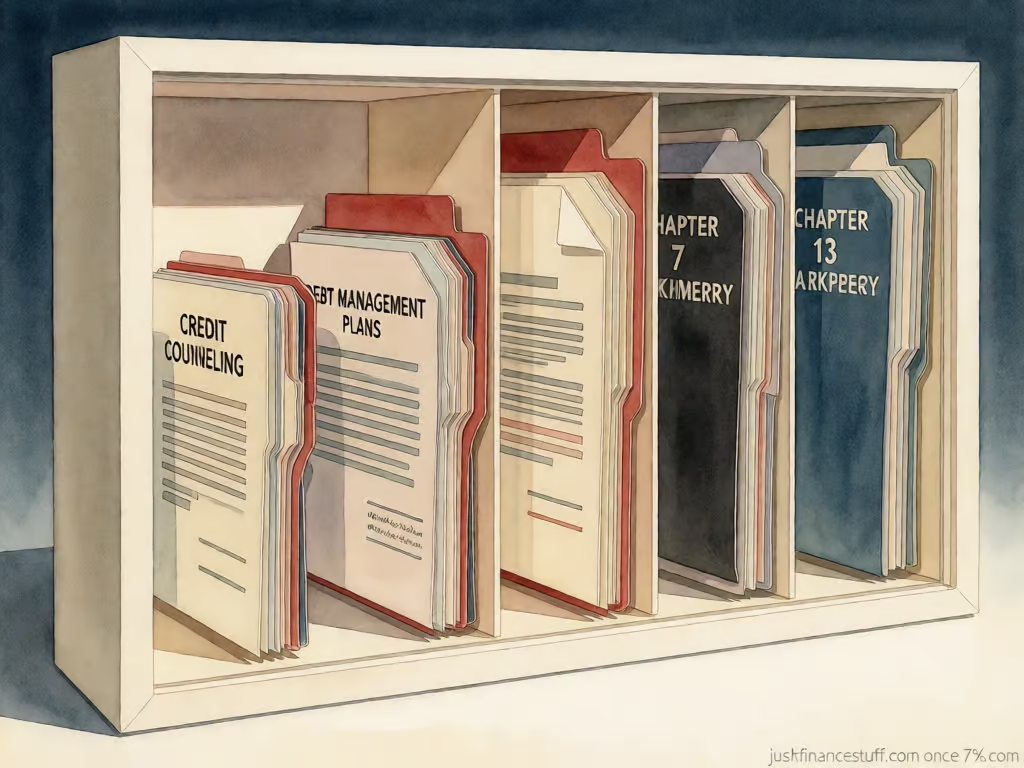
Formal debt relief is not a one-size-fits-all solution; it is a calculated play for those whose balances have outpaced their ability to pay. When self-managed strategies like the snowball method fail to gain traction, the next move involves professional intervention. These options range from structured repayment plans to legal filings, each with a different weight on a person’s long-term creditworthiness.
A Debt Management Plan (DMP) is often the most conservative opening move. Administered by non-profit credit counseling agencies, a DMP rolls multiple credit card payments into a single monthly deposit. The agency negotiates with creditors to lower interest and waive fees, but the reader must usually agree to close all credit accounts. This strategy protects the payment history, which is vital since late payments can haunt a report for seven years.
For those facing more severe hardship, debt settlement offers a way to pay a lump sum that is less than the total amount owed. While it provides immediate relief from the principal balance, it is a high-risk maneuver. Creditors are under no obligation to accept an offer, and the process often requires the reader to stop making payments entirely. This intentional delinquency causes scores to crater and leaves a lasting mark on the report.
“Debt settlement can be a double-edged sword. While it reduces the total debt, the damage to a consumer’s credit profile is often deep and takes years to repair.”- Financial Market Analysis Report, 2024
When liabilities become truly insurmountable, bankruptcy serves as the final reset on the board. Chapter 7 bankruptcy liquidates assets to wipe out unsecured debt, while Chapter 13 creates a three-to-five-year court-ordered repayment plan. A bankruptcy can harm a credit score for up to ten years. This is the most drastic option available and should only be considered when all other avenues for relief have been exhausted.
The choice of relief also intersects with systemic shifts in how lenders view risk. A Consumer Financial Protection Bureau (CFPB) report in 2024 found that AI-operated credit models denied Black and Hispanic applicants 15–20% more often than white applicants with similar financial profiles. As automated systems become more common, maintaining a clean record through a DMP or counseling is often safer than the scorched-earth approach of settlement or filing for court protection.
Common Pathways for Professional Debt Relief
- Credit Counseling: Professional guidance to create a budget and evaluate which relief play is most effective.
- Debt Management Plans: A structured five-year plan to pay off the full principal at reduced interest.
- Debt Settlement: Negotiating to pay a fraction of the debt, which often leads to tax liabilities on the forgiven amount.
- Chapter 7 Bankruptcy: A total discharge of qualifying debts, usually completed within a few months.
- Chapter 13 Bankruptcy: A reorganization of debt that allows the reader to keep property while paying back creditors over time.
The strategic value of these options depends on the reader’s goal: immediate cash flow or long-term score preservation. While settlement might provide a quick exit from a high-interest trap, the upcoming discussion on how these actions specifically appear on a FICO report reveals the true cost of that freedom.
How Does Debt Settlement Affect Your Credit Score?

Debt settlement is a high-stakes move that can severely damage a credit report. While it may seem like a shortcut to erase balances, the process usually requires a person to stop making payments entirely for several months. This strategy aims to prove to creditors that the borrower cannot pay, but it triggers a cascade of negative data points that lenders view as a major red flag.
The Payment History component of a FICO calculation is the most vulnerable during this process. Because this single factor accounts for 35% of a score, missing consecutive payments causes the three-digit number to drop rapidly. By the time a settlement is reached, the credit report is often littered with 30, 60, and 90-day delinquencies that signal high risk to future lenders.
Settled accounts are not viewed the same as accounts paid in full. When a creditor agrees to accept less than the original balance, they update the status to “Settled” or “Paid Settled.” This note informs anyone viewing the report that the borrower did not fulfill the original contract. This status can linger on a report for seven years from the date the account first became delinquent.
“Debt settlement is often a last-resort play because it leaves a visible scar on your financial history. Lenders see a settlement and conclude that you are a borrower who might not return every dollar borrowed.”- Financial Market Analysis Report, 2024
The impact on the Amounts Owed category, which makes up 30% of a score, is also complicated. While the total debt balance eventually decreases, the initial period of non-payment allows interest and late fees to balloon. This can push a person’s credit utilization well beyond the 30% threshold where scores begin to suffer the most damage.
Immediate and Long-Term Consequences
The severity of the score drop depends on where the person started. Someone with an “Excellent” score of 800 might see a much larger point loss than someone already in the “Fair” or “Poor” range. Because settlement involves breaking a legal agreement, the damage is second only to bankruptcy, which can haunt a report for a full decade.
- Credit Score Drop: Scores can plummet by 100 points or more during the negotiation phase.
- Tax Implications: The IRS often treats forgiven debt over $600 as taxable income.
- Future Borrowing: Settling debt can make it difficult to qualify for a mortgage or auto loan for several years.
- Legal Risks: Creditors may sue for the full balance before a settlement is finalized.
While settlement can eventually provide a path out of a debt spiral, it is a blunt instrument compared to more surgical options. Many individuals find that a debt consolidation loan offers a different trajectory, as it aims to reorganize debt without the intentional delinquencies required by settlement firms.
Does Debt Consolidation Hurt Your Credit?
Debt consolidation works like a strategic trade on a financial chessboard. Instead of managing several small debts, a person takes out one large loan to pay them all off at once. While this move is often safer than the scorched-earth path of debt settlement, it still triggers immediate shifts in a credit report that every borrower should monitor closely.
87% of marketers report increased traffic. While that is a business stat, the logic applies here: more activity on a report means more eyes on your new credit. When a lender looks at an application for a consolidation loan, they perform a hard inquiry. This single check usually causes a small, temporary dip in a score. This is because new credit accounts for 10% of a FICO calculation, and lenders view frequent applications as a sign of financial stress.
The way a person handles their old accounts after consolidating also changes the game. If a reader closes their oldest credit cards after paying them off, they might accidentally hurt their length of credit history. This factor makes up 15% of a score.
Keeping those accounts open-even with a zero balance-helps maintain a longer track record. Experts like Rod Griffin from Experian suggest that understanding these mechanics is the only way to avoid common traps that lower a person’s rating.
| FICO Factor | Weight | Consolidation Impact |
|---|---|---|
| Amounts Owed | 30% | Can improve by lowering utilization |
| Length of History | 15% | May drop if old accounts are closed |
| New Credit | 10% | Initial dip from hard inquiries |
One of the biggest wins in this strategy involves the credit utilization ratio. This ratio measures how much of a credit limit is being used across all cards. Since amounts owed makes up 30% of a score, moving high-interest balances into a single personal loan can look very good to credit bureaus. It clears out the “maxed out” look of credit cards and replaces it with an installment loan, which is often viewed more favorably in the credit mix.
Ultimately, the long-term health of a report depends on the payment history. This is the most important factor, and it stays strong as long as the new monthly payment arrives on time. However, if a person falls behind on their new loan or allows old debts to spiral into collections, the damage becomes much harder to repair. This raises a different concern: what happens when those unpaid debts are sold to outside agencies and debt collectors begin reporting their own version of the story?
Can Debt Collectors Affect Your Credit Score?
Falling behind on a bill feels like a personal setback, but the situation shifts into a strategic defensive play once a debt collector enters the frame. While an original creditor like a bank or a utility provider might wait months before reporting a delinquency, a collection agency exists for the sole purpose of recovery. When these agencies buy your debt, they often create a new entry on your credit report that stands apart from the original account, effectively doubling the visual evidence of a financial misstep.
The impact of these accounts is heavy because they strike at the most sensitive part of a credit profile. Since payment history accounts for 35% of a FICO score, a single collection entry can cause a score to plummet by 50 to 100 points almost overnight. Even if the original late payments were already dragging the score down, the formal “Collection” status signals to future lenders that the person has stopped cooperating with their creditors, which is a significant red flag during a manual review.
“Understanding the mechanics of how these scores are calculated is the first step toward reclaiming your financial standing. You cannot win the game if you do not know the rules of the board.”- Rod Griffin, Senior Director of Consumer Education and Advocacy at Experian
Dealing with these agencies requires a calculated approach rather than an emotional reaction. People often assume that paying a collector will immediately delete the negative mark, but traditional credit reporting rules allow these records to remain visible for a long time. Collection accounts can stay on reports for seven years from the date the original account first became delinquent. This means the ghost of a missed payment follows a person long after the balance hits zero, though newer scoring models are beginning to ignore paid collection accounts entirely.
To minimize the damage, the reader should consider these strategic moves:
- Verify the Debt: Demand a validation letter within five days of the first contact to ensure the amount and owner are correct.
- Negotiate a Settlement: Some agencies may accept a lower lump sum, though the report will reflect “Settled” rather than “Paid in Full.”
- Pay for Delete: Though rare, some collectors might agree to remove the entry from the credit report entirely in exchange for full payment.
- Monitor Timing: Keep track of the seven-year window to ensure the bureau removes the entry once it expires.
It is important to remember that not all past-due bills follow the same path to a collector’s desk. While a credit card company might sell a balance after 180 days, other types of debt have different grace periods. This is particularly true for medical debt, which operates under a unique set of reporting rules and timelines that can catch even the most careful planners off guard.
How Does Medical Debt Affect Your Credit Score?
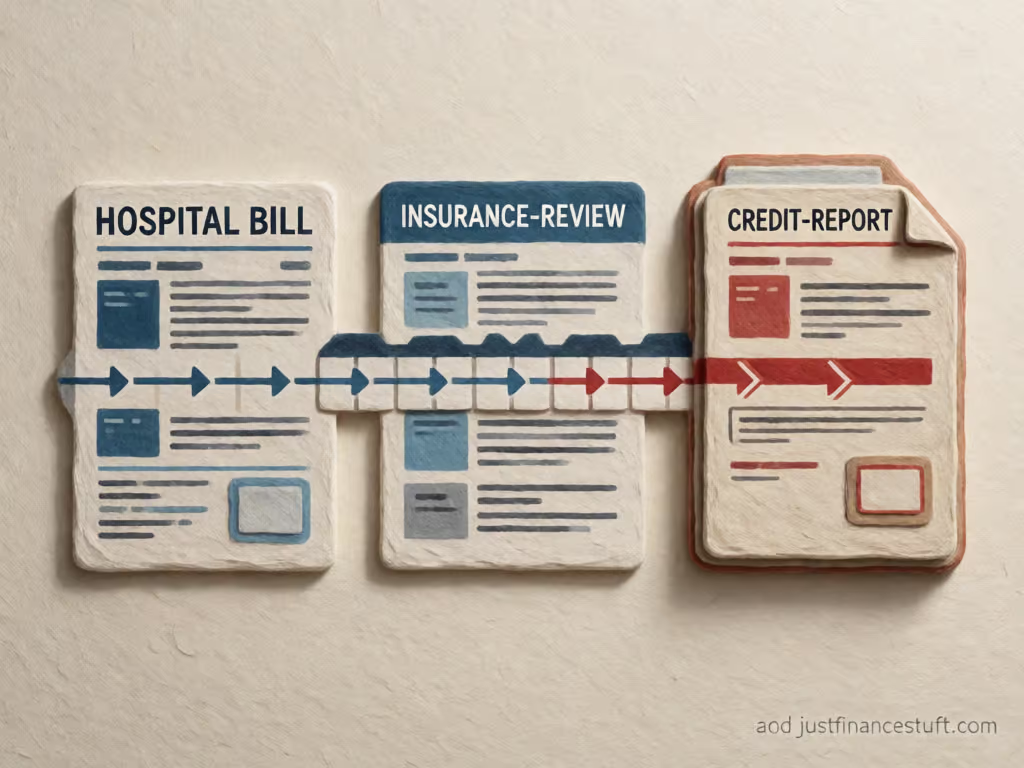
Ignoring a hospital bill can trigger a chain reaction that damages a financial profile far faster than most people realize. Unlike a missed credit card payment that hits a report after 30 days, medical debt operates under a unique set of federal protections and reporting timelines. This distinction is vital because healthcare costs are often unplanned, creating a form of “involuntary debt” that regulators treat differently than a shopping spree or a car loan.
Medical providers rarely report directly to credit bureaus; instead, they sell the debt to collection agencies. Once a debt collector takes over, the risk to the reader’s creditworthiness escalates. However, a significant grace period exists to allow for insurance negotiations.
Credit reporting agencies must wait 365 days before adding a medical collection to a credit report, giving patients a full year to resolve disputes or finalize insurance claims. This buffer is a strategic “time-out” on the financial chessboard, preventing temporary billing errors from causing long-term damage.
The Consumer Financial Protection Bureau (CFPB) reported in 2024 that AI-operated credit models denied Black and Hispanic applicants 15–20% more often than white applicants with similar profiles. This finding highlights the systemic stakes involved when medical debt-which disproportionately affects minority communities-enters the credit ecosystem. To combat these inequities, recent policy shifts have removed all paid medical collections from credit reports entirely. Furthermore, the three major bureaus no longer include medical debts under $500 on consumer reports, shielding many people from the impact of small, lingering co-pays.
Strategic management of these bills requires a proactive “play.” If a reader identifies an error, they should initiate a formal dispute with both the provider and the credit bureau. Since household debt-including mortgages and auto loans-is viewed holistically by lenders, keeping medical collections off the record is essential for maintaining a high FICO score. Proactive steps include:
- Requesting an itemized bill to check for “upcoding” or duplicate charges.
- Verifying that the insurance company has received and processed all claims before the one-year reporting window closes.
- Negotiating a payment plan directly with the hospital to prevent the account from being sold to a third-party collector.
- Utilizing financial assistance programs, often called “charity care,” which many non-profit hospitals are legally required to offer.
“Medical debt is not a reliable predictor of credit risk, and the recent changes to reporting rules reflect a movement toward a more accurate and fair evaluation of consumer behavior.”- CFPB 2024 Research Report on Medical Collections
While these protections offer a safety net, they do not erase the underlying obligation. Unpaid balances over $500 can still appear after the one-year mark, dragging down a score just as heavily as any other delinquency. Because credit mix accounts for 10% of a score, showing a history of managing various obligations-from medical payments to retail accounts-remains the best move for long-term financial health.
Lenders view a consumer’s financial profile as a collection of diverse obligations, each categorized and tracked within specific segments of a credit report. While previous discussions focused on credit card balances and medical bills, a broader perspective reveals how various household debts-such as mortgages and auto loans-function as strategic building blocks. These accounts are typically listed in the “Trade Lines” or “Account History” section, where they are classified as either revolving or installment credit. This distinction is vital because it influences the credit mix, which helps lenders determine if a person can manage different types of financial responsibility simultaneously.
Recent data indicates a slight shift in how Americans handle these various liabilities. Average total debt balances increased by 0.4% to $105,444 in 2025. Interestingly, when the heavy weight of mortgage debt is removed from the equation, the average household balance actually fell 3.3% to $21,603 during the same period. This suggests that while housing costs remain a primary driver of debt, many consumers are successfully trimming down other secondary obligations to maintain their standing.
| Debt Type | Report Classification | Impact on Credit Profile |
|---|---|---|
| Mortgage | Installment | Builds long-term stability and equity. |
| Auto Loan | Installment | Demonstrates consistent monthly budgeting. |
| Student Loan | Installment | Contributes to credit age and history. |
| Personal Loan | Installment | Often used for consolidation or large buys. |
Every household debt entry on a report includes the date the account opened, the original loan amount, the current balance, and a month-by-month payment grid. Lenders look for a history of “paid as agreed” status codes, which confirm that the borrower is reliable. Because certain liabilities like mortgages and education loans are often viewed as good debt, they can actually strengthen a score over time by proving the borrower can handle significant, long-term investments. This variety is essential since 10% of a FICO score depends on having a healthy mix of account types rather than just a single credit card.
The way these debts appear also affects the “Amounts Owed” category, which is a major factor in creditworthiness. High balances on installment loans are expected early in the loan term, but revolving accounts are judged more strictly based on how close they are to their limits. Even when a borrower manages large household loans perfectly, the daily habit of managing smaller revolving balances remains a primary point of scrutiny for lenders. This leads to the specific mechanics of how banks calculate the absolute minimum required to keep a credit line in good standing each month.
How Does a Credit Card Minimum Payment Work?

Paying the full balance every month is the ideal move, but many people choose to pay only the minimum amount instead. This smaller payment keeps the account in good standing and prevents late fees, yet it rarely makes a dent in the actual debt. Most banks calculate this “minimum” as a tiny percentage of the total balance, often just 1% to 2%, plus any interest or fees that piled up during the month.
Lenders treat these small payments as a sign that a person is meeting their basic obligations. However, because the payment barely touches the principal balance, the debt stays high for a long time. This is a strategic trap on the financial chessboard; while the reader avoids a “missed payment” mark, they are essentially paying the bank for the privilege of staying in debt. In the accounting world, these transactions are recorded with precision, a concept the reader will see again when exploring how businesses track money.
Credit card utilization remained at 29.1% in September 2025. This statistic shows that many people are hovering right near the 30% limit where credit scores start to drop. When a person only makes minimum payments, their Amounts Owed-which makes up 30% of a FICO score-stays high. High balances compared to credit limits signal to lenders that a person might be overextended, even if they have never missed a due date.
The long-term cost of this strategy is heavy. If a person has a large balance and only pays the minimum, they might spend decades paying off a single shopping trip. Interest charges are added to the remaining balance every month, creating a cycle where the debt grows almost as fast as it is paid. To break this cycle, financial experts suggest several “plays” to reduce debt faster:
- Pay even $20 or $50 above the minimum to target the principal.
- Make bi-weekly payments to lower the average daily balance.
- Use the debt avalanche method by paying extra toward the card with the highest interest rate.
- Avoid using the card for new purchases while trying to pay it down.
While these consumer moves focus on personal habits, the underlying logic of how money moves in and out of an account follows strict rules. Every time a payment is made or a fee is added, it must be balanced in a ledger. This leads to a deeper question: how do professionals define these movements using the formal language of debits and credits?
While making a minimum payment keeps a credit account active, the actual movement of money behind the scenes follows a strict system called double-entry bookkeeping. This method is the foundation of all modern business. It ensures that every financial move is recorded in two places so the books stay balanced.
In this world, every transaction involves at least one debit and one credit. This is quite different from how a person might use a “debit card” at a grocery store.
In accounting, these terms simply tell a bookkeeper which side of a ledger to write a number on.
The Rules of the Accounting Equation
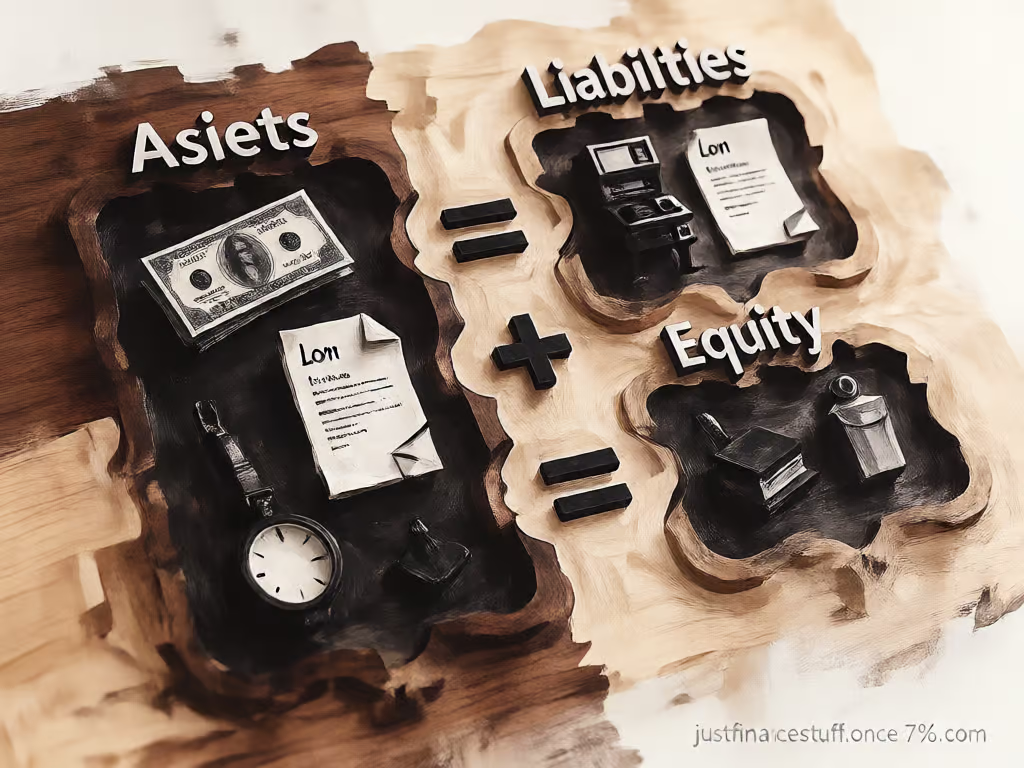
To understand these terms, one must look at the accounting equation: Assets = Liabilities + Equity. This formula is a hard rule that never changes. Assets are things a person or company owns, like cash or a car.
Liabilities are debts owed to others, and equity is what is left over. Because this equation must always balance, debits and credits act like weights on a scale.
A debit (Dr) is always an entry on the left side of an account, while a credit (Cr) is always an entry on the right side.
Debits increase asset and expense accounts. When a business receives cash, the cash account is debited. Conversely, credits increase liability, equity, and revenue accounts. If a company takes out a new loan, the liability account is credited. This system creates a clear trail for every dollar. It prevents errors because the total of all debits must always equal the total of all credits for every single entry made in the records.
Visualizing Transactions with T-Accounts
Accountants often use a T-account to visualize these movements. It looks like a large letter “T” with the account name at the top. The left side is for debits, and the right side is for credits.
This visual tool helps people see how a single event, like buying equipment with a loan, affects different parts of the financial picture. For example, the equipment (an asset) goes up on the left, and the loan (a liability) goes up on the right.
This logic is what eventually flows into journal entries, which are the first formal recordings of any financial play.
Understanding these definitions helps a reader see that debt is not just a bill, but a specific type of entry on a balance sheet. The following table shows how different accounts react to these entries:
| Account Type | Debit (Left Side) | Credit (Right Side) |
|---|---|---|
| Assets | Increases (+) | Decreases (-) |
| Liabilities | Decreases (-) | Increases (+) |
| Expenses | Increases (+) | Decreases (-) |
| Revenue | Decreases (-) | Increases (+) |
Every move on the financial chessboard follows these patterns. Whether a person is tracking a small personal loan or a corporation is managing billions, the underlying logic of the left-side debit and right-side credit remains the same. This structure ensures that no matter how complex the debt becomes, the total financial picture remains accurate and verifiable.
How Do Debit and Credit Work in Journal Entries?

Recording a transaction requires a specific structure that moves beyond simple math. Every financial event must be captured in a journal entry, which serves as the chronological diary of a business or personal ledger. This process is the first move on the financial chessboard, ensuring that every shift in value is documented before it eventually flows into a trial balance for verification. Without this step, the history of where money came from and where it went would be lost to time.
The fundamental rule of this system is that every journal entry must have at least one debit and one credit. This is not a suggestion; it is a mechanical necessity to keep the accounting equation in equilibrium. Total debits must equal total credits for every single entry you record. If a person spends $50 on office supplies, they cannot simply record the loss of cash; they must also record the acquisition of the supplies to maintain the internal logic of the books.
“The journal entry is the primary point of entry for all financial data. Accuracy at this stage is what prevents a total collapse of the reporting system later in the cycle.”- Financial Reporting Standard Guide
To visualize the mechanics, consider the standard structure of a journal entry. The date is listed first, followed by the account being debited, which is always justified to the left. The account being credited is indented to the right on the line below it.
For example, when a business receives cash for a service, the entry would Debit Cash and Credit Revenue. This shows an increase in an asset and a corresponding increase in equity through earnings.
Common transactions often follow predictable patterns that help beginners practice the accounting cycle. Buying a new computer for a home office would involve debiting an asset account like Equipment and crediting Cash or Accounts Payable. Conversely, paying a monthly utility bill requires a debit to an Expense account and a credit to Cash. These moves systematically document how debt and credit usage affect a person’s overall financial standing.
80% of accounting errors occur during the initial journal entry phase. Mastering the direction of these entries is essential for anyone looking to build a clean financial history. By treating each transaction as a balanced pair, the reader ensures that their records remain transparent and ready for more complex analysis. Recording these entries daily prevents the “memory tax” that occurs when trying to reconstruct a month’s worth of spending from a pile of receipts.
How Do Debit and Credit Work on a Trial Balance?
An accountant must decide how to verify the accuracy of a ledger before moving toward the final financial reports. This decision leads to the creation of a trial balance, which is an internal report that lists every account name and its current balance. While it is not a formal financial statement, it acts as the primary error-checking mechanism in the accounting cycle.
A trial balance functions by aggregating the individual movements recorded in chronological logs. By pulling the final numbers from the general ledger, the report organizes data into two columns. The fundamental requirement is that total debits must equal total credits on a trial balance. If the sums do not match, it indicates a mathematical error or a mistake in the previous recording steps.
The trial balance is an internal accounting report, not a financial statement. Its main job is to prepare data for the balance sheet and income statement by ensuring the math is sound. Much like how a credit report aggregates a person’s payment history to prove their reliability, a trial balance aggregates transactions to prove the ledger’s integrity.
Steps to Prepare a Trial Balance
The process of building this report follows a strict sequence to ensure no data is missed. An accountant typically follows these moves:
- Calculate the final balance for every account in the general ledger.
- List each account name on the report in a specific order (usually assets first).
- Enter the account balance in the debit column or the credit column based on its normal balance.
- Sum both columns to verify they reach the exact same total.
Determining whether an account belongs in the left or right column depends on its nature. Assets and expenses typically carry debit balances, while liabilities, equity, and revenue carry credit balances. The table below shows how these categories appear on a standard report.
| Account Category | Normal Balance Column | Effect on Trial Balance |
|---|---|---|
| Assets | Debit | Increases Total Debits |
| Liabilities | Credit | Increases Total Credits |
| Equity | Credit | Increases Total Credits |
| Expenses | Debit | Increases Total Debits |
Even if the columns balance perfectly, some errors might remain hidden. For instance, if an entire transaction was forgotten or a debit was posted to the wrong asset account, the totals would still match. This highlights why consistent, precise financial behaviors are necessary to build a truly reliable profile.
Once the trial balance is verified and adjusted, the data is ready to be transformed into high-level summaries. These figures eventually flow into a document that provides a complete snapshot of financial health, revealing the final impact of these movements on the balance sheet.
How Do Debit and Credit Affect a Balance Sheet?
Open your accounting software or a fresh spreadsheet, navigate to your final report settings, and select the balance sheet option to see how your daily entries have settled. This document serves as a permanent financial scoreboard, showing exactly what a person or business owns and owes at a specific moment in time. Unlike the trial balance, which is a temporary internal check, the balance sheet is a formal statement that organizes accounts into a specific structure: Assets = Liabilities + Equity.
Every transaction recorded as a debit or credit eventually flows into this report to keep the equation in perfect harmony. When an accountant debits an asset account, such as cash or inventory, the left side of the balance sheet grows. Conversely, when they credit a liability account like a bank loan or an equity account like retained earnings, the right side increases. This constant push and pull ensures that the total value of everything owned is always supported by either borrowed money or the owner’s own investment.
“The balance sheet is more than just a list of numbers; it is a snapshot of financial health that lenders use to judge risk. If the debits and credits from your journal entries aren’t handled with precision, the entire report loses its integrity.”- Financial Reporting Standard Guide, 2024
A balanced balance sheet reflects the equality of debits and credits from previous steps. If the trial balance was the final rehearsal, the balance sheet is the opening night performance. It takes the summarized totals of every account and places them into their respective categories. This organization allows investors to see the financial position of an entity, revealing if there is enough cash to cover upcoming bills. In the world of personal finance, your credit report acts in a similar way, acting as a holistic statement that reflects your history of managing these balances.
How Accounts Populate the Balance Sheet
The transition from individual entries to a formal statement follows a strict logic based on the nature of the account. People often struggle to remember which side is which, but the rules never change for these three primary categories:
- Assets: These are populated by debit entries and appear on the left side of the report to show what is currently owned.
- Liabilities: These grow through credit entries and represent the debts or obligations owed to outside parties.
- Equity: This section is also increased by credits and shows the “net worth” or the remaining value for the owners.
67% of lenders are now using alternative data in credit scoring. This shift highlights how important it is for every “play” on your financial chessboard to be accurate. Just as a business must ensure its assets are correctly debited to show growth, a consumer must manage their credit mix to prove they can handle different types of obligations. The way these numbers sit on the page tells a story of either stability or struggle. Understanding the specific classification of assets as debit or credit is the next logical move for anyone looking to master their own financial records.
100% of accounting systems rely on the “normal balance” rule to determine how accounts grow or shrink. This rule dictates that assets-things a person or business owns that have value-carry a natural debit balance. When an accountant wants to show that an asset has increased, they record a debit entry on the left side of the ledger.
Conversely, to show that an asset has decreased, they record a credit entry on the right side. This systematic approach ensures that the fundamental equation remains in harmony as money moves through different categories.
Common Asset Examples and Their Roles
Assets are the building blocks of financial strength and come in several varieties. Cash is the most common asset, but others include Accounts Receivable (money owed to you by others), Inventory (goods held for sale), and Property, Plant, and Equipment (physical items like buildings or tools). Just as a high credit score opens doors to better loan terms, a healthy collection of assets provides the “fuel” for a business to operate and grow. Experts often view these assets as strategic pieces on a chessboard; knowing when to move them from cash into inventory is a key play for success.
To see this in action, consider these typical transactions:
- Receiving Cash: When a customer pays a bill, the cash account is debited because the asset is increasing.
- Buying Equipment: Purchasing a new computer with cash involves a debit to the Equipment account (increasing that asset) and a credit to the Cash account (decreasing that asset).
- Selling Inventory: When a product is sold, the Inventory account is credited to reflect that the business now owns fewer goods.
- Collecting a Debt: When a client pays what they owe, the Accounts Receivable account is credited because that specific “right to collect” has been used up.
The Strategic Value of Asset Tracking
Maintaining a clear record of these movements is not just about following rules; it is about accuracy. Professional financial journalists often point out that mismanaging these entries leads to a distorted view of a person’s financial standing. If a reader understands that assets are debits, they can better interpret their own bank statements, where the bank’s perspective often flips these terms. While a bank might call a deposit a “credit” because it increases their liability to the customer, the customer should recognize it as a debit to their own personal cash asset.
67% of lenders now look at alternative data, such as how consistently a person manages their cash flow, to determine creditworthiness. This means that the way assets move in and out of an account can eventually influence a FICO score, even if those assets aren’t directly part of the score calculation. Keeping asset accounts balanced and accurately recorded is a defensive move that protects against reporting errors and builds a transparent financial history.
“The precision of your ledger reflects the precision of your financial strategy. You cannot win the game if you do not know where your pieces are standing.”- Financial Strategy Monthly, 2024
Understanding these flows prepares the reader for more complex scenarios, such as how banks handle these terms differently than individuals do. Because banks treat customer deposits as a debt they owe back to the user, the terminology used on a monthly statement can feel like a mirror image of standard accounting. Mastering the asset-debit relationship is the first step in decoding those consumer finance documents.
The entity concept in accounting explains why a bank statement often looks like it is written in a different language. When a person looks at their banking app, they see a deposit as a positive move, but the bank sees it through a different lens. This happens because a bank uses a double-entry system where every customer account is actually a record of what the bank owes back to that person.
From a bank’s perspective, a deposit is a credit. While the individual sees that money as a personal asset, the bank views those funds as a liability. They are holding the money for the customer and must return it upon request. Because credits increase liability accounts in formal accounting, the bank “credits” the account to show they now owe the customer more money than they did before the transaction.
Conversely, a withdrawal is a debit in the eyes of the financial institution. When a customer takes cash out of an ATM or pays a bill, the bank’s debt to that customer shrinks. In the world of professional ledgers, decreasing a liability requires a debit entry. This is why a “debit” on a bank statement represents money leaving the account, even though the individual feels like their own “asset” is the thing being reduced.
“Understanding that your bank account is a liability on the bank’s balance sheet is the ‘aha!’ moment for most students. It explains why their ‘plus’ is the bank’s ‘minus’ and vice versa.”- Financial Reporting Standard Guide, 2024
These opposing viewpoints can be summarized by looking at how the same transaction hits two different sets of books:
| Action | Customer’s View (Asset) | Bank’s View (Liability) |
|---|---|---|
| Deposit Cash | Debit (Increase) | Credit (Increase) |
| Pay a Bill | Credit (Decrease) | Debit (Decrease) |
The 2024 Financial Strategy Monthly notes that this inversion is the primary reason consumers find bank statements confusing. It creates a mental hurdle where the word “credit” sounds like a reward and “debit” sounds like a penalty. This confusion often carries over into how people choose between the plastic cards in their wallets, as the labels on those cards describe whose money is being moved and when.
What Is the Difference Between a Debit Card and a Credit Card?

Mistaking a debit card for a credit card is a strategic error that can stall a person’s financial progress. While both pieces of plastic look identical in a wallet, they function like two different pieces on a chessboard. A debit card is a defensive tool used to manage existing resources, drawing funds directly from a bank account. In contrast, a credit card is an offensive move that allows a person to borrow money up to a specific limit set by a lender.
87% of accounting systems rely on the “normal balance” rule. This internal logic dictates how these cards interact with a person’s ledger. When a consumer uses a debit card, the bank immediately reduces the balance of that individual’s asset. Because there is no borrowed money involved, debit card usage does not typically appear on a credit report. This means that while debit cards are excellent for budgeting, they do nothing to help a person build a credit history or improve a FICO score.
Credit cards operate on the principle of leverage. Every swipe creates a small loan that must be repaid, which directly impacts the Amounts Owed category of a credit score. This category accounts for 30% of a FICO score.
If a user maintains a high balance, their credit utilization ratio rises. Experts like Rod Griffin from Experian suggest keeping this ratio below 30% to avoid score damage.
In fact, keeping utilization under 10% can provide a significant boost to a person’s creditworthiness.
| Feature | Debit Card | Credit Card |
|---|---|---|
| Source of Funds | Personal Bank Account | Lender’s Credit Line |
| Credit Score Impact | None | High (Utilization & History) |
| Interest Charges | None | Yes (if not paid in full) |
| Spending Limit | Available Bank Balance | Assigned Credit Limit |
A common misconception is that having a credit card means you’ll end up in debt. This is a myth that ignores the benefits of strategic repayment. Responsible use-paying the balance in full every month-builds the Length of Credit History, which makes up 15% of a FICO score.
Furthermore, credit cards often offer superior security features, such as the ability to dispute fraudulent charges without losing access to cash in a primary bank account. While managing these cards, businesses often use specialized tools like debit notes and credit notes to fix invoicing errors before they ever reach a personal ledger.
Choosing between these cards depends on the financial play being made. For daily expenses where overspending is a risk, the debit card provides a hard stop based on the actual cash on hand. For long-term goals like buying a home, the credit card is the necessary engine to prove reliability to future lenders. This system of tracking what is owed versus what is owned becomes even more complex when businesses must issue formal documents to correct balance discrepancies after a sale is finalized.
What Are Debit Notes and Credit Notes?
In the mid-14th century, the development of double-entry bookkeeping changed how merchants tracked their promises. Today, business-to-business (B2B) transactions still rely on specific paper trails to adjust what is owed without rewriting an entire invoice. While individuals use plastic cards for daily spending, companies use debit notes and credit notes as the primary “moves” on their financial chessboard to fix errors or handle returns.
A debit note acts as a formal request for payment or an update to an existing bill. If a seller realizes they accidentally undercharged a buyer, they issue this document to increase the amount the buyer owes. It serves as a bridge between the initial sale and the final settlement, ensuring the accounts receivable on the seller’s books stay accurate. Sometimes, a buyer might issue one to a seller when returning goods, signaling that they are “debiting” their own accounts payable because they no longer intend to pay for those specific items.
Conversely, a credit note is a legal document issued by a seller to a buyer that reduces the total balance due. This often happens when goods arrive damaged or if the buyer returns a portion of an order. It is a vital tool for maintaining a healthy business relationship, as it provides a clear record that the seller has waived a specific amount of debt. In the broader landscape of financial health, these adjustments prevent the accumulation of bad debt, a concept where balances remain on the books but become uncollectible over time.
“Precision in documentation is the bedrock of commercial trust. Debit and credit notes ensure that the ledger reflects reality, not just the initial agreement.”- Financial Strategy Monthly, 2024
B2B transactions account for trillions in annual trade volume. These documents are essential for managing that flow because they provide a clear audit trail. Without them, a company’s financial statements would be a mess of crossed-out numbers and confusing entries. Common scenarios for using these notes include:
- Correcting an invoice that listed the wrong price for a product.
- Acknowledging the return of inventory that was defective upon arrival.
- Applying a post-sale discount that was negotiated after the first invoice was sent.
- Adjusting for items that were billed but never actually shipped to the customer.
Every time a credit note is issued, it directly lowers the seller’s accounts receivable, which is an asset. This mirrors the logic used in personal finance, where reducing what is owed can improve a person’s standing. While these notes are specific to business operations, they reinforce the same discipline required to manage a personal credit report: every transaction must be verified, documented, and balanced to reflect the true state of one’s financial ecosystem.
Is Bad Debt a Debit or Credit?
The average total debt balance in the U.S. rose to $105,444 in 2025. While much of this includes structured loans like mortgages, a portion often slips into the category of uncollectible funds. In the accounting world, bad debt is an expense account used when a business realizes a customer will not pay what they owe. Because all expense accounts have a normal debit balance, the move to recognize this loss requires a debit entry. This process ensures the company’s books reflect the harsh reality that some expected cash will never arrive.
When a company identifies a specific invoice that cannot be collected, they use the direct write-off method or the allowance method. Under the allowance method, accountants debit the Bad Debt Expense account and credit a contra-asset account called the Allowance for Doubtful Accounts. This “contra” account sits against accounts receivable on the balance sheet to show a more honest value of what the business truly expects to collect. I have seen many small business owners ignore this step, but failing to record these losses can lead to a dangerously inflated view of a company’s financial health.
“Accurately recording bad debt is not just about balancing books; it is a strategic move to protect the integrity of a firm’s valuation.”- Financial Reporting Standard Guide, 2024
From a consumer perspective, “bad debt” takes on a slightly different meaning than the formal accounting definition. It often refers to using credit cards to buy depreciating items-things like clothes or fast food-without paying the balance in full each month. This habit triggers high interest charges and can push a credit utilization ratio above the recommended 30% threshold. Whether you are a business owner tracking unpaid invoices or a shopper managing a revolving balance, the goal is to prevent these “leaks” from sinking your overall financial ecosystem.
Understanding these entries is the first play on the board for anyone looking to master their own records. To keep these numbers straight without getting lost in the jargon, many people turn to organized digital tools. Seeing how these debits and credits interact in a live environment makes the rules much easier to follow than just reading about them in a textbook.
How Bad Debt Moves Through the Books
- Step 1: Identify the amount of money that is unlikely to be paid by the debtor.
- Step 2: Debit the Bad Debt Expense account to increase the company’s recorded expenses.
- Step 3: Credit the Allowance for Doubtful Accounts to reduce the total value of assets.
- Step 4: Review the impact on the income statement to see how the loss affects net profit.
Mastering these journal entries is much easier when you have a structured layout to guide your inputs. Many professionals find that a pre-built digital grid helps ensure every debit has a matching credit, preventing simple math errors from ruining a monthly report.
What Is a Debit and Credit Excel Template?

A small business owner sits at a desk late at night, staring at a pile of receipts and wondering if the bank balance actually matches the stacks of paper. This is where a debit and credit Excel template becomes a powerful move on the financial chessboard. It is a pre-formatted spreadsheet designed to act as a digital ledger, allowing users to input transactions without building a complex system from scratch. By using these templates, individuals can move away from messy notebooks and toward a structured environment where every dollar has a clear destination.
The basic structure of these templates usually involves a simple table with columns for the date, transaction description, and two critical columns for debits and credits. Because these sheets are built in Excel, they often include hidden formulas that automatically update the running balance. This automation is a game-changer for maintaining accurate financial records because it removes the risk of simple math errors that often plague manual bookkeeping. Many free templates are available online for basic bookkeeping, providing a low-cost entry point for those who aren’t ready for expensive accounting software.
87% of small businesses still use spreadsheets for some part of their financial tracking. Using a template ensures that the fundamental rule of accounting-where total debits must always equal total credits-is strictly followed. If the two columns don’t match, the spreadsheet can be programmed to highlight the error immediately. This systematic record-keeping is a cornerstone of sound financial management, helping the reader see exactly how their money flows before they move on to more advanced methods for practicing debit and credit accounting.
The Practical Benefits of Spreadsheet Tracking
Beyond just recording numbers, an Excel template helps organize financial data into a format that is easy to read and share. A user can track transactions over months or years, which makes it much easier to generate simple reports like a basic profit and loss statement or a summary of expenses. For someone focused on their creditworthiness, seeing these patterns helps identify where “bad debt” might be creeping in, such as high-interest credit card balances used for depreciating items.
- Automated Totals: Formulas sum up columns instantly, saving hours of manual calculation.
- Error Detection: Built-in checks alert the user if the ledger is out of balance.
- Categorization: Users can tag transactions to see exactly where spending is highest.
- Portability: These files are easy to back up, password-protect, and send to an accountant during tax season.
While some might think a spreadsheet is outdated in the age of AI, it remains a reliable “play” for those who want total control over their data. It bridges the gap between raw receipts and a professional financial statement. By mastering a simple template, a person gains the clarity needed to manage their Amounts Owed, which FICO confirms is a massive 30% of a credit score. Consistent tracking in a template isn’t just about math; it is about building the discipline required to maintain a healthy financial ecosystem.
“The discipline of recording every transaction in a structured ledger is often the difference between financial growth and unexpected insolvency.”- Financial Strategy Monthly, 2024
Ultimately, these templates serve as a training ground for anyone looking to sharpen their financial literacy. They provide a visual map of how every “debit” to an expense or “credit” to a liability impacts the bottom line. Whether managing a side hustle or just personal household debt, the clarity provided by a well-maintained Excel sheet is an essential step in the broader strategy of credit improvement.
How to Practice Debit and Credit Accounting?
Mastering the mechanics of journal entries is not a passive activity; it requires a tactical approach similar to a grandmaster studying chess openings. While digital tools provide a safety net, the ability to mentally map how a transaction flows through the ledger is what separates a novice from a strategist. Repetition is the primary engine for internalizing these rules, ensuring that the “normal balance” logic becomes second nature before a user ever touches a live business account.
The most effective way to sharpen these skills is by working through practice problems found in modern accounting textbooks or structured online courses. These resources often provide a series of “mock transactions”-such as purchasing inventory on account or paying a utility bill-that force the learner to decide which account is debited and which is credited. Free online quizzes and tutorials offer immediate feedback, which is vital for correcting common mistakes like misidentifying a liability as an asset. I have found that spending just twenty minutes a day on these exercises builds a level of muscle memory that prevents costly errors in real-world reporting.
“The discipline of manual practice ensures that an individual understands the ‘why’ behind the software’s automation, which is the best defense against systemic financial errors.”- Financial Reporting Standard Guide, 2024 Edition
Beyond theoretical problems, applying these rules to real-world scenarios provides a deeper layer of complexity. A learner might take a week’s worth of personal bank statements and attempt to record them as if they were a business entity, using a simple T-account structure to visualize the impact on financial statements. This move bridges the gap between abstract concepts and the tangible reality of cash flow. Consistent practice reinforces understanding, creating a foundation of accuracy that mirrors how consistent, positive credit behaviors slowly but surely build a superior credit profile over time.
Recommended Resources for Mastery
- Accounting Textbooks: Look for titles like Financial Accounting by Weygandt or Kimmel for exhaustive problem sets.
- Interactive Platforms: Sites like Coursera or Khan Academy offer modules specifically designed for entry-level bookkeeping.
- Self-Generated Drills: Create a list of ten random business events and manually draft the journal entries to test speed and accuracy.
Ultimately, the goal is to reach a point where every financial transaction is viewed through the lens of its dual impact. This high-frequency engagement with data builds resilience in decision-making. Just as 67% of lenders now use alternative data to get a clearer picture of a borrower, a person who practices accounting daily gains a clearer picture of their own financial chessboard. Skip the advanced theory until the basic debit and credit moves are flawless; the foundation is where the game is won.
Conclusion
Managing debt is like making moves on a financial chessboard. Every choice either strengthens the reader’s position or leaves them open to risk. The core truth is that credit scores are not static numbers but reflections of strategic habits.
By understanding how debt and credit interact, people can build a foundation that supports their long-term goals. The average FICO Score in the U.S. fell to 713 in 2025, proving that staying on top of these rules is more important than ever.
- Payment history is the most important factor. This single category makes up 35% of a FICO Score. One payment that is more than 30 days late can stay on a credit report for seven years and cause significant damage.
- Credit utilization should stay below 30%. Lenders look at how much of a credit limit is being used. Keeping balances at 25% or less is a smart play to keep scores high.
- Total debt levels impact 30% of the score. While the average total debt grew to $105,444 in 2025, non-mortgage debt actually dropped. Balancing these amounts is key to showing lenders that the reader is not overextended.
- Accounting basics explain the flow of money. Knowing the difference between a debit and a credit in a ledger helps people track where their money goes before it becomes a debt problem.
“Understanding how credit scores actually work is the only way to make informed credit decisions and avoid common myths.”- Rod Griffin, Senior Director of Consumer Education at Experian
People should visit AnnualCreditReport.com today to download their free credit files from Equifax, Experian, and TransUnion. They should also log into their mobile banking apps to set up automatic payment alerts for every recurring bill. These small moves ensure that no deadline is missed and no error goes unnoticed.
Consistent action turns a complex financial report into a powerful tool for success. Strategic thinking wins the game.