Why saving on a low income is possible
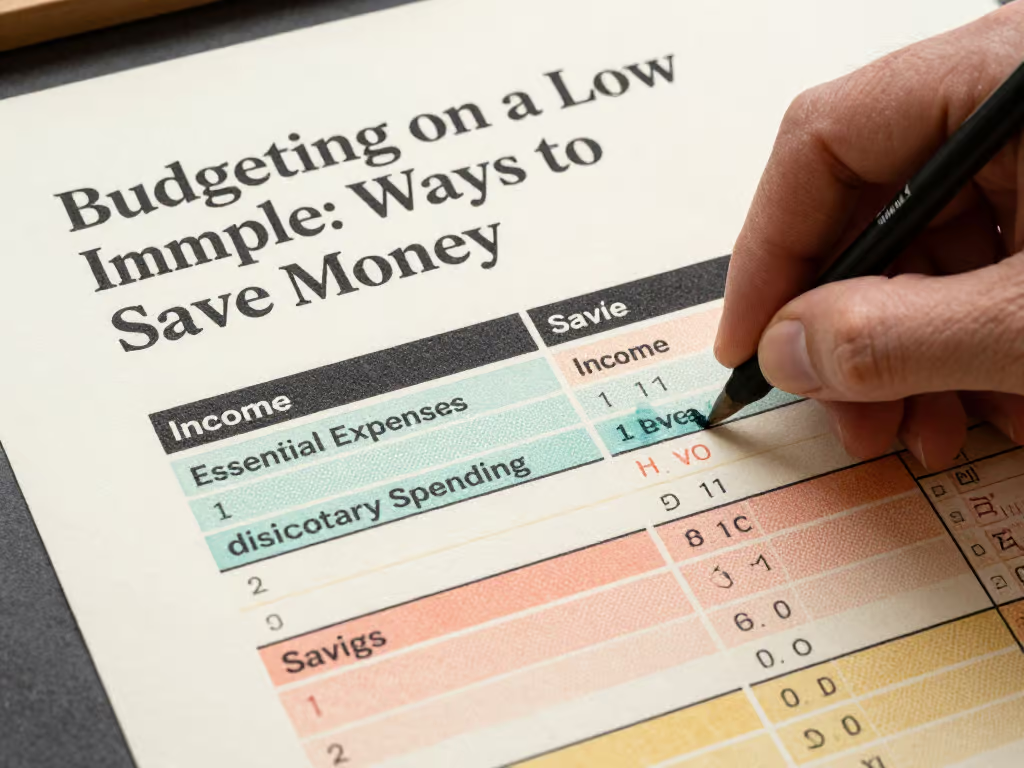
Saving money on a low income isn’t a myth. Small, steady changes add up over time, and a clear plan makes it doable. Start with simple steps like tracking every dollar and naming a regular savings goal, even if the amount is modest.
Key idea: treat money as a tool, not a dream. By organizing your income and expenses, you spot where you can cut waste and create room for emergency savings and goals.

What this covers
This guide walks you through practical, realistic steps to save money on a tight budget:
- Track your income and expenses using budgeting tips to know where money goes and boost your income.
- Build a budget based on needs, wants, and savings
- Automate savings so you consistently set aside money
- Cut everyday costs with simple substitutions to better manage your budget money.
Throughout, you’ll see concrete tips, realistic figures, and easy actions you can take today to stay on track with your financial goals and create a budget.
Track your income and expenses
How to record all sources of income
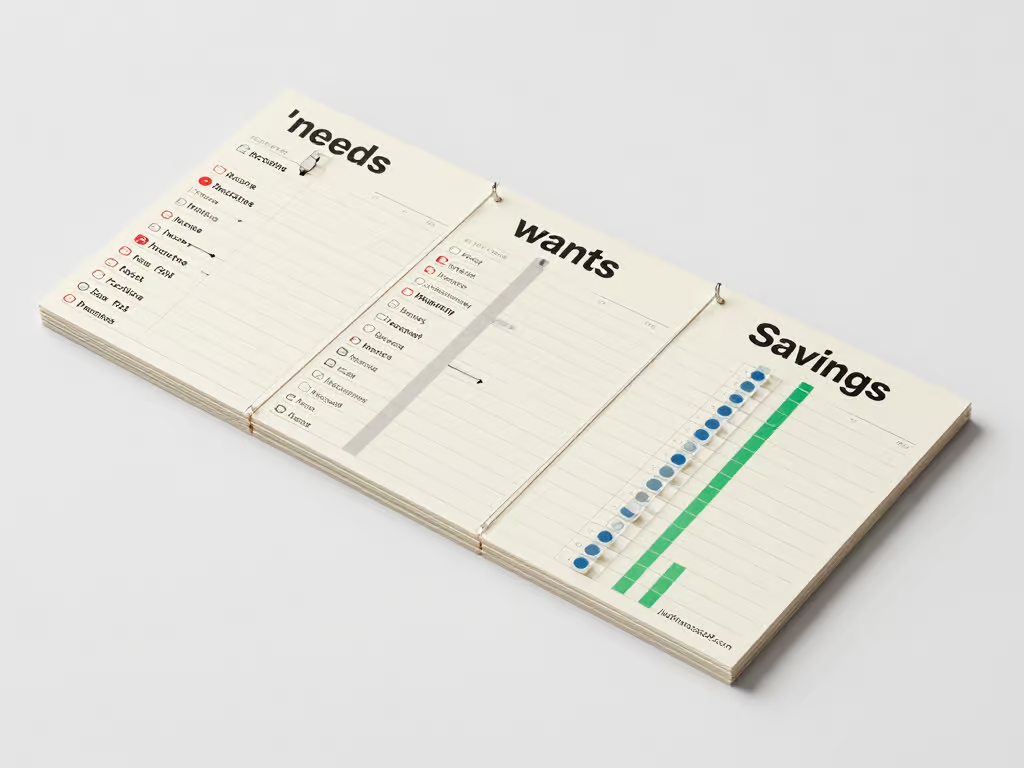
List every source of money you receive each month. This includes official pay, freelance work, benefits, child support, and irregular inflows like gifts or side jobs to calculate your total monthly income. Knowing your total income helps you see what you truly have to work with in making a budget.
Tips to capture income accurately:
- Record each source with the expected amount and when it arrives, for example salary on the 1st and freelance payment on the 15th.
- Keep irregular income separate so you don’t misjudge monthly cash flow, such as a quarterly bonus or a holiday gift.
- Review bank deposits or pay slips weekly to confirm numbers and catch mistakes early.
Methods for tracking expenses (apps, spreadsheets, paper)
Choose one method you can stick with for at least a month. Consistency matters more than having the flashiest tool.
- Apps: Pick a simple expense-tracking app that labels transactions automatically and shows a three-month trend.
- Spreadsheets: Create columns for date, category, amount, and notes to track your debt payments in your budget. Update daily to keep accuracy, then total costs monthly.
- Paper: Use a small notebook or receipts; tally totals weekly and compare to your bank statements.
Whichever method you pick, aim to categorize every expense as
- Needs (rent, utilities, groceries)
- Wants (dining out, entertainment)
- Savings or debt payments
Build a practical budget based on needs, wants, and savings
Categorize essentials, discretionary spending, and savings
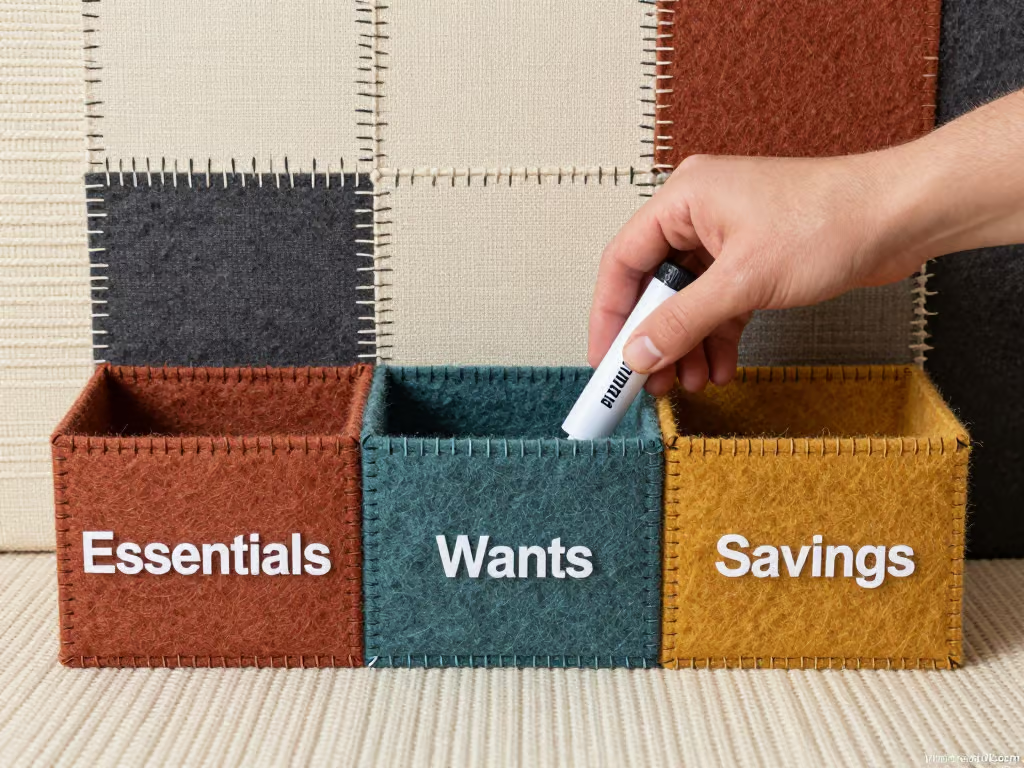
Start with three clear buckets: essentials, discretionary spending, and savings. Essentials cover housing, utilities, groceries, and transportation. Discretionary spending includes dining out, entertainment, and non essential shopping. Savings are funds you set aside for emergencies or future goals.
Keep this threefold view simple so you can see where every dollar fits. If you cut a small daily habit, you gain more for savings or debt payoff over the month. A few tiny changes add up quickly on a tight budget.
- Essentials first: rent or mortgage, utilities, food, and reliable transport, especially when living on a limited income.
- Wants second: limit non-essential purchases to a small, fixed amount each week within your budget categories.
- Savings third: treat it like a bill you must pay each month, and automate it.
Applying the 50/30/20 guideline in a low-income context
The 50/30/20 rule splits after-tax income into needs, wants, and savings, helping you create a budget that works for you. On a tight budget, the shares tilt toward needs while still carving out savings where possible.
- 50% needs: housing, utilities, groceries, health, and transport; consider areas where you can cut to stay within this limit.
- 30% wants: small pleasures, affordable entertainment, and non essential items within a set limit.
- 20% savings: emergency fund, debt payoff, or retirement contributions when feasible to ensure you are saving for retirement.
If 50/30/20 feels tight, try 60/20/20 or 70/20/10 for needs, savings, and wants respectively, then adjust your budget as income changes. Remember to treat savings as a fixed monthly expense and automate it to stay consistent. For example, set up an automatic transfer of $50, $100 if you can, right after payday.
Automate your savings

Setting up automatic transfers
Automating savings helps you turn a goal into a habit you won’t have to think about. Set up a regular transfer right after each payday so money moves before you see it. For example, if you’re paid on the 25th, schedule transfers for the 26th each month.
Tips to get it right:
- Choose a fixed amount you can comfortably set aside each month. Start with $50 if you’re new to saving, then adjust as needed.
- Schedule transfers on the same day as income deposits to keep consistency. If your bank supports it, set two transfers: one on payday and one a week later to catch irregular cash flow.
- Split transfers if you want multiple targets, such as a small emergency pot and a larger sinking fund. Example splits: $30 to emergency, $20 to sinking fund each month.
Choosing savings destinations (emergency fund, sinking funds)
Pick destinations that fit your needs and feel achievable. Two common options are emergency funds and sinking funds. Real-world example: you might keep $1,000 in an emergency fund for sudden repairs and $200 monthly for upcoming expenses like birthday gifts or annual insurance, adjusting your budget as necessary.
- Building an emergency fund is essential for personal finance stability.: a dedicated pool for unexpected expenses like car repairs or sudden illness. Target at least 3 months of essential living costs when possible to ensure you save each month.
- Sinking funds: smaller pools for regular, upcoming costs like car maintenance, birthday gifts, or annual insurance payments. Break large costs into monthly chunks to avoid one big hit.
How to choose amounts:
- Start with a modest goal, such as $500 for emergencies and $50, $100 each month for a sinking fund. If you have high irregular expenses, raise emergency targets to $1,000 or more.
- As income grows or debt decreases, gradually raise these targets without dipping into them for everyday spending. Use a calendar reminder to review your budget plan after 90 days.
- Review balances quarterly and adjust automatic transfers to reflect changes in your financial situation. If a car repair fund hits $900, reallocate extra to debt payoff or a new sinking fund.
Cut everyday expenses with easy substitutions
Meal planning and simple cooking strategies
Planning meals upfront helps you cut waste and lower grocery bills, allowing you to stay within your budget categories. Start with a basic weekly plan and build from there, then test it for two weeks to see what actually works.
- Choose 5 affordable staples you can rotate, like beans, rice, eggs, oats, and seasonal vegetables. For example, swap between black beans and lentils to keep variety without raising cost.
- Batch cook to save on groceries and make meal prep easier. once or twice a week. Make a large pot of rice, a skillet of roasted veggies, and a protein like chicken thighs you can repurpose in different dinners to save on groceries.
- Use leftovers creatively to avoid edible scraps turning into waste. Turn yesterday’s roasted carrots into a quick soup, or yesterday’s steak into fajita bowls.
Simple cooking habits add up. If you cook at home 3 extra meals per week, a family of four can save about $40, $60 monthly on groceries, depending on local prices.
Smart grocery shopping and couponing basics
Smart shopping means buying what you actually need and avoiding impulse buys. Start by tracking your typical weekly spend for two weeks to spot waste.
- Shop with a written list Create a grocery list based on your meal plan and stick to it to manage your money better. A list tied to your plan reduces spontaneous buys by up to 60% in some stores.
- Compare unit prices and buy store brands for core items to save each week. For example, store-brand canned tomatoes can be 20, 40% cheaper per ounce than name brands.
- Look for bulk options for non per perishables and stock up only when it fits your plan and space. Buy dry beans, oats, or rice in bulk if you’ll use them within a few months.
Couponing helps only if it fits your plan. Don’t buy because a coupon exists if the item isn’t on your list or you can’t use it within your planned meals.
Reduce housing and utility costs
Lowering housing and utility costs can free up cash each month. Small changes add up, and they don’t have to disrupt your life. Here are practical ways to make housing cheaper and energy bills smaller without big sacrifices.
Ways to lower rent or housing costs
- Negotiate with your landlord for a modest rent reduction or a longer lease with a lower monthly rate. Bring data from similar units and offer a trial period to prove you’ll stay within your budget money.
- Explore cheaper housing options in the same area, such as a smaller unit, a roommate arrangement, or another building with lower rent to increase your income level. Compute total monthly costs, including utilities and parking, to create a budget that allocates funds effectively.
- If you own, consider turning part of a larger space into a smaller, more efficient living area to cut utilities and rent. For example, convert a 1,000 sq ft spare room into a studio with one thermostat and shared bathroom, then rent the rest.
- Check for rental assistance programs or city subsidies in your area and apply if you qualify to free up extra cash for savings. Track deadlines and required documents so you don’t miss out.
Energy-saving habits to cut utility bills
- Set programmable thermostats to cooler temperatures when you’re away or asleep. For example, drop from 72°F to 65°F during the day to trim heating and cooling costs.
- Seal drafts around doors and windows with weatherstripping or caulk to keep heat in winter and out in summer. Inspect the attic hatch and outlets for leaks and seal them.
- Run full laundry loads and use cold water when possible to reduce washing costs. Air-dry towels and sheets to save more energy.
- Unplug rarely used devices and use power strips to cut phantom energy draw and save each month. Schedule standby power off for TVs and game consoles after 11 pm where possible.
| Strategy | Typical monthly impact |
|---|---|
| Rent negotiation or cheaper housing | Varies by market; potential cut of 5, 15% with a solid case |
| Programmable thermostat and drafts sealed | 5, 15% on heating and cooling when used consistently |
| Full laundry loads and cold water | Small but steady savings over months; 1, 3% of bill per cycle |
Keep track of changes and adjust as you move. The goal is to free up room in your budget for essential needs and savings goals.
Lower transportation costs
Public transit, car sharing, and fuel-saving tips
Public transit Using budgeting apps can dramatically cut monthly transport expenses when you plan around schedules and fares. For example, in cities with a $60 monthly pass, you can save compared with paying per ride or gym trips. Look for multi‑ride passes or reduced fare programs in your area to lower costs further.
- Check if you qualify for student, senior, or income-based discounts.
- Use real-time transit apps to avoid delays and unnecessary extra trips, saving both time and extra money. In one city, a driver swapped a 30‑minute detour for a 10‑minute direct line after checking live updates.
- Consider a monthly or weekly pass if you make several trips per week to save per‑ride costs.
Car sharing can be cheaper than owning a car if your trips are infrequent. Example: in a metro area, borrowing a car for a 6‑hour weekend trip costs about $40, $60 with fuel, versus a private car’s fixed costs. Compare costs for a monthly plan versus ownership for your usual routes to identify areas where you can cut.
- Estimate fuel, insurance, maintenance, and parking for an owned vehicle and compare to a car‑share credit or per‑hour rate.
- Choose off‑peak usage to reduce hourly rates where available, and combine trips to lower total hours rented.
Fuel‑saving tips can also be part of your budget plan. help you stretch every dollar at the pump. Small habits add up over time and work even in city driving:
- Maintain steady speeds and avoid rapid acceleration; a 10 mph slower drive can save 1, 2 mpg in urban driving.
- Plan routes to combine errands and avoid backtracking; map two errands on the same trip to cut total miles.
- Keep tires inflated to the recommended level; underinflated tires can lower mpg by about 0.3, 0.6 mpg per 1 psi drop in each tire.
Maintaining a vehicle on a tight budget
Regular maintenance prevents big repairs and keeps costs predictable. Create a simple maintenance calendar and set aside a small monthly amount. For example, setting aside $15, $25 monthly covers oil changes and brake checks over a year, preventing a surprise $200+ service.
- Address small issues early, before they become expensive fixes; a squeaky brake fixed early costs much less than a full pad replacement.
- Shop around for reputable, lower‑cost repair shops and ask for itemized estimates to compare against dealer rates.
- Use a dedicated maintenance fund to cover routine services like oil changes, tire rotations, and brake checks.
| Strategy | Typical monthly impact |
|---|---|
| Public transit passes | Lower than owning a car if used regularly; example saves $100, $180 monthly vs daily rides |
| Car sharing vs ownership | Variable; often lower for occasional use when factoring fuel and maintenance |
| Preventive maintenance fund | Prevents costly repairs and fits budget; $15, $25 monthly covers usual maintenance |
Manage debt and obligations
Prioritizing essentials while reducing interest
When money is tight, keep essential bills paid first and look for ways to reduce interest when possible. For example, paying rent or mortgage on time protects housing stability, while negotiating lower credit card rates can save hundreds over a year. This approach prevents late fees and keeps savings goals on track.
Practical steps to balance debt and essentials include creating a budget that allocates funds wisely.
- List all debts and minimum payments to see the full picture and include debt payments in your budget to avoid surprises.
- Prioritize high interest debts first, especially those with penalties for missed payments like credit cards and payday loans.
- Stay current on housing, utilities, and groceries to maintain stability while you negotiate terms or set up repayment plans with creditors.
- Call lenders about hardship options and ask for temporarily reduced payments or lower interest, then compare total costs if you extend terms.
Using free or low-cost resources for debt help
Free or inexpensive help can prevent costly mistakes and help you understand where your money is going. Look for local nonprofits or community centers that offer guidance without a big price tag and ask about counselor credentials.
- Budget counseling services can help you craft a debt payoff plan that fits your cash flow and timeline, including a realistic payoff date and strategies to pay off debt.
- Credit counseling agencies often provide education on interest reduction and repayment strategies at low or no cost, plus practical negotiation scripts for creditors.
- Debt management plans may consolidate payments with reduced fees, but confirm the impact on your credit and monthly cash needs, and ask about any potential account closures.
- Watch for red flags like upfront fees, pressure to stop communicating with creditors, or promises of guaranteed fixes.
| Option | What it helps with |
|---|---|
| Free budget counseling | Clarifies priorities and creates a realistic repayment path with timelines |
| Low-cost debt help services | Educates on negotiating with creditors and avoiding scams, often includes practice scripts |
| Debt management plan | Streamlines payments and can lower overall interest, but check impact on credit and creditors |
FAQ
What is the $27.40 rule?
The $27.40 rule gives a simple starting target for tiny, steady savings. If you can set aside about $27 to $28 each week from your net pay, it can grow into a meaningful cushion over time. For example, saving $28 weekly becomes about $1,456 in a year and roughly $7,280 in five years. Start with an amount you won’t miss, then raise it as bills fall or income rises. Consider automating the transfer on payday so you don’t have to think about it. What is the 3-3-3 rule for savings?
The 3-3-3 rule encourages small, steady actions: save 3 percent of income, pay down 3 percent of debt, and push savings or investments 3 percent higher over time. On a $3,000 monthly income, that means $90 into savings, $90 toward debt, and an extra $90 toward future savings or investments as you can. Use it as a floor, not a ceiling, and increase as goals tighten. How to save $10,000 quickly using a side hustle to generate extra money?
To reach $10,000 faster, try these steps:
- Set a concrete monthly target and auto-transfer to savings the day after each paycheck.
- Review recurring expenses and cut one big cost, like a subscription you rarely use or a cheaper cell plan, as part of your budget plan.
- Put windfalls such as tax refunds or bonuses directly into the savings account and resist re-spending to manage your money effectively.
How can I save $100 a week?
To hit $100 weekly, consider a plan that combines a fixed weekly transfer with extra savings from cutting costs. Look for one or two big costs you can swap for cheaper options and log daily spending to stop leaks. If you save $100 every week for 50 weeks, you’ll have about $5,000.
Conclusion
Track your income and expenses to understand where your money really is available each month. By separating needs, wants, and savings, you can tailor a budget that fits a tight paycheck. Automating savings helps you build an emergency fund even when money is tight, allowing for extra cash to be set aside. Small substitutions and smarter shopping can cut daily costs without giving up essential needs.
Encouragement and next steps
Small, steady changes beat big, unlikely leaps. Pick one concrete action this week, such as recording every expense for 14 days using a budgeting app or setting up an automatic transfer to a savings account on payday. If it feels overwhelming, start with a single category to optimize and build from there. Consistency compounds, and your money management improves with each step.