Why Basic Investing for Newbies Matters
Investing lets your money grow over time and helps you reach goals like retirement, a home, or education. Starting early gives your money more time to compound, which is a key principle in the guide to investing. But investing carries risk, so build a solid foundation and a plan you can stick with.
What you will learn and how to use this guide
This guide offers practical steps for beginners who want to start investing. It covers various investment products:
- What to do before you invest, including emergency savings and paying down high interest debt
- Low-cost options that provide broad diversification are essential for a balanced financial plan.
- How to set a budget, choose investments, and pace your contributions is essential knowledge for anyone new to investing.
- Costs, taxes, and keeping a simple investment plan
Use this as a practical checklist. Keep your financial goals in view, start small, and increase your investing for retirement as you become more comfortable. Each point is grounded in real‑world steps you can take this month.
Assessing your financial foundation

Emergency fund importance and target amount
An emergency fund acts as a safety net that keeps you from dipping into investments or using high interest debt when surprises happen, reinforcing the importance of saving and investing. It gives you the steadiness to stick with a long-term financial plan. A practical target is three to six months of essential expenses, kept in an insured savings or money market account for easy access.
Managing high interest debt before investing
High interest debt can eat into any early investment gains, making it crucial to consider investing wisely. If you have credit card balances or other high rate loans, prioritizing repayment often makes sense before investing. Once you have a plan to reduce the burden, you can redirect monthly savings toward investments. This approach helps ensure your money works for you rather than paying a larger interest bill, emphasizing the need to invest wisely.
Setting realistic investment goals
Clear goals shape how much you save, where you invest, and how long you stay invested. Write down your top priorities, such as building an emergency fund, buying a home, or saving for retirement. Add a rough time frame and target amount for each goal. If a goal is near term, lean toward conservative choices; for longer horizons, broader diversification can help.
Understanding Investment basics
What investing is compared to saving
Investing means putting money to work with the expectation that it will grow over time. It involves some risk in exchange for potential higher returns. Saving, by contrast, keeps money ready for near term needs and typically offers lower risk but slower growth. The key idea is to balance safety with the chance to increase your purchasing power over years through a solid retirement plan.
Common investment options and how they work
Here are the main paths beginners often consider, with plain explanations:
- Stocks represent partial ownership in a company. They can rise or fall in value based on the company’s performance and the market, illustrating the risks associated with different types of investments.
- Mutual funds pool money from many investors to buy a diversified mix of stocks and bonds. They are managed by professionals and come in many types of investment flavors.
- Exchange-traded funds (ETFs) are like mutual funds but trade on stock exchanges throughout the day. They often have lower fees and can be bought in smaller pieces.
- Bonds are loans to governments or corporations. They generally provide steady income and lower risk than stocks, but with lower potential returns.
- Cash equivalents Include money market funds, savings accounts, and other types of investment. They offer quick access and safety, but minimal growth, which is important to consider when investing for retirement.
For new investors, starting with broad, low-cost options helps limit investment risk while you learn how markets move.
Starting with low-cost, diversified options

Index funds and exchange-traded funds explained
Index funds and ETFs are simple ways for beginners to gain broad market exposure without picking individual stocks. They track a market index or a basket of assets, so they move with the overall market rather than trying to beat it, which is a fundamental concept in investing for beginners.
- Index funds aim to match a specific index. They’re typically bought at the end of the trading day and often have very low ongoing costs.
- ETFs trade like stocks, so you can buy or sell throughout the day in small pieces. They usually have low fees and can cover many asset classes in one fund.
- Both types offer instant diversification by including many securities within a single diversified investment fund.
Why diversification reduces risk
Diversification spreads money across different types of investments, so a drop in one area doesn’t drag down your entire investment portfolio. It helps smooth out volatility and can improve the chances of steadier returns over time.
- Asset classes such as stocks, bonds, and cash equivalents behave differently at the same time.
- Broad funds combine many securities, so you’re not tied to the fate of a single company or sector in your investment portfolio.
- For beginners, diversification is a practical way to manage risk while you learn how markets move.
Choosing a simple investment plan

Setting an investment budget and automatic contributions
Start with a realistic monthly amount you can invest after essentials are covered. Small, regular contributions to your investment portfolio still compound over time, especially if the earlier you start. Automating this process helps you stay consistent without thinking about it each month.
- Choose a fixed monthly amount you can commit long term
- Set up automatic transfers to an investment account on payday to enhance your saving and investing strategy.
- Increase contributions when your income grows or expenses decrease
Determining risk tolerance and time horizon
Risk tolerance is how you feel about market ups and downs. Time horizon is how long you plan to invest before needing the money. Both guide which investments fit you best and help you avoid putting all your eggs in one basket.
- Short time horizon plus low risk: prefer conservative, diversified options
- Long time horizon and higher comfort with volatility: may accept broader diversification in their guide to investing.
- Adjust as life changes, not just as markets move
Building Your First Portfolio
Asset allocation basics for beginners
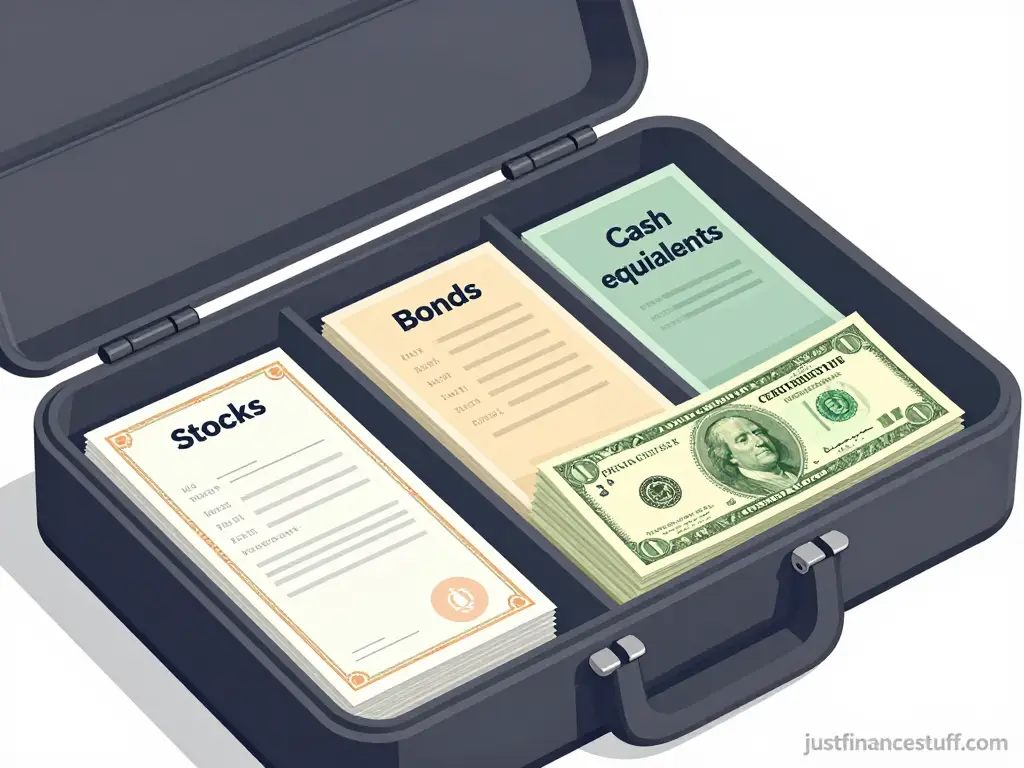
Your asset allocation decides how you spread money across different kinds of investments. For beginners, a simple mix helps manage risk while you learn the investing basics. A common starting point is combining stocks for growth with bonds for stability, plus a small cash-like slice for emergencies, ensuring a diversified investment.
- Stocks or stock funds for growth potential
- Bonds or bond funds for income and lower volatility
- Cash equivalents for liquidity and safety, essential for those new to investing.
Think in terms of a target mix that fits your time frame and comfort with market swings. If you have many years before you need the money and can tolerate ups and downs, you might lean toward more stocks. If you expect to need funds sooner, a more conservative mix can help reduce investment risk and big swings.
Rebalancing lightly to maintain targets
Rebalancing realigns your portfolio back to its planned mix. Over time some parts may grow faster and shift your allocation away from the target. A light touch helps keep costs down and your plan intact.
- Check your mix every 6 to 12 months
- Sell portions that have grown too large and buy those that have shrunk toward the target
- Use automatic contributions to nudge the balance gradually without frequent trades
Costs, taxes, and fees to watch
Understanding expense ratios and trading costs
Costs accumulate over time and can significantly trim your returns, so consider seeking investment advice. An expense ratio shows how much a fund charges each year as a percentage of assets. The lower the ratio, the better for a long term, beginner investment portfolio.
Trading costs include commissions and bid-ask spreads when you buy or sell investments. Some brokers offer commission free trading, but you still pay the spread on less liquid funds.
- Look for funds with low expense ratios and no load fees
- Be mindful of trading costs when you rebalance or add new money
- Consider the total cost over time, not just the upfront price
Tax-advantaged accounts and tax implications
Where you place your investments affects how much you keep after taxes. Tax advantaged accounts offer benefits that can help your money grow toward long term goals.
- Contribution limits and eligibility vary by account type
- Some accounts allow tax deferred growth, while others offer tax free withdrawals for qualified uses
- Different investments may produce taxable events at different times, influencing when you sell
| Key consideration | Impact for beginners is crucial, as investing involves understanding your financial plan. |
|---|---|
| Expense ratio | Lower costs preserve more of your returns over years |
| Trading costs | Minimize frequent trades to reduce fees and improve your rate of return. |
| Tax-advantaged accounts | Choose accounts that fit your time horizon and goals |
FAQ
How much money do I need to start investing?
You can begin with a small amount. Some accounts have minimums as low as a few dollars, and many funds allow you to invest through fractional shares in the stock market. Start with an amount you can comfortably set aside each month without touching essential spending or your emergency fund to build your initial investment.
Can I start investing with a small amount?
Yes. You can begin with a modest initial contribution and add regularly. Automating small, consistent deposits helps you build a diversified investment portfolio over time and reduces the pressure to pick perfect investments right away.
Is dollar-cost averaging right for me?
Dollar-cost averaging means investing a fixed amount on a regular schedule, regardless of market moves. It can smooth out price swings and build a disciplined saving habit. It suits beginners who prefer a steady, long-term approach over trying to time the market.
What should I invest in first as a beginner?
Start with simple, diversified options. Consider broad market index funds or exchange-traded funds that cover many stocks or bonds. These choices reduce risk through diversification and are easier to manage as you learn.
Conclusion
Recap of practical steps to begin investing
To start investing, confirm you have a solid foundation first. Build an emergency fund and address high-interest debt before putting money into investment products in the markets. Set a clear goal with a realistic time horizon, then choose simple, low-cost options like broad market index funds or exchange-traded funds to start your portfolio. Automate contributions so money flows into your retirement plan regularly without constant attention, a smart move for those new to investing. Finally, keep costs in check by staying diversified and avoiding frequent trades.
- Open an investment account that fits your plan, such as a standard brokerage or a retirement account if you’re saving for the long term.
- Choose a starter allocation for your initial investment as part of your investing basics. that matches your risk tolerance and time horizon, then rebalance lightly as needed.
- Review fees and taxes to minimize what you pay over time.
Encouragement to take the first formal step
Starting is the hardest part. Begin with a small, steady commitment and build from there. Put your money to work gradually, not all at once, and let time help compound your gains. Investing carries risk, but a disciplined approach with diversification and a long horizon can help you reach your financial goals.