

What Is Investing and How Does It Help You Build Wealth?
Investing means putting money into assets with the aim of growing our wealth over time. For beginners it can feel risky, but the payoff comes from compounding growth rather than keeping money only in a savings account. This section clarifies what investing is, how it compares to saving, and how it can work for you in the long run.

What investing means for beginners?
For someone new to this, investing is about placing money into assets that can rise in value or generate income. Common choices include stocks, bonds, and funds. The idea is to let your money grow over time, not just protect it from immediate loss. A simple starting move is setting aside a small amount each month, then watching it ride through market ups and downs.
Investing vs saving: what’s the difference?
Here’s a quick contrast to keep straight:
| Aspect | Saving | Investing |
|---|---|---|
| Purpose | Preserve capital | Grow wealth |
| Risk | Low | Moderate to higher |
| Return potential | Low, steady | Higher over time |
| Liquidity | High in most accounts | Varies by asset |
How compound growth builds wealth over time
Compound growth means earnings earn their own earnings. Reinvesting dividends or interest accelerates growth, turning small, regular contributions into a larger portfolio over years. For example, contributing $200 a month at a 7% annual return can roughly double in about 10 years and continue growing thereafter. Even modest long-term contributions can compound into meaningful wealth.
Can investing really make you rich?
It can, but only with a clear plan, time, and steady contributions. The key is long‑term investing and consistent actions, not chasing quick wins; getting started early can make a significant difference. If you start early and stay disciplined, your wealth can grow beyond what you’d get from savings alone. A practical plan is to pick a simple mix (for beginners) and automate monthly investments so you build wealth without thinking about it daily.
Are you financially ready to start investing?
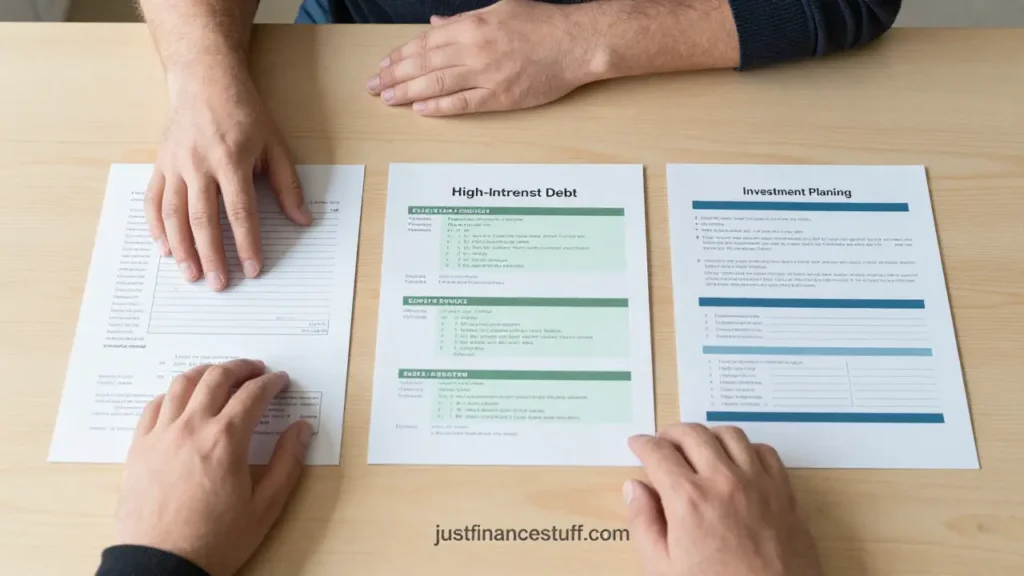
Starting to invest is smarter when you have a clear, practical foundation. Build an emergency fund first, then tackle high‑interest debt, and only then set goals, understand risk, and decide how much to invest. This approach keeps you on solid ground as you begin investing guide.
Build an emergency fund first
An emergency fund is your safety net. Aim for 3, 6 months of essential living costs in a liquid, accessible account. This lets you weather unexpected bills without dipping into your investments. 💡
- Keep it separate from your investing money
- Use a high‑yield savings account or a money market fund
- Replenish it after withdrawals promptly
Real‑world example: if your monthly essentials are $2,500, target a $7,500, $15,000 fund. If you lose a job, you can cover rent, groceries, and utilities for 3, 6 months without selling stocks at a bad time. 💼
Pay down high‑interest debt
Debt with high interest can outpace any initial investment gains. Prioritize paying off such debt before putting your money into the market. ⚠️
- Target credit cards and high‑rate loans first
- If you must carry debt, consider a plan to reduce the rate where possible
- Once paid, redirect payments to investing goals
Practical steps: compare a $5,000 credit card at 19% APR with a potential 6% investment return. If you clear the card in 12 months, you save about $500 in interest after taxes versus chasing uncertain market gains. Use balance transfers or a 0% promo wisely, and avoid new high‑cost debt. ⚡
Define your financial goals and time horizon
Know what you’re aiming for and by when. Short, medium, and long‑term goals shape choices about asset mix and risk. ✅
- Retirement, a home, education, or a first big purchase
- Time horizon helps set how aggressive or conservative you should be
- Document milestones to track progress
Mini example: you might plan to buy a $300,000 home in 10 years. That suggests a mix leaning toward bonds for stability and some stocks for growth, with annual rebalancing to keep you on track. 🏠
Understand your risk tolerance
Risk tolerance is how calm you stay when markets move. It guides whether you prefer steady growth or are comfortable with bigger swings for potentially higher returns. 💡
- Assess how you react to losses
- Link risk tolerance to your goals and time frame
- Adjust as life or priorities change
Edge case: if you’re near a major expense deadline (college tuition next year) you might favor a shorter horizon and lower risk, even if you could tolerate more volatility overall. Consider a glide path that shifts from stocks to cash as you approach the goal. 🔎
How much money should you invest?
Start with what you can consistently contribute without compromising essentials. Even small, regular contributions matter over time.
- Consider a fixed monthly amount you won’t miss
- Automate contributions to stay disciplined
- Increase deposits gradually as income grows
Concrete plan: begin with $200 per month into a diversified index fund, then add $25, $50 if you get a raise or reduce a subscription. Track your starting balance, monthly contribution, and annual return to see compounding in action. 💹
How to start investing as a beginner: step by step

Set a clear investing goal to guide every move. Whether you want a comfortable retirement, a down payment, or college funds, your goal shapes your time horizon and risk choices. Write it down and review it annually. investing becomes a plan when you know what you’re aiming for.
Set a clear investing goal
Define the amount you want to reach and by when. Break it into smaller milestones to track progress. This keeps you motivated and helps you choose the right mix of assets. ✅
- Long-term goals like retirement or education
- Short-term aims like a down payment may lose value if not properly invested.
- Time horizon to decide risk level
Example: If you want $100,000 for college in 15 years, you might start with a 70/30 stock to bond split and recheck every year after a market dip.
Choose the right investment account
Pick an account that suits your tax situation and withdrawal needs. A tax-advantaged account can boost growth, while a taxable account offers flexibility.
- Roth or traditional retirement accounts for long horizons
- Brokerage accounts for flexibility and liquidity
- Education savings accounts for schooling goals
map each goal to an account type. For a 10-year college fund, a 529 plan combined with a taxable index fund can balance tax benefits and liquidity.
Pick a brokerage or investing platform
Look for low fees, easy onboarding, and solid research tools. A beginner-friendly platform helps you start without overwhelm. 💡
- Commission-free trades
- User-friendly interfaces
- Educational resources and planning tools
What to test: open a demo account, try placing a mock trade, and check how often the platform updates prices during trading hours.
Decide what to invest in
Focus on simple, broad options first. Index funds or ETFs offer diversification with low costs. Avoid overloading on individual picks early on.
- Index funds and broad ETFs
- Bond funds for stability
- Keep a core portfolio and add satellite positions later
Edge case: if you’re near a major life event, tilt toward short-term bonds or cash equivalents to reduce risk while you save.
Start small and invest consistently
Begin with an amount you won’t miss and automate contributions. Regular investments beat big one-off bets over time. 🚀
- Set up automatic monthly transfers
- Increase contributions as income grows to take advantage of free money opportunities.
- Revisit your goals annually and rebalance if needed
Stocks, bonds, ETFs and mutual funds explained
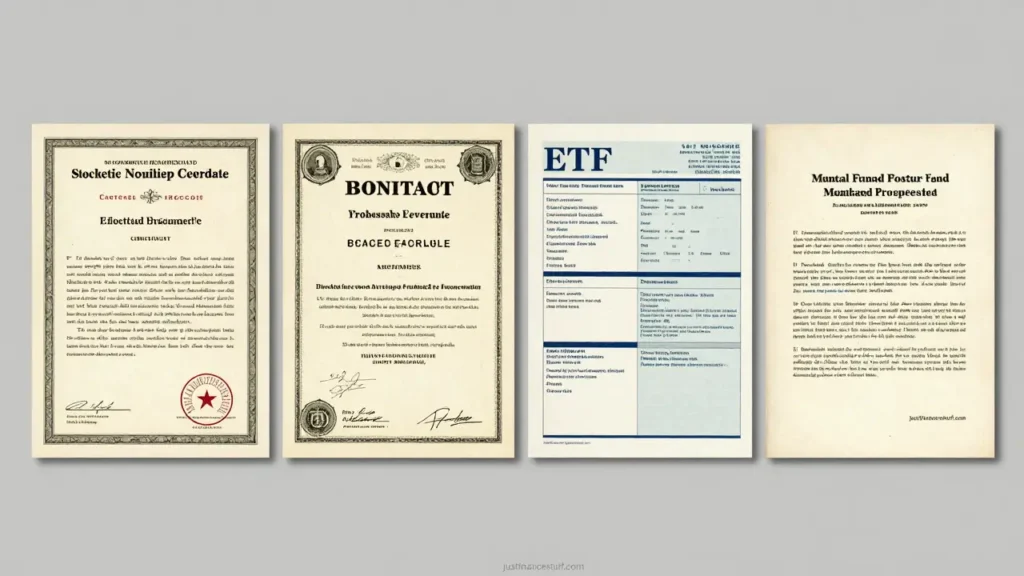
Understanding the basic building blocks helps you choose a simple, realistic path into investing. This section breaks down how each works and how they fit together in a beginner’s portfolio.
How bonds work
Bonds are loans you make to a company or government. In return, you receive regular interest payments and the original amount back at maturity. The price of bonds moves with interest rates and issuer risk, which can affect your total return.
- Pay fixed or variable interest over time with a stated maturity date
- Higher risk typically means higher potential rewards, but also bigger price swings
- Used for income, ballast, and a guardrail against stock downturns
What are ETFs?
ETFs are funds that trade on an exchange like stocks. They hold a bundle of assets, such as many stocks or bonds, and track a specific index or strategy. They offer instant diversification with low costs and easy trading.
- Diversified exposure in a single trade, from broad market to niche themes
- Typically lower expense ratios than mutual funds, and they trade intraday
- Good for beginner portfolios aiming for broad market exposure with simple rebalancing
What are mutual funds?
Mutual funds pool money from many investors to buy a curated mix of stocks, bonds, or other assets. They are professionally managed and priced at the end of each trading day.
- Professional management with a defined objective and clear prospectus
- Can be actively or passively managed, with different fee structures
- Great for investors who prefer hands-off choices but want a target risk
Stocks vs bonds vs ETFs vs mutual funds
Here is a quick way to compare their core traits so you can pick a simple core portfolio.
| Asset | What it is | Key benefit | Typical role for beginners |
|---|---|---|---|
| Stocks | Shares of a company | Ownership with growth potential | Higher risk, higher reward; add for growth |
| Bonds | Debt issued by entities | Income and lower volatility | Stability and predictable income |
| ETFs | Tradeable funds holding many assets | Instant diversification | Low-cost core exposure |
| Mutual funds | Pooled investor portfolios | Professional management | Hands-off diversification |
4. Core investment vehicles for beginners
Index funds and ETFs
Index funds and ETFs offer simple, inexpensive exposure to broad markets. They let you own a wide slice of the market without picking individual stocks, making them a solid core for beginners.
- Example: a common starting mix uses a total‑market stock index fund plus a broad bond ETF for balance
- Low fees compared with many active funds, which helps your money grow over time
- Instant diversification across many assets, lowering single‑stock risk
- Easy to trade at most brokerages with transparent pricing
Bonds and bond funds
Bonds provide steady income and can calm a volatile portfolio. Bond funds let you own a mix of bonds without buying each one individually, aiding diversification and liquidity.
- Example: a ladder of government bonds can smooth payments when stocks wobble
- Interest income helps balance equity risk, especially in down markets
- Options span government, corporate, and municipal bonds to suit different tax needs
- Prices move with interest rates, so some risk remains even in high quality bonds
Dollar-cost averaging explained
Dollar-cost averaging means investing a fixed amount regularly, no matter how markets move. Over time, it can lower your average cost per share and soften short‑term swings.
- Example: $500 on the first of each month buys more shares when prices dip and fewer when they rise
- Removes timing pressure by sticking to a schedule
- Builds saving discipline that compounds over years
- Works well with index funds or broad ETFs, thanks to predictable trading cadence
How to build a diversified beginner investment portfolio

What diversification means
Diversification means spreading your money across different asset types to reduce risk, and it works because different assets often move at different times. For example, a mix of stocks and bonds can cushion a 30% stock drawdown when bonds hold steady or even rise. Real-world scenario: a retiree uses a 60/40 mix to ride stock highs and weather crashes without tapping principal early. The key is to tailor the mix to your goals and time horizon, not chase a single hot asset. 💡
Understanding asset allocation
Asset allocation is your plan for dividing investments among stocks, bonds, and other assets to balance growth and stability. A practical rule of thumb: start with a long horizon like 20 years and 80% in stocks, then progressively shift toward bonds as goals approach. Real example: a 35-year-old saving for a 20-year target might begin at 85/15, then move to 60/40 by year 15.
- Stocks offer growth but can swing with the market
- Bonds provide income and lower volatility
- Cash equivalents reduce risk but cap potential returns
How to balance risk and return
Balance means matching risk to your comfort and timeline. Practical steps: build a core with broad-market index funds, add satellite income assets like investment-grade bonds or dividend ETFs, and keep a small cash sleeve for emergencies or quick buys. Real-world tweak: if you face a sudden job change, you can pivot toward the bonds sleeve to protect capital while maintaining exposure to equities when markets recover. 💡
| Asset class | Role in portfolio | Typical risk level |
|---|---|---|
| U.S. stocks (broad index funds) | Growth and participation in market gains | High |
| Bond funds | Stability and income | Low to moderate |
| Cash equivalents | Liquidity and safety | Low |
Simple portfolio ideas for beginners
Pick a mix that fits your time horizon and risk tolerance with concrete targets:
- Aggressive: 80% stocks, 20% bonds
- Balanced: 60% stocks, 40% bonds
- Conservative: 40% stocks, 60% bonds
When and how to rebalance
Rebalance when allocations drift by about 5-10 percentage points from your targets. Practical approach: set a rebalance schedule (twice a year) and also rebalance after major moves like a 15% stock rally or drop. This discipline helps lock in gains and buy cheaper assets during dips. ⚠️
Best investment strategies for beginners

Buy-and-hold investing
Buy-and-hold means buying quality assets and keeping them for years. This approach avoids trying to time the market and lets compounding work in your favor. ✅
- Example: a broad S&P 500 index fund bought at a low in 2009 and held through 2024 shows a multiyear rebound with dividends reinvested.
- Tip: choose low-cost funds like total-market or broad ETF options to reduce drag from fees.
- Real-world setup: automate monthly contributions so you consistently grow your position without chasing headlines.
Dollar-cost averaging
Dollar-cost averaging means investing a fixed amount at regular intervals, regardless of market moves. It smooths buying prices over time. 💡
- Scenario: you contribute $500 every month to a diversified ETF; when prices drop, you buy more shares, when they rise, you buy fewer.
- Action: set up automatic transfers and recurring buys on your brokerage platform.
- Compatibility: works well with index funds and broad ETFs, and pairs with a separate emergency fund for discipline.
Value investing
Value investing seeks stocks that appear undervalued relative to fundamentals. It requires patience and a careful read of financials. ✅
- Example: screening for solid free cash flow and a stable dividend history can reveal overlooked names.
- Steps: check debt levels, consistency of earnings, and a conservative price-to-earnings or price-to-book ratio compared with peers.
- Trap: value traps exist when a business is structurally failing; verify with competitive moat and revenue resilience.
The Rule of 72 explained
The Rule of 72 helps you estimate how long it takes for money to double at a given return. Divide 72 by the expected annual return to get years to double. Simple speed gauge for planning. 📊
- Example: 6% annual return ≈ 12 years to double
- Practical use: pair the rule with your target date to set milestones and recheck annually
- Limit: it assumes a steady return and reinvested gains; real markets vary
| Strategy | Main idea | Ideal for |
|---|---|---|
| Buy-and-hold | Long-term ownership | Patients with a long horizon |
| Dollar-cost averaging | Regular, fixed-amount investing | New accounts and ongoing contributions |
| Value investing | Undervalued fundamentals | Analytical thinkers seeking quality picks |
| Rule of 72 | Growth pacing | Planning milestones and expectations |
Retirement investing and Roth IRA basics

Why retirement investing matters
Saving for retirement compounds wealth over decades, turning small, regular contributions into meaningful funds. The earlier you start, the more time your money has to grow. 💡 For example, saving $200 a month at 7% over 30 years can accumulate a sizable nest egg compared with starting later.
401(k), Traditional IRA and Roth IRA explained
Here’s a practical distinction between the main retirement accounts you’ll encounter:
- 401(k) plans are usually offered by employers. They often come with matching contributions and use pre tax money that grows tax deferred until withdrawal. Example: a 50% match on the first 6% of salary boosts your effective return.
- Traditional IRA lets you contribute either pre tax or after tax money depending on eligibility. Growth is tax deferred until distributions in retirement. It can help smooth income during variable years.
- Roth IRA is funded with after tax dollars. Growth and withdrawals in retirement are generally tax free, subject to rules. This helps if you expect higher taxes later or expect to be in a higher bracket in retirement.
Roth IRA vs Traditional IRA
Understanding the tradeoffs helps you pick what fits your situation.
| Aspect | Roth IRA | Traditional IRA |
|---|---|---|
| Tax treatment on contributions | After tax | Pre or after tax depending on eligibility |
| Tax treatment on withdrawals | Generally tax-free | Taxed as ordinary income |
| Required minimum distributions | No RMDs for Roth IRAs | Yes, after age 72, it’s time to start investing if you haven’t already. |
What can you invest in inside a Roth IRA?
A Roth IRA typically allows a wide range of securities, including:
- Index funds and ETFs
- Individual stocks within limits
- Mutual funds
- Some savings vehicles, depending on custodian rules
When should beginners start investing for retirement
Start as soon as you can, even with small amounts. If your work offers a plan with matching, contribute enough to capture that match first. Then consider adding a Roth or Traditional IRA to diversify tax outcomes over time. ✅
Investment taxes, fees and tax-efficient investing

How investment taxes work
Taxes reduce your returns just as much as market moves do. They apply to capital gains, dividends, and interest earned inside accounts. The exact bill depends on your country, your account type, and how long you held the asset. 💡
- Short term gains are often taxed as ordinary income, so quick flips can eat into profits more than you expect.
- Longer holding periods typically unlock lower tax rates, rewarding patience.
- Tax-advantaged accounts can shield or defer taxes on some earnings, but withdrawals aren’t always tax free.
Capital gains and investment income
Two main tax streams matter: capital gains from selling assets and regular income from investments. They influence what you hold and when you sell. ✅
- Capital gains tax depends on sale price relative to cost and may vary by income level.
- Dividends and interest generate ongoing income that may be taxed annually or when earned, depending on the account.
- Qualified dividends often receive favorable treatment in many jurisdictions, but rules vary.
How investment losses can affect your taxes
Losses can offset gains and sometimes reduce other taxable income. This can lower your current bill and improve after‑tax returns. ⚠️
- Harvest losses by selling underperforming assets to offset gains in the same year.
- Unrealized losses do not reduce taxes until you actually sell the asset.
- Wash sale rules may prevent deducting a loss if you repurchase the same or substantially identical asset within a set period.
Investment fees and expense ratios
Fees quietly chip away at compounding returns. Compare costs and choose low‑cost options to protect growth. 📊
- Expense ratios express annual costs as a percentage of assets and directly reduce returns.
- Trading commissions matter less on many platforms today, but they still add up with frequent trading.
- Active funds often charge higher fees than index funds or broad ETFs, which can erode long‑term gains.
Are investment management fees tax-deductible?
Tax rules vary by region and account type. In some places advisory fees can be deductible or excluded from certain bases. Consider how your specific account treats these costs.
Basic tax-efficient investing strategies
Smart moves save you money year after year. 💡
- Use tax-advantaged accounts for growth and income when possible, and maximize contributions before deadlines.
- Prefer low‑cost index funds and broad ETFs to minimize ongoing fees and drag on performance.
- Plan withdrawals and asset location to manage capital gains and income taxes across years.
Investing for kids, teens and family financial goals
Starting early can set your family up for a stronger financial future and provide opportunities for free money. This section explains practical paths to invest for kids, teens, and future generations while keeping risk and tax considerations in mind. For real world results, you’ll see how a few hundred dollars a year compounds over time and how different accounts affect financial aid and taxes.
Custodial investment accounts explained
A custodial account lets an adult manage investments for a minor until they reach legal adulthood. It helps teach money lessons and grow a starter portfolio. For example, you might start with a $200 monthly contribution invested in a broad market ETF and review progress every six months with your child.
- Ownership transfers to the child at adulthood
- Gifts and contributions may affect annual limits and taxes
- Common options include UGMA/UTMA accounts and custodial IRAs where allowed
Investing for teens
Teen investing can build independence and long-term discipline. Start with simple, age-appropriate goals and a low-cost platform. A practical plan: set a $50 weekly contribution from part-time work and pick two broad index funds to diversify.
- Open a teen brokerage with parental oversight
- Focus on broad index funds or ETFs for diversification
- Encourage regular contributions from part-time income
Investing for a baby’s future
Early contributions can compound significantly by graduation day. Use accounts designed for long horizons and favorable tax treatment where possible. For instance, a $100 monthly contribution to a tax-advantaged account can grow to a meaningful sum by age 18, depending on market returns.
Investing for grandchildren
Grandchild investments can be a thoughtful gift that compounds over decades. Consider gifts to a tax-advantaged account if available. Use a calendar reminder to rebalance annually and keep costs low.
Education investing and FAFSA considerations
Education-specific accounts can reduce college costs, but rules vary by jurisdiction. Plan around how accounts affect financial aid eligibility. Example: assess if funds count as parental assets or student assets in your FAFSA style calculation and adjust contributions accordingly.
Trusts and long-term family investing
Trusts can provide control and tax planning for heirs. They require careful setup with professional guidance to align with goals and compliance. A simple step is to list guardians, beneficiaries, and investment norms in a written plan for your attorney to review.
| Option | Who it helps | Key considerations |
|---|---|---|
| Custodial accounts | Kids under adulthood | Transfer of ownership, tax rules vary |
| Teens investing | Young earners | Parental oversight, low-cost choices |
| Education accounts | Future students | Impact on financial aid, contribution limits |
Crypto, Gold, Real Estate and Alternative investments

Cryptocurrency investing for beginners
Cryptos are digital assets that operate without a central authority. They can offer quick gains, but they come with high volatility. 💡 For example, a token might jump 30% in a day and crash 20% the next, leaving you stressed and unsure.
- Use only funds you can afford to lose and never mix everyday savings with crypto bets.
- Store keys securely in a reputable wallet; avoid leaving large amounts on exchanges.
- Diversify within crypto by considering multiple projects rather than betting on one token.
Gold as an investment
Gold is traditionally used as a hedge against inflation and market stress. It tends to move independently of stocks, but it may not generate income. ✅ For instance, you might buy a 1 oz gold bar as a ballast during a stock swoon, then watch its price swing with global demand.
- Consider physical gold versus gold-backed ETFs to fit your liquidity needs.
- Think in terms of a small portion of your portfolio rather than a core holding.
- Factor any storage or insurance costs into the overall return.
Real estate investing basics
Real estate offers potential for income and appreciation, but it requires more capital and hands-on management than stocks. 🔎 Imagine buying a duplex, renting it out, and gradually building equity while mortgage payments chip away.
- Direct property versus real estate investment trusts (REITs) provide different levels of involvement.
- Leverage can boost returns but also magnify losses in falling markets.
- Check local market trends, rental demand, and maintenance costs before committing.
How alternative investments fit into a portfolio
Alternative assets can add diversification when traditional stocks and bonds move together. They should complement, not dominate, your plan. 💡 Here’s a relatable snapshot: a 60/40 stock/bond mix might shift more when alternatives like private credit or commodities move independently.
- Use alternatives to tilt risk and potential return in uncertain times.
- Keep allocations modest to avoid overconcentration in niche markets.
- Monitor fees and liquidity, which can be higher than standard investments.
Risks beginners should understand
All alternatives carry specific risks that require careful due diligence. ⚠️ Common traps include chasing hot niches without a plan or ignoring tax implications.
- Liquidity risk: some assets cannot be sold quickly at fair value.
- Valuation risk: prices can swing based on sentiment rather than fundamentals.
- Regulatory risk: rules and protections vary across markets and assets.
AI investing, ethical investing and emerging investment trends
Using AI tools for investment research
AI tools can speed up analysis and surface patterns you might miss, parsing company data, earnings calls, and market signals quickly. 💡
- Example: use an AI summarize feature to pull out key revenue drivers from a quarterly report, then verify with the official filing.
- Practical step: build a watchlist of 10 companies and let AI flag unexpected guidance or margin changes in earnings notes.
- Tip: test AI-generated scenarios for best, base, and worst cases to stress your thesis before buying.
- Risk: AI can miss nuances in statements; always read transcripts or filings for context.
Investing in AI stocks and themes
AI is a broad theme, not a single stock. Build exposure by separating infrastructure, software, and applied AI outcomes, then tailor bets to your risk tolerance. ✅
- Example: distinguish chipmakers supplying AI accelerators from cloud platforms delivering AI services and from firms selling AI-enabled apps.
- Practical tip: use broad funds for wide exposure, then anchor your thesis with 2, 3 select picks.
- Warning: watch revenue visibility and margins, especially in early-stage AI startups that burn cash.
What is ethical or ESG investing?
Ethical or ESG investing weighs environmental, social, and governance factors alongside profits. It aims to align money with values while targeting market returns. 📊
- Real-world example: an ESG fund may favor companies with lower carbon intensity and transparent boards.
- Step: check how the fund measures ESG scores and whether those metrics actually guide buys and sells.
- Clarification: ESG is a lens for selection, not a guarantee of lower risk or higher returns.
Risks of following investment trends
Trends can rise fast and fade just as quickly. Always test the logic behind a trend before committing capital. ⚠️
- Common mistake: chasing headlines and momentum while ignoring fundamentals.
- Edge case: during hype cycles profits can shrink even if the theme stays viable long term.
- Strategy: balance trend bets with core holdings and set a clear risk cap for each position.
Best investing apps, platforms, tools and books for beginners
Choosing the right tools can make starting investments easier and more reliable. Below is a practical guide to what to look for, where to begin, and solid resources to learn from.
What to look for in an investing app
Keep it simple, cheap, and secure. A good app should have a clean layout, quick setup, and clear fees. 💡
- Zero or low trading commissions
- IRA or retirement accounts for long term goals
- Beginner prompts and clear educational content
Beginner-friendly investing platforms
Seek guided paths that fit a newbie’s needs. ✅
- Default diversified options like index funds or target-date funds
- Accounts that merge banking and investing for simplicity
- Strong support and easy error resolution
Investing research and AI tools
Use AI to save time, not replace your checks. 💡
- AI summaries of earnings and trends
- Filters that surface your key fundamentals
- Direct access to filings and official reports
Best types of investing books for beginners
Choose titles with practical examples you can apply now. ✅
- Foundations of investing, risk, and diversification
- Step-by-step guides for accounts and funds
- Books with practice scenarios and worksheets
How to evaluate investing reviews and recommendations
Look for specifics, dated insights, and verifiable sources. ⚠️
- Check authors and cited data to ensure you are getting sound investment advice.
- Prefer reviews that disclose fees, risks, and real results
- Cross-check with official pages and independent guides
Common beginner investing mistakes to avoid
New investors often stumble because they skip the planning step or chase quick wins. Here are the missteps to watch out for and how to steer clear of them.
Investing without a financial plan
Jumping in without clear goals or a budget invites aimless bets. A solid plan aligns your investments with your time horizon, risk tolerance, and financial goals. 💡
- Define your financial goals and a realistic timeline
- Set a monthly contribution you can sustain
- Build an emergency fund before investing more money
Here’s a quick, practical starter: write down three goals, like saving for a down payment in 5 years, retirement in 25 years, and an emergency fund covering 6 months of expenses. Then map each goal to a rough yearly savings target. For example, a $60,000 down payment in 5 years might need about $1,000 extra per month aside from your normal investable amount, assuming conservative growth. 💡
Trying to time the market
Trying to predict short-term moves rarely pays off. The best results come from steady, long-term practice rather than rapid entry and exit. ✅
- Focus on consistent, automatic investments
- Prefer broad-based funds over picking winners
- Let time, not luck, work for you
Real-world example: someone set up a monthly automatic investment of $250 into a total market index fund for 20 years. By staying committed through a couple of dips, they benefited from dollar-cost averaging and compounding, ending with a larger balance than many trying to time the market. ⚠️
Chasing hot stocks and trends
FOMO leads to crowded bets on overhyped names. Look for fundamentals and sustainable growth instead. 📊
- Evaluate a company’s earnings, margins, and balance sheet
- Balance fad plays with stable core holdings
- Avoid positions based on headlines alone
Concrete check: if a stock has a flashy story but a shrinking profit margin and rising debt, it’s a red flag. Compare with a diversified ETF that covers similar themes but with built-in risk controls. A tangible hint: use a 5-year earnings track and debt-to-equity ratio to gauge sustainability. 📊
Ignoring diversification
Single bets can blow up a portfolio. Diversification smooths volatility and protects against company-specific risk. ⚠️
- Spread across stocks, bonds, and cash equivalents
- Use index funds or ETFs to achieve broad exposure
- Review asset allocation as goals and markets change
Practical setup: allocate 60/40 to stocks and bonds, then adjust to 70/30 if you’re under 40 and aiming for growth, or 40/60 if you’re near retirement. Rebalance once a year or after a 5% swing in either direction. ✅
Overtrading your portfolio
Frequent buying and selling eats into returns via costs and taxes. A patient, rules-based approach wins more often. ✅
- Avoid daily or weekly churn unless you have a clear strategy
- Set minimum performance thresholds before rebalancing
- Focus on long-term growth rather than short-term swings
Edge case: in a year with extreme volatility, a disciplined rebalancing plan might still trigger modest changes. Document the rule, then stick to it even when emotions run high. 💡
Ignoring fees and taxes
Costs accumulate quietly and compound over decades. Keep fees low and understand tax implications to protect gains. ⚠️
- Prefer low-cost index funds and passive strategies
- Be aware of tax-advantaged accounts and withdrawal rules
- Monitor expense ratios and trading costs
Tax note: in taxable accounts, hold tax-efficient funds in taxable space and place high-turnover or high-dividend vehicles in tax-advantaged accounts when possible. This can save thousands over a decade. 💡
Taking too much risk too soon
Pushing into high-risk bets early can derail a plan when markets wobble; investing involves risk that can lead to losses. Build risk tolerance gradually. 🔍
- Start with smaller positions and increase as you learn
- Balance growth assets with safer components
- Set stop-loss or downside rules only if they help your plan
Scenario: a new investor starts with 20% in small-cap funds and 80% in a broad index after a 3-month learning phase. If markets drop 10% in a month, they can stay the course or trim only a portion, depending on whether the drawdown hits their predefined risk limit.⚠️
Confusing investing with gambling
Investing aims to grow wealth through time, not quick wins. Separate beliefs from data and keep emotions in check. 💡
- Track why a decision is made, not just how it feels
- Rely on verified information and a testable thesis
- Reframe bets as structured bets with defined outcome targets
| Common mistake | Why it hurts you | One quick fix |
|---|---|---|
| Investing without a plan | Leads to inconsistent contributions and misaligned goals | Write a simple financial plan with monthly contribution amount |
| Trying to time the market | Missed compounding and higher trading costs can significantly impact your total return when new to investing. | Automate investments and stay the course |
Conclusion
Starting with clear goals and a simple plan is the fastest path to growth. You don’t need perfect timing or a giant sum to begin. invest Gradually increase your contributions and stay focused on long-term results, as investing involves risk.
- Protect your foundation: establish an emergency fund and pay down high interest debt before heavy investing.
- Keep it simple: choose broad, low cost options like index funds or ETFs to build your initial portfolio.
- Automate and stick with it: regular contributions beat trying to time the market and help you achieve compound growth over time.
Think of investing as a long race, not a sprint. Your financial future hinges on consistent actions, a sensible risk level, and ongoing learning. If you’re unsure where to start, pick a small, automatic monthly amount and review your progress every quarter.
| Action | Why it helps | Easy starter step |
|---|---|---|
| Build a budget | Clarifies how much you can invest each month | Set a fixed transfer to an investment account on payday |
| Choose a core investment | Provides broad exposure with minimal fuss | Open a self-directed account and buy a total market index fund as a guide to getting started with investing. |
What to watch as you start
- Forecast costs: look for funds with expense ratios below 0.15 percent when possible to keep more of your gains.
- Realistic expectations: a 6, 7% annual return is common over long horizons, but year to year moves can be volatile.
- Common mistake: skipping rebalancing. Set an annual check to adjust drift from your target mix.
FAQ
Here are quick answers to common questions beginners ask about investing.
- What should I invest in first? For most newcomers, a broad market index fund or ETF remains a solid starting point because it provides instant diversification with low fees. A practical example is a 60/40 split between a total stock market fund and a broad bond ETF to balance growth and risk in the early years.
- How much money do I need to start? You can begin with small amounts. Many brokers offer fractional shares, so regular investing works even with modest sums. Start with an automatic transfer of $50, $100 per week or month to build habit and momentum.
- Is investing risky? Yes, investing carries risk, including the possibility of losing money. The key is to align risk with your time horizon and goals and to stay diversified. If you have 30 years until retirement, you can tolerate more stock exposure than if you’re saving for a down payment next year.
- What is long-term investing? Long-term investing means holding assets for years or decades, letting compounding work, and riding out short-term swings. A simple practice is to rebalance once a year to maintain your target mix.
- What are fees I should watch? Look at fund expense ratios and any trading costs. Low-cost options help protect your returns over time. Compare a fund with 0.10% expense ratio to one at 0.50% over two decades to see the impact.
At a glance: the simplest path is a low-cost index fund, automatic monthly contributions, and a plan that fits your goals and risk tolerance.