
You want a straightforward way to save more each month. This budget rule offers a clear path and helps you keep control of your money in monthly budget guideline.
The guide centers on a monthly plan built around three elements: needs, wants, and savings. It uses the 50/30/20 framework but stays flexible so it fits your life. Start with your take-home pay and build from there.
You’ll learn how to set up a budget rule, monitor your savings goals, and create automatic transfers that support steady progress without constant effort. You’ll also see practical steps to keep savings moving even during busy months.
By the end, you’ll feel ready to make smart personal finance choices, prepare for emergencies, and strengthen your retirement savings over time. This guidance is practical money help you can use daily.
Monthly Budget Calculator Approach
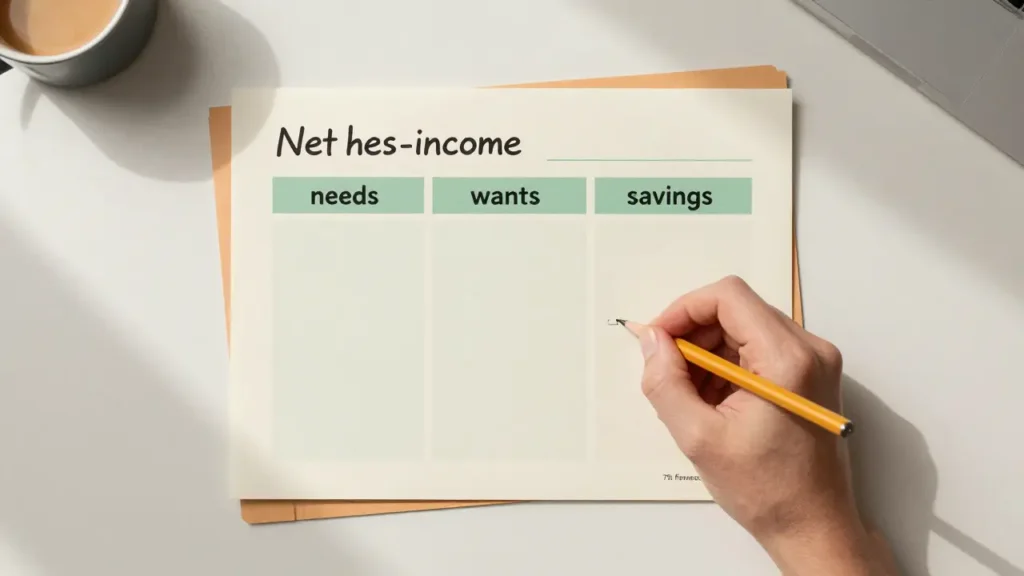
How to input net income
Start with your take home pay after taxes. This is the money you actually receive each month. Include all reliable sources of income as one total.
Keep it simple. Use a single number for monthly net income. If you are paid irregularly, estimate your average monthly take home pay from the last few months.
- Include steady income like paychecks and side gig money.
- Exclude one-off windfalls or refunds from this base figure to maintain an accurate picture of your monthly after-tax income.
- Note monthly transfers that you count as income for budgeting.
Interpreting the results for adjustments
After listing needs, wants, and savings, look at the leftover amount. This signals how much you can adjust without derailing goals.
- If needs exceed 50% of net income, trim fixed costs first.
- If savings fall short of 20%, target small automatic increases here.
- If you have a healthy surplus, consider boosting emergency funds or debt payments.
Avoiding common calculator missteps
Avoid double counting or excluding small recurring expenses. These add up over time and distort the picture.
- Include regular subscriptions and routine fees in needs or expenses.
- Avoid counting savings twice when you set up automatic transfers.
- Recheck the numbers monthly to catch changes early.
| Step | What to do | Why it helps |
|---|---|---|
| 1 | Enter net income | Grounds your plan in reality |
| 2 | Assign amounts to needs, wants, savings | Creates a clear spending plan |
| 3 | Check leftover for adjustments | Shows where to adjust first |
Keeping Flexibility: Modifying the 50/30/20 for Your Season

Seasonal income changes
Your pay can rise or fall with the season. You can adapt the budget to fit the shifts. Keep essential needs steady, and plan how extra or less income will flow to savings and debt repayment.
- When income increases, allocate a portion toward long term goals.
- When income drops, trim wants first while preserving essential needs.
- Track seasonal patterns to forecast upcoming changes.
Irregular expenses and buffer strategies
Some costs come and go. A small cushion helps you stay on track. Build a simple buffer to cover unpredictable bills.
- Create a monthly buffer from the savings portion.
- Set aside a small amount for annual costs like renewals or repairs.
- Revisit categories if a big expense is missing from the plan.
Adjusting categories without compromising goals
You can tweak the three categories to fit life changes. The aim is to protect progress toward savings and debt goals.
- Move funds from wants to savings during tight months if needed.
- Maintain the overall 50/30/20 balance by shifting within the percent ranges.
- Use a monthly check-in to confirm that essentials stay funded.
| Scenario | Adjustment | Impact |
|---|---|---|
| Income up | Reallocate to emergency fund or retirement | Boosts security and future growth |
| Unexpected bill | Trim wants a bit, preserve needs | Avoids debt stress by promoting better money management practices. |
| Seasonal lull | Slow pace savings temporarily | Maintains progress without hardship |
Debt Paydown Within the Budget
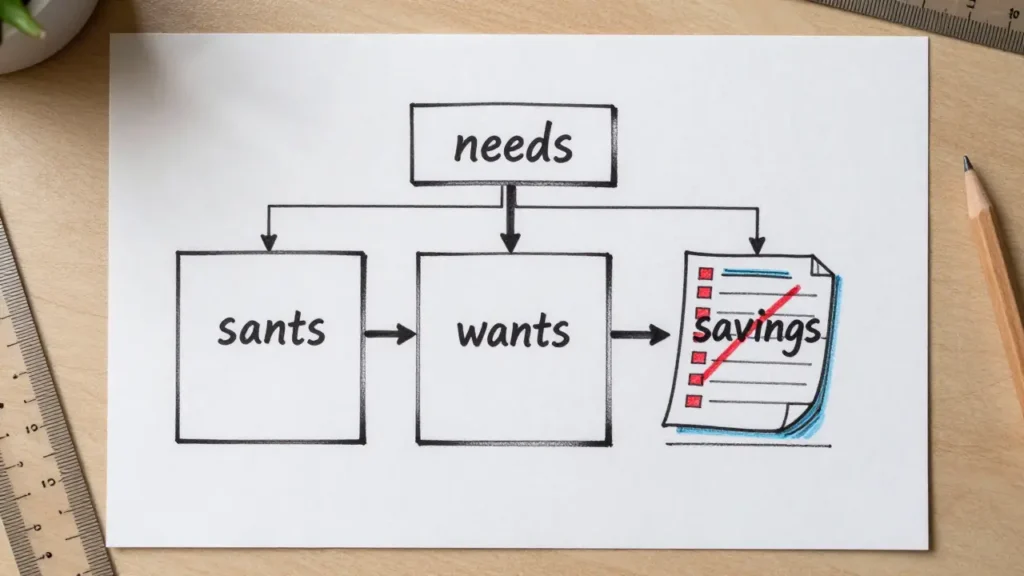
Integrating debt payments into savings and needs
Treat debt payments as a regular expense alongside essential needs and savings. This keeps you current and reduces the risk of accruing costly interest on your student loan.
- Include minimum debt payments in the needs category to stay on track.
- Allocate extra payments from the savings portion whenever possible to speed payoff.
- Set up automatic transfers aligned with paydays to maintain consistency in saving for the future.
Snowball vs avalanche within the guideline
Choose a payoff approach that fits your situation within the 50/30/20 framework.
- Snowball: focus on the smallest balance first for quick wins and motivation.
- Avalanche: tackle the highest interest rate first to minimize costs over time.
- Combine ideas by starting with quick wins, then shift to rate-based payoff for larger debts.
When to accelerate vs reallocate funds
Know when to push harder or reallocate money. The goal is steady progress without harming essentials.
- Accelerate when your emergency fund is solid and you have extra income.
- Reallocate from wants if a debt balance grows faster than expected.
- Pause aggressive paydowns during large one-time expenses and resume when feasible.
Savings Goals That Fit Your Life

Short-term, mid-term, and long-term goals
Set three clear horizons. Short-term goals handle upcoming expenses or small purchases. Mid-term goals cover the next few years. Long-term goals look further ahead, like retirement or education savings, which require careful planning and saving for the future. Name each goal and tie it to your monthly budget.
- Short-term: save for a small purchase or an upcoming bill while managing your money effectively.
- Mid-term: build a vacation fund or a car upgrade.
- Long-term: retirement savings or education funds.
Automating transfers and automating reminders
Automation makes saving easy. Set automatic transfers from your paycheck to your savings account. Pair this with reminders to review goals every month.
- Automatic transfers keep you consistent without thinking about it.
- Reminders help you adjust goals as life changes.
- Use simple naming to track each goal in your bank app.
Emergency fund benchmarks and targets
Start with a small, steady target you can reach. An emergency fund protects daily life during surprises.
- Aim for a minimum cushion that covers three to six months of essentials.
- Move toward six months if you have variable income or dependents.
- Keep this fund separate from other savings to avoid raiding it for normal costs, ensuring you can allocate money aside for debt repayment.
Tools and Templates for a Monthly Budget Guideline
Tools help you stay on track. They should simplify applying the monthly budget guideline each month. Start with straightforward templates and expand as you learn what works for you.
Printable templates
Printed sheets offer a quick, low-tech view. Use a concise one-page layout with three columns for needs, wants, and savings. Update by hand each month to reflect your allocation.
- Clear sections for income, expenses, and savings
- Space to note priorities and changes
- Easy to share with family or partners to enhance collective money management efforts.
Spreadsheet setups
Spreadsheets let you tailor the three categories and track trends over time. Create a simple table listing line items by category and showing totals. Add a chart to visualize progress toward savings goals.
- Automatic sums for quick checks
- Year-over-year views to spot patterns
- Conditional formatting highlights overages
Mobile budgeting apps and their pros and cons
Apps put budgeting in your pocket. They can sync with accounts, send reminders, and alert you when you near limits. They work well for on-the-go updates but may require a subscription.
- Pros: real-time updates, quick adjustments, portability
- Cons: privacy concerns, learning curve, potential fees
- Tip: choose an app that supports automatic transfers and category customization
Common Pitfalls and How to Avoid Them
Overestimating income or underestimating expenses
Forecasting too high a take-home pay or too low costs creates a false sense of safety in your budgeting method. Start with conservative income estimates and list every fixed bill and variable expense to reveal gaps before you spend.
- Track actual bills for a full month to gauge true costs against your monthly income.
- Use historical data from your bank to adjust future estimates.
- Revisit your budget after big changes like a raise or new recurring expense.
Lifestyle creep and its prevention
As income grows, spending often rises. This can erode savings. Set a cap on discretionary items and funnel any extra into savings or debt payoff. Small, steady cuts add up over time.
- Set a fixed discretionary limit and stick to it.
- Redirect any paycheck bonuses to savings goals.
- Review subscriptions periodically and drop unused ones.
Infrequent budgeting vs real-time tracking
Waiting weeks to review money moves leads to missed opportunities. Real-time tracking shows where money goes and when to adjust. Use quick checks to stay aligned with the monthly guideline.
| Approach | Benefit | Tip |
|---|---|---|
| Infrequent budgeting | Less time spent, but blind spots grow. | Set a monthly reminder to review; adjust only after careful checks. |
| Real-time tracking | Immediate visibility; faster corrections. | Turn on alerts, update categories during the month, keep receipts. |
FAQ
What exactly is the monthly budget guideline? It is a simple plan that splits your take-home pay into three parts: needs, wants, and savings. This helps you spend wisely while building money for the future.
What is the 50/30/20 rule? It divides income into 50% for needs, 30% for wants, and 20% for savings. It can be adjusted to fit your life, but the idea stays the same: cover essentials first, enjoy some extras, and save money.
- What counts as a need? Rent, utilities, groceries, health care, and minimum debt payments are essential components of effective money management.
- What counts as a want? Dining out, entertainment, and subscriptions you could live without can be adjusted in your budgeting method.
- How do I start? Create a budget, identify net income, then allocate funds into the three categories.
Should I automate savings? Yes. Automating transfers to a savings account helps you save consistently without thinking about it. It also reduces the chance of skipping savings in busy months.
| Question | Answer |
|---|---|
| Can I change the ratio? | Yes. If your season has lower income, adjust to protect essential needs first and keep some savings if possible. |
| What about debt payments? | Integrate debt payments into the needs or savings category depending on priority. Consider debt strategies if you want to accelerate payoff. |
| Is this suitable for families? | Yes. Add childcare and education costs into needs or savings goals as appropriate. |
Conclusion
You now have a practical monthly budget guideline you can apply right away. Start with the 50/30/20 framework as a baseline, then adapt it to your current season and goals.
Keep your money organized into needs, wants, and savings. Align these categories with what matters most to you, whether that is building an emergency fund, growing retirement savings, or paying down debt. Small, consistent actions compound over time.
- Automate transfers to a savings account to build the habit and reduce effort.
- Review your budget monthly to catch changes in monthly income or expenses early.
- Adjust categories thoughtfully when life shifts, while keeping essential goals in view.