

Understanding the core fear: not enough money vs. not enough worth
The fear of not having enough money often hides a deeper worry about worth and money. When your bank balance is small, you may feel defined by numbers rather than your true value. This article treats not having enough money as a signal, not a verdict, and offers concrete steps to feel valuable beyond finances. 💡
Why this fear persists across income levels
Scarcity can show up even with solid salaries. Someone earning $75,000 a year may fear layoffs, while a freelancer worries about feast or famine. The issue isn’t just money in the bank; it’s a mindset that makes small costs feel like big threats. Common patterns include impulsive spending after a lapse and hesitation to invest in skills. ✅
How this article will help you reframe money mindset
You’ll get actionable steps to cut through fear, build a safety net, and think in terms of sufficiency. Expect clear tasks like budgeting with goals, automating savings, and evaluating needs vs. wants. Real outcomes include less stress, quicker decisions, and steady progress toward goals. Start with one small, doable change today. 💡
The Scarcity money mindset explained
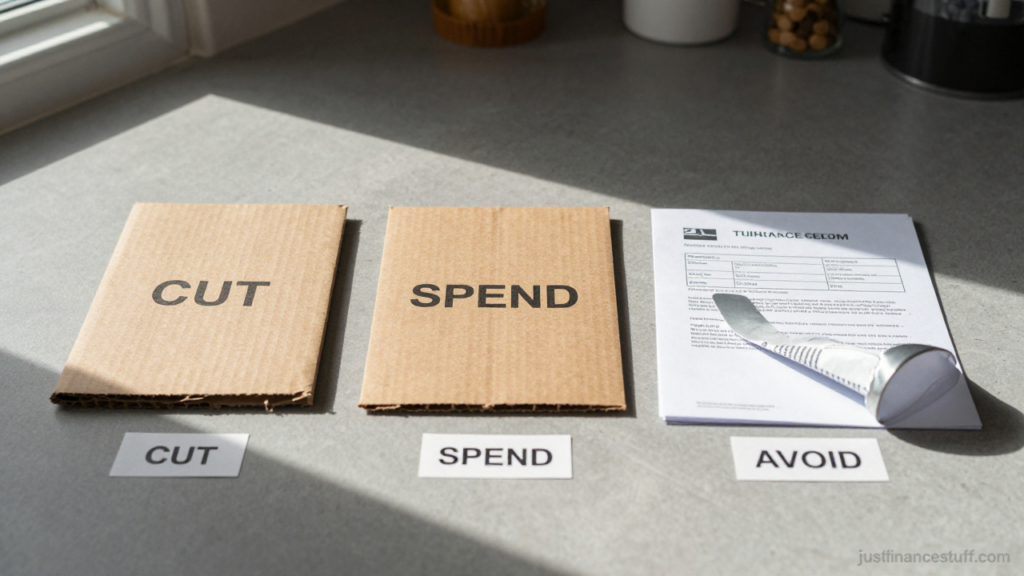
Definition and signs of scarcity mindset
The scarcity money mindset is a way of thinking where resources feel always limited, regardless of how much you have. It shows up as constant worry, tight control, and actions driven by fear rather than clear reasoning. You may notice:
- Overemphasis on cutting every expense, even essentials
- A habit of emotional spending when stressed
- A belief that future needs will always outpace current income
- Spending decisions driven by fear of risk rather than by growth or security
How scarcity affects daily financial choices and long-term planning
Scarcity shapes both small choices and big plans, often driven by fears about financial security. In daily life, you might:
- Skip building an emergency fund, turning a $500 car repair into a crisis
- Let credit card balances linger to cover gaps, paying high interest
- Avoid automatic investments or employer matches, missing out on growth
Concrete steps you can take this month: set up automatic transfers of small amounts to a dedicated savings bucket (for example, $10, $25, and $50); set a calendar reminder to review budget categories every two weeks; track one expense category for a month to reveal hidden leaks. Even small, consistent saves add up over time and ease fear-driven decision shifts. Be mindful of edge cases like seasonal income or medical costs that require flexible planning.
Distinguishing real financial risk from perceived risk
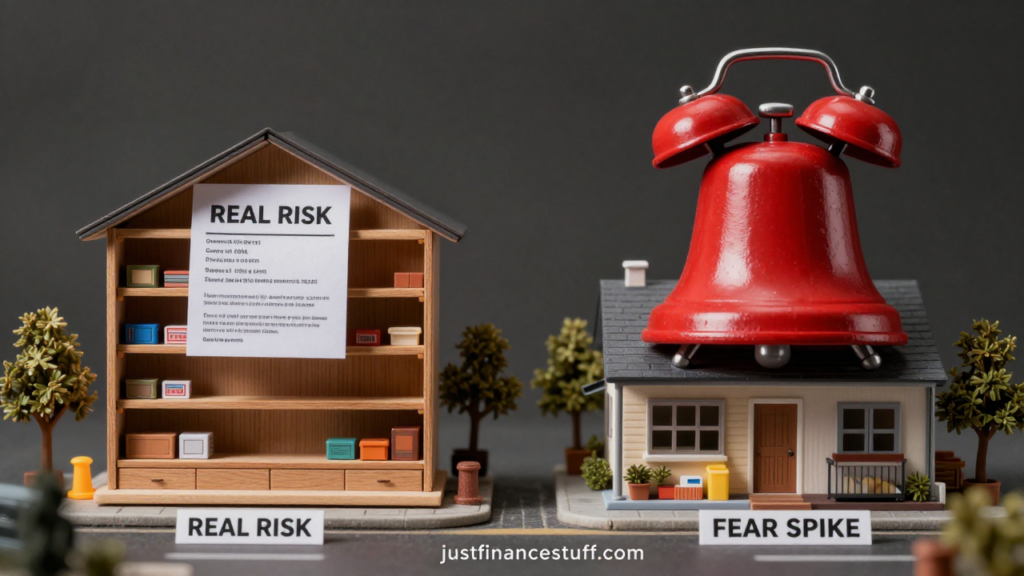
When a lack of funds is a genuine emergency
Real risk shows up as immediate threats to basic needs or safety. If you can’t cover rent, utilities, or essential medical costs, that is a true emergency. In these moments, you need practical steps that reduce harm now and preserve future options for achieving financial security. 💡
- List expenses from essential to non essential, then tackle the top three first.
- Know where you can access emergency funds, payday loans, or family help with a clear repayment plan.
- Call your utility or rent provider within 24 hours to set up a temporary relief or payment plan.
When fear is inflated by cognitive biases
Fear can warp perception, especially when it stems from persistent financial fears., turning small money worries into big, unhelpful alarms. Cognitive biases push you toward worst case scenarios or overgeneralize a single setback. Recognize these patterns and pause before acting. ✅
- Catastrophizing: write down the worst case, then list two things that could realistically prevent it.
- Anchoring: compare current finances to a high, unsustainable balance from months ago, not today’s numbers.
- Present bias: allocate just 15 minutes to plan today, then commit to one small, manageable step tomorrow.
| Reality check | What to do | Expected outcome |
|---|---|---|
| Emergency edge is real | Activate a small emergency fund, reassess essentials, contact providers for relief | Stabilization and a concrete next step |
| Fear inflates risk | Pause, verify facts, test a tiny, reversible action | Calmer choices and better risk judgment |
The psychology behind money anxiety

Early experiences and money scripting
Money anxiety often starts with childhood lessons that stick into adulthood. Your first memories about money can shape how you feel about finances today. If you heard phrases like “be careful with every cent” or watched doors close when bills came, those patterns can create lingering worry. 💡 For example, a child who sees mom hide receipts to avoid arguments may associate money with secrecy rather than clarity.
These early scripts influence how you respond to new financial stress. You might default to saving aggressively or become wary of sharing financial goals with others. Understanding where your feelings come from helps you change the script you tell yourself now, which is crucial for overcoming financial challenges. In practice, name the cue, then replace the thought with a concrete step you can take today.
- Learned beliefs about enough money from family or peers
- Early scarcity cues that linger in adult decisions
- Patterns that show up in how you price risk
Emotional spending and avoidance behaviors
Money anxiety often shows up as emotions guiding purchases, impacting your ability to manage your money effectively. When worry spikes, you may buy things you don’t need to feel a temporary relief. That relief is short lived and can deepen the cycle of fear and debt, impacting your mental health and financial situation. ✅ For instance, you might buy a gadget you barely use, hoping it will calm nerves during a stressful week.
Avoidance behaviors also hide in plain sight. You might postpone budgeting, skip tracking expenses, or pretend problems don’t exist. Facing the numbers, even briefly, breaks the hold fear has on your choices. Try a 2-step routine: 1) log yesterday’s spending for 60 seconds, 2) write one affordable, non-purchasing alternative to ease the urge and manage your money better.
- Emotional spending creates a quick high but longer regret
- Avoidance buys more time for anxiety to grow
- Confronting feelings with small, controllable steps reduces stress
| Behavior is often influenced by one’s financial status and overall mental health. | Why it happens | What to try |
|---|---|---|
| Emotional spending | Wants instant relief from fear, which can lead to poor financial decisions and deeper financial issues. | Pause before buying, write down the trigger, and set a 24-hour rule |
| Avoidance | Fear of facing numbers | Set a 5-minute daily review ritual, then extend by 2 minutes each week |
Practical steps to reframe your money mindset

Shift from scarcity to sufficiency: cognitive techniques
If you feel there is never enough money, you can train your mind to notice enough in the present. Start with small, repeatable shifts that don’t require big wins. 💡
- Identify one recurring thought about enough money and reframe it into a neutral fact.
- Pause before a purchase to ask if it aligns with a real need or a planned goal.
- Run a mini experiment: save a tiny amount for 30 days and observe the impact on mood, not just balance.
Practical example: if you catch yourself thinking “I must have this now,” try noting the cost and choosing a lower priced alternative or delaying the purchase for 24 hours. This creates a habit of testing impulse against your goals. 💡
Develop a money narrative that supports security and growth
Your money story shapes choices more than you think. Build a narrative that combines safety with progress, not fear and avoidance. ✅
- Write a simple one-paragraph anchor: what you want money to do for you this year (security, a small treat, retirement prep).
- Attach specific actions to that story, like “save $50 each week” or “pay toward debt on Fridays.”
- Review your narrative monthly and tweak it to reflect new goals or gains.
Edge case: if you’re recovering from debt, anchor goals around building a small emergency fund first, even if it starts at $100, then scale up. Track progress with a weekly check-in and adjust as earnings or expenses shift. 💡
| Aspect | What to do | Why it helps |
|---|---|---|
| Thought pattern | Replace scarcity thoughts with neutral observations | Reduces automatic alarm reactions |
| Money narrative | Link goals to concrete actions | Turns worry into purposeful steps |
| Implementation trap | Pair intentions with a 1-week experiment | Turns plans into measurable results |
Building a financial safety net that works

A solid safety net turns the fear of not having enough money into a clear plan that fits your life. It should reflect your income, expenses, and stage of life so it actually works, not just sounds good on paper. 💡
Emergency fund strategies for different income levels
Set a realistic, achievable goal. Small gains beat big promises every time. Here are practical ranges based on what you earn.
- Low income: aim for $500 to cover small emergencies like a car repair or a medical bill you can handle without debt.
- Moderate income: target 1 to 3 months of essential expenses to cushion bigger hits such as a missed paycheck.
- Higher income: work toward 3 to 6 months of essentials to weather longer job gaps or bigger costs.
| Income level | Emergency fund goal | Best starter move |
|---|---|---|
| Low | $500 | Open a separate savings subaccount |
| Moderate | 1-3 months of essentials | Set up automatic transfers on payday |
| High | 3-6 months of essentials | Shift surplus to a dedicated fund first |
Automating savings and reducing decision fatigue
Automation turns money saving from willpower into habit. It also cuts the urge to spend what you planned to save. 💡
- Automate a small, regular transfer to your emergency fund every pay period.
- Use roundups or a fixed percentage of income if your pay fluctuates.
- Review quarterly to adjust amounts as expenses rise or fall, not every week.
Example: Jamie, a part-time worker with irregular hours, sets up a $25 transfer every Friday and adds an extra $50 when a guaranteed paycheck comes in. Within six months, the fund hit $1,000 despite monthly income swings, contributing to a sense of financial security. ⚠️ A common mistake is waiting for the perfect amount; start with something you can repeat reliably.
Strategic money management for peace of mind

How can budgeting reduce money anxiety
Simple budgeting gives you a map. It shows where money goes and what you can safely save. The right method fits your life, not your dream version of it. 💡
- Zero-based budgeting assigns every dollar a job, so nothing sits idle in your bank account. For example, you tell $2,000 exactly where to go each month, rent, groceries, debt, and savings, and you adjust as bills shift.
- 50/30/20 splits your income into needs, wants, and savings, offering a clear pace for spending. If you earn $4,000, you allocate $2,000 to needs, $1,200 to wants, and $800 to savings or debt payoff.
- Envelope or category budgeting keeps essential expenses visible and controllable. Place cash or a dedicated card for categories like groceries, gas, and recreation to curb overspending.
Which budgeting method fits your real life?
Try two approaches and see what sticks. Start with a one-month test, then adjust. ✅
| Budgeting method | Best for | Drawback |
|---|---|---|
| Zero-based | People who want tight control over every dollar often struggle with their financial situation. | Requires regular tracking |
| 50/30/20 | Balanced approach for steady income and goals | Less precision on exact expenses |
Intentional spending: align purchases with values and goals
When you buy, ask two questions first: Do I need this for my essential life goals? Will this purchase move me toward my priorities? If not, reconsider. 💡
- Before buying, note the benefit and price in a quick line item. For example, compare a $60 gym membership against a $60 at-home workout app you actually use.
- Link each purchase to a specific goal, like building savings or paying down debt. Create a one-sentence reminder for each goal as a decision anchor.
- Pause for 24 hours on non-essential big spends to cool the impulse. If you still want it after a day, reassess its value.
7. Communication and relationships: finances as a team
Talking about enough money with a partner can feel risky. The fear of not having enough can surface as person drama or blame. The key is to make money a shared project, not a private stressor. This section covers how to talk openly and set up real accountability so money feels like a team effort.
Discussing money with partners without triggering fear
Start with calm, concrete facts instead of accusations. For example, both of you share current take-home pay, fixed expenses, and a rough monthly save goal. Then ask open questions like, “What would reduce worry for us this month?” Keep chats short, specific, and scheduled so anxiety doesn’t stack. 💡
- Share a simple snapshot of income, essential expenses, and a rough savings goal to help overcome financial fears.
- Ask clarifying questions to avoid assumptions about each other’s spending.
- Avoid labeling choices as good or bad; describe how they affect your joint safety net.
Setting joint goals and accountability mechanisms
Make goals clear, time-bound, and doable. Use a lightweight framework you both can check weekly without nagging. ✅
- Agree on 1-2 measurable targets, such as a monthly savings target or debt payoff milestone.
- Set a regular check-in day to review progress and adjust plans together.
- Use a shared budget view or a basic dashboard to keep decisions transparent.
| Aspect | What to do | Why it helps |
|---|---|---|
| Communication tone | Focus on facts and feelings without blame | Reduces defensiveness and builds trust |
| Goal setting | Choose 1-2 targets with clear deadlines | Creates momentum and accountability |
Conclusion
Recap of key insights
The fear of not having enough money often runs deeper than dollars. It ties to how you view your security and your worth. A scarcity money mindset can push you toward choices that create more worry, not less. Recognizing the emotion and the pattern helps you distinguish real risk from imagined risk. You can replace vague fear with concrete steps that support your financial wellbeing. 💡
- Financial anxiety often stems from past experiences and money scripting, not just current sums, affecting one’s financial situation.
- Distinguishing genuine emergencies from fear driven reactions helps you make calmer decisions.
- Building an emergency fund and automating savings reduces daily stress and increases peace of mind.
Next steps for sustaining a healthy money mindset
Turn insight into steady progress. Start with small, doable actions you can repeat weekly.
| Step | What to do | Why it helps |
|---|---|---|
| Track your spending | Record essentials and a few nonessentials for a month | Shows where money actually goes and highlights nonessential leaks |
| Set realistic goals | Define 1-2 achievable targets aligned with your income | Built in motivation and clear priorities |
| Create an easy budget | Pick a method you can maintain, like 50/30/20, to help improve your financial status. | Reduces decision fatigue and builds consistency |
Common pitfalls to watch for
Avoid overcorrecting by dumping all discretionary spending at once or chasing perfect budgets. Start with one small saving habit you can keep for 30 days, then add another. If a month goes poorly, adjust rather than abandon the plan. ⚠️
FAQ
Is there a phobia of not having enough money?
Yes, some people describe a specific fear about finances as a phobia. It often shows up as persistent worry, avoidance of money tasks, or panic at the thought of bills. The fear usually ties to a sense of vulnerability rather than a pure reluctance to spend. For example, someone may cancel a planned car repair because the idea of a large bill triggers a full-blown panic response.
What is money dysmorphia?
Money dysmorphia is a mental pattern where someone believes their finances look worse than they actually are. This can lead to overestimating risk, excessive frugality, or chronic dissatisfaction with money progress, even when tasks are on track. Imagine a saver who refuses to sign up for a useful 6 month savings challenge because they feel their entire budget is already broken.
How can I tell if I’m experiencing financial anxiety or real risk?
The line between anxiety and real risk often lies in outcome versus perception. Real risk shows up as clear, imminent threats like a missed bill, insufficient savings for emergencies, or rising debt. Anxiety is the feeling that money might fail you, even when there is a cushion, reflecting deep-rooted financial fears.