
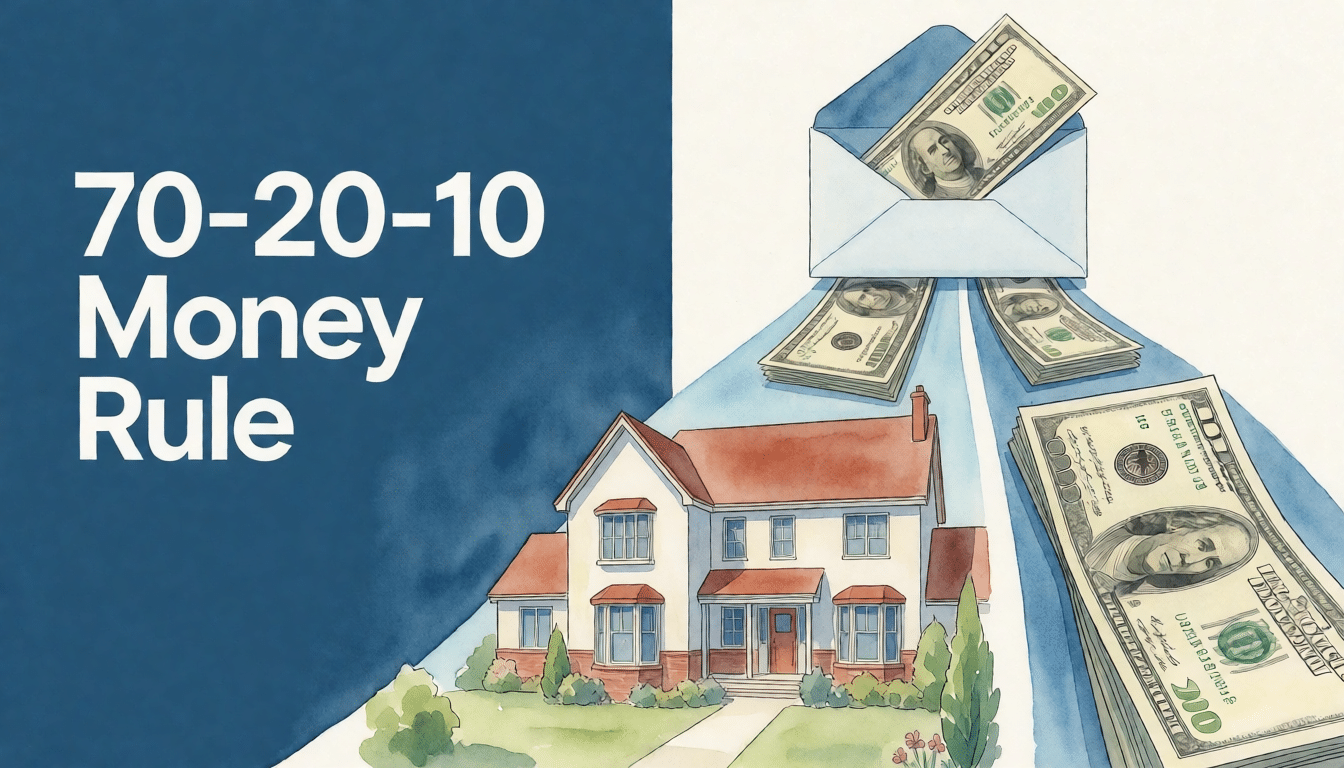
The Basic 70-20-10 framework explained
The 70-20-10 budget rule helps you organize money after you bring it home. It splits your take-home pay into three clear categories so you can see where each dollar goes and how to spend money wisely. The idea is to spend most on living costs, save a chunk, and set aside something to reduce debt or give to others. Here’s the breakdown in plain terms.
70%: spending and living expenses
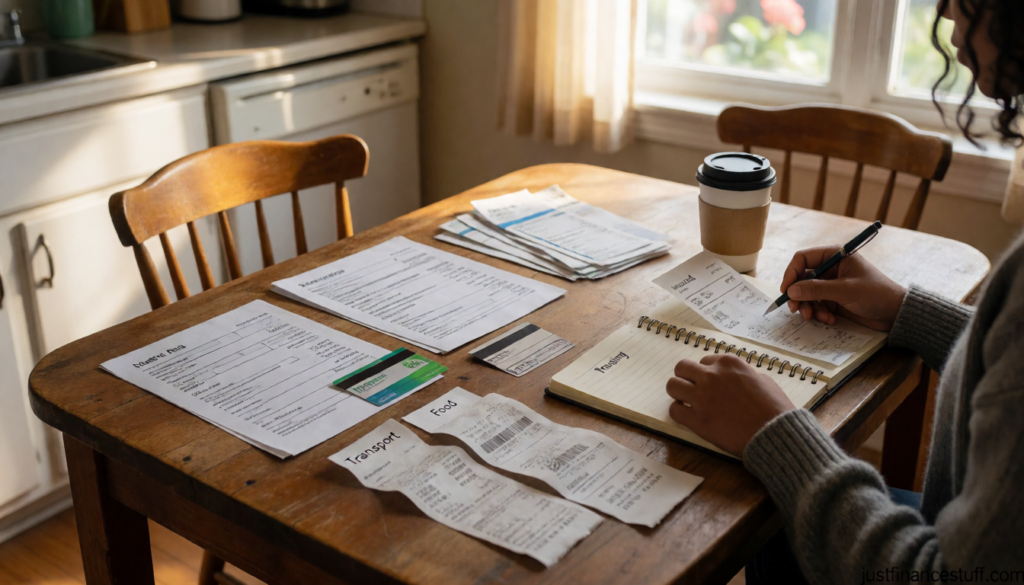
About 70% of your take-home pay should cover housing, utilities, transportation, groceries, and everyday needs according to budgeting guidelines. For example, a $3,000 monthly paycheck might allocate $2,100 to these basics. Include small treats like a weekly coffee or a movie night, but cap them so they don’t push you over. Track one month of spending with a simple app or notebook, then look for waste to trim by 5, 10%, such as unused streaming services. 💡
20%: saving and investments
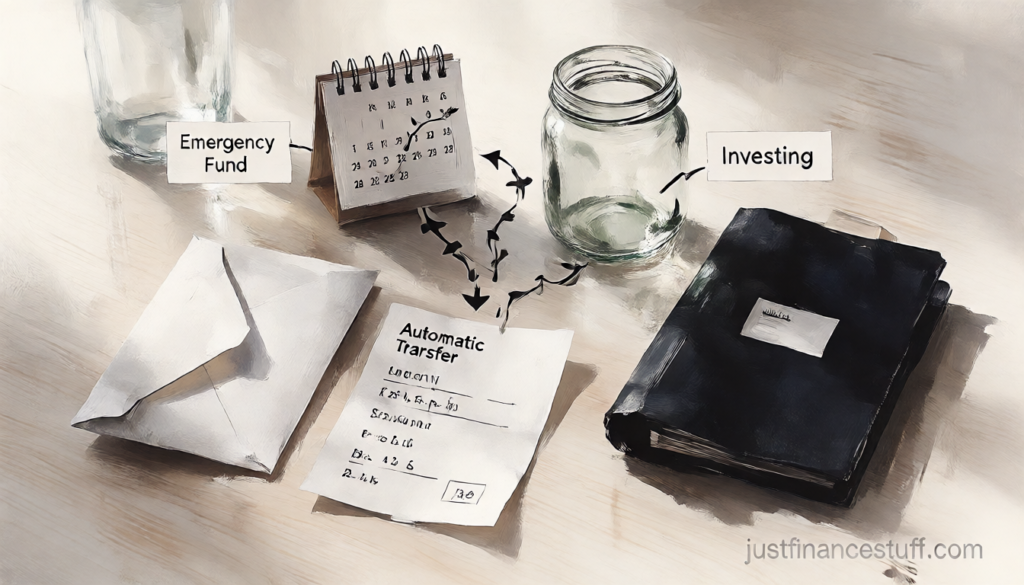
Reserve about 20% for savings and investments. Practical steps: open a high-yield savings account for emergencies, contribute to a retirement plan, and set up automatic transfers of, say, $600 per month if you earn $3,000 after tax. Review fees annually and choose low-cost index funds or target-date funds. Over time, this money compounds and grows, building financial security. ✅
10%: debt reduction or giving
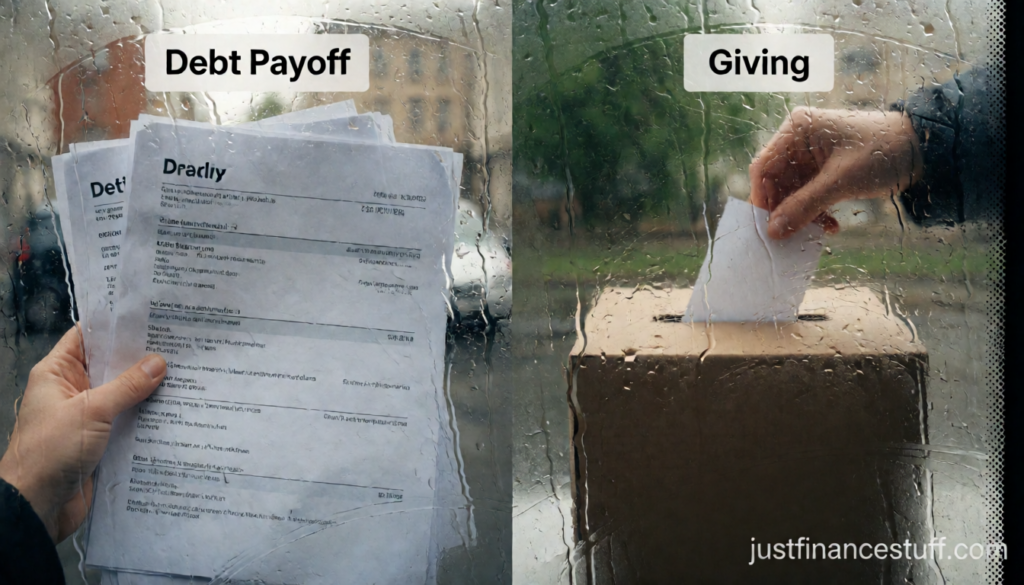
Allocate around 10% to debt payoff or charitable giving. If you carry credit-card debt, direct the 10% toward paying down the highest-interest balance first. If debt is light, switch this to a dedicated savings jar for a vacation or a home repair fund, or donate to a cause you care about. This portion helps you reduce what you owe and feels like a real payoff. ⚠️
Adapting the Rule to net income vs. gross income
Choosing take-home pay as the baseline helps in tracking your spending. Creating a budget is the simplest approach to tracking your spending. Use the money you actually receive after taxes and deductions. This keeps the 70-20-10 split realistic because you’re budgeting with money you have. Track a full month of take-home pay and compare it to your budget goals to see real results.
- Take-home pay reflects real spending power after withholdings, which is crucial for creating a budget.
- It helps prevent overspending based on gross income you never touch.
- Most people will see a shift in percentages when tax withholdings change, so the baseline matters.
Impact of taxes and withholdings
Taxes, retirement contributions, and benefits like health insurance reduce take-home pay. The same 70-20-10 split can look tighter if net income is lower. Revisit the percentages when tax rates or withholdings change. For example, a small raise that nudges you into a higher tax bracket can trim take-home pay more than you expect, squeezing savings space.
- Higher withholdings before the end of the year can affect monthly budgets.
- Tax credits or refunds may temporarily alter your available cash.
- Employer benefits can shift net income without changing gross pay.
Adjusting allocations for pay periods
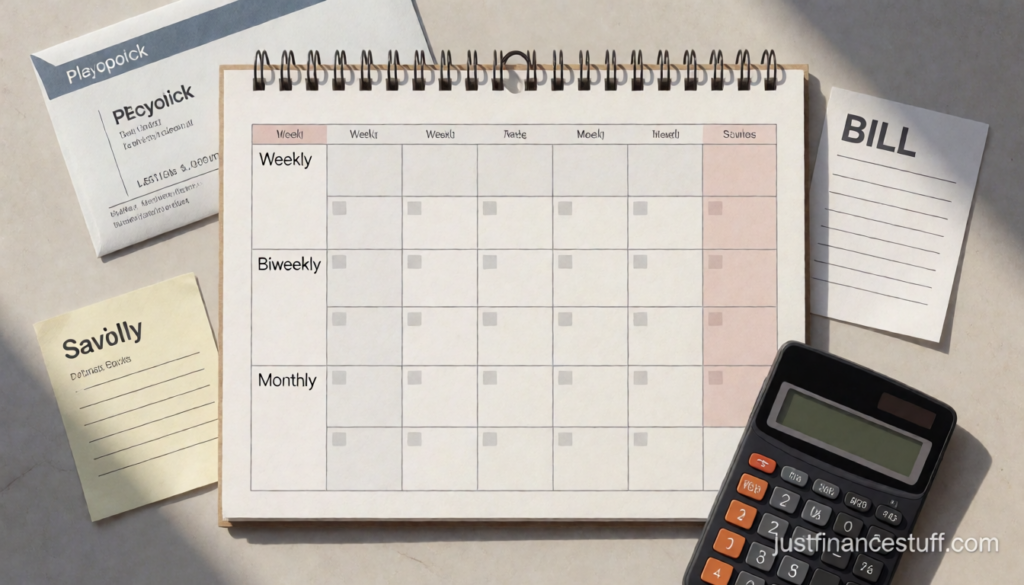
Pay frequency matters. If you’re paid weekly, biweekly, or monthly, align the 70-20-10 targets to each period to effectively manage your monthly expenses. A quick check keeps you from overcommitting in a single check and starving later ones, ensuring you manage your monthly income effectively. In practice, you might round to the nearest dollar and set a temporary buffer when a month has five paydays.
| Pay period | How to apply the rule | Notes |
|---|---|---|
| Weekly | Split 70% for spending, 20% for saving, 10% for debt | Review every week to catch drift |
| Biweekly | Apply the same proportions per paycheck | Keep an emergency buffer |
| Monthly | Set aside a monthly target that averages the period | Smooths fluctuations between weeks |
Practical tweaks you can use now

Try these quick steps to make the baseline work in real life:
- Set up automatic transfers: 70% to spending, 20% to savings, 10% to debt the moment your paycheck hits.
- Keep a one-page monthly snapshot: compare actual spending to the 70-20-10 targets within 3 days of each payday.
- Recalculate after big life changes: new job, relocation, or retirement contributions can shift take-home pay by 5, 15%.
Practical steps to implement the 70-20-10 budget
Ready for a concrete plan? Start by tracking where your money goes this month, then align it with the 70-20-10 targets. This baseline helps you see gaps and habits to adjust.
Track current spending to identify baseline
Record every expense for 30 days to gain insight into your monthly expenses. Group costs into three buckets: living expenses, savings goals, and debt reduction or giving. This reveals which category swells beyond the target and which has room to grow. 💡
- Use a simple app or a notebook to log items like rent, utilities, groceries, and transit.
- Note irregular costs such as car maintenance or annual subscriptions to better plan your budgeting strategies.
- Summarize weekly to spot trends before the month ends.
Set concrete 70%, 20%, and 10% targets
Translate your take-home pay into three clear goals. Adjust the percentages if needed to fit your real life, but keep the spirit: most of your money should cover living costs, a solid slice goes to savings, and a modest portion tackles debt or charitable giving. ✅
- 70% for spending and living expenses, including housing and bills.
- 20% for savings and investments, building emergency funds and retirement.
- 10% for debt reduction or giving, to reduce balances or support causes.
Automate allocations and bill payments
Automation locks in discipline and reduces decision fatigue, making it easier to stick to your savings goals. For example, set automatic transfers to a savings account the moment your paycheck lands, then schedule recurring payments for rent and utilities on the same day. 💡
- Automate transfers to a savings and investment account, targeting the 20% bucket.
- Set up automatic debt payments above the minimum when possible, prioritizing high-interest debts.
- Use calendar reminders for when amounts reset and review quarterly to adjust as income changes.
Common challenges and how to overcome them
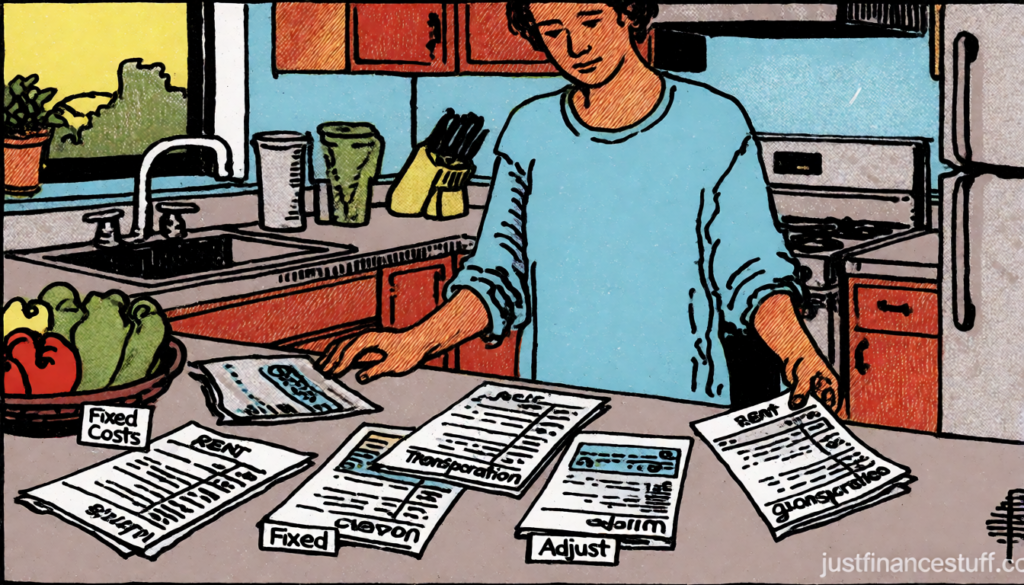
High fixed costs and housing
Large bills like rent or mortgage can squeeze the 70-20-10 split. The core idea remains, but you may need to adjust the percentages to fit your reality. For example, a renter paying $1,800 monthly might cut discretionary spending first, then look at housing options that lower the bill without sacrificing safety or comfort. 💡
- Track each fixed cost to spot where you can trim without harming essentials.
- Consider housing options that reduce monthly outlay, such as refinancing, moving to a smaller place, or sharing a larger unit with a trusted roommate to better manage your monthly income.
- renegotiate bills or switch providers for utilities and insurance to lower recurring payments.
Irregular income or freelance work
Variable pay makes it hard to keep a steady 70-20-10 rhythm. Plan around the lowest expected month and use a buffer to cover the gaps. For someone who bills clients irregularly, this might mean prioritizing essential expenses first and delaying nonessential purchases during lean periods. 💡
- Set a baseline budget from your calmest month’s take-home pay.
- Build a larger emergency fund to cover income slumps, aiming for 3, 6 months of essential expenses.
- Adjust the 10% debt or giving portion during thin months and return when earnings rebound.
Debt levels and savings trade-offs
If debt is high, you might feel pulled toward paying more on balances before saving. The rule supports progress by keeping a dedicated savings slice while still targeting debt reduction. In practice, this means you automate transfers to both debt payoff and a growth fund so you don’t backslide when bills spike. ⚠️
| Scenario | Recommended adjustment | Notes |
|---|---|---|
| High debt with steady income | Maintain 10% for debt payments, boost 20% to savings | Focus on reducing high-interest balances first |
| Growing savings, rising costs | Shift toward 60-25-15 temporarily | Return to 70-20-10 when costs ease |
70-20-10 in different life stages

People move through life, and your budget should move with you. The 70-20-10 rule adapts as your needs change, keeping your money aligned with current goals. Here’s how it looks at three common stages with concrete steps you can take today.
Starting out: students and early careers
Early on you may earn less and face student loans or rent for the first time. Use the rule to build discipline and track habits from day one. 💡
- 70% covers essentials like rent, groceries, transit, and utilities. Example: if you earn $2,000, allocate $1,400 for these costs and write down your fixed vs variable bills.
- 20% goes to habits: an emergency fund starter (first $1,000) and small investments or a retirement starter account (even a tiny $5 daily habit adds up).
- 10% toward debt reduction or giving, such as tackling a $15,000 student loan with a $150 monthly extra payment or donating to a small fund you care about.
Mid-career: building emergency funds and investments
Income usually rises, but so do responsibilities like family costs or mortgage payments, which can affect your budgeting method. This is the phase to lock in security and grow wealth. ✅
- 70% for living costs plus a real cushion. Build a concrete target, say 3, 6 months of expenses, and set automatic transfers to a separate savings account.
- 20% accelerates savings and investments: maxing a Roth or 401(k), plus a dedicated high-interest savings fund for emergencies or big purchases as part of your budgeting strategies to simplify your financial situation.
- 10% continues debt management or charitable giving, aiming to pay off high-interest debt faster (e.g., cut a $8,000 balance by $200 monthly).
Approaching goals: retirement and major expenses
When big milestones loom, you tailor the split to protect assets and fund plans. This is about long-term peace of mind. 🛡️
- 70% covers essential living costs and predictable bills. If needed, trim discretionary spending first to keep essentials unchanged.
- 20% focuses on retirement funding and non-retirement investments, including catch-up contributions if eligible.
- 10% remains for debt payoff or charitable giving, shifting toward preserving net worth as you near retirement and avoiding new debt.
Variations and comparisons to other rules
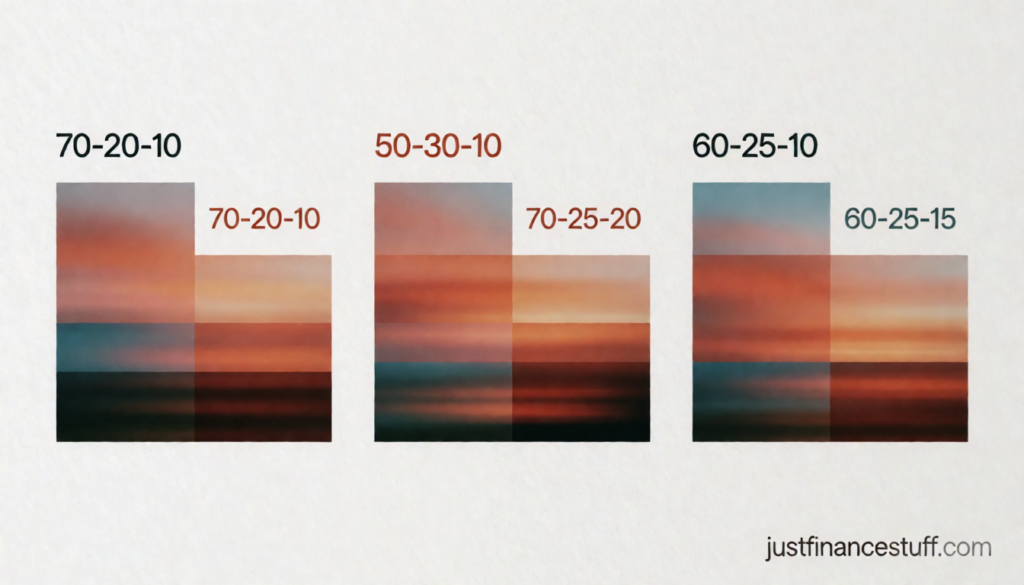
70-20-10 vs 50-30-20 vs 60-25-15
Think of these as three different roadmaps for the same paycheck, helping you manage money effectively. The 70-20-10 plan pays the bills first, saves second, and handles debt or giving last. The 50-30-20 split prioritizes needs and wants, with a smaller savings slice. The 60-25-15 setup builds savings faster while still letting you spend on life now. Primary takeaway: pick the one that matches your current financial pinpoints and stay with it for 3, 6 months before rechecking.
| Rule | Typical split | Best use | Tradeoffs |
|---|---|---|---|
| 70-20-10 | 70% living, 20% saving, 10% debt/giving | Steady debt payoff and predictable progress | Wants may feel tight in expensive months when you need to manage money carefully. |
| 50-30-20 | 50% needs, 30% wants, 20% savings creates a balanced approach to spending money. | Balanced lifestyle with growing nest egg | Savings slower if costs rise |
| 60-25-15 | 60% living, 25% savings, 15% debt/giving | Faster savings without slamming discretionary spending | Emergency cushion smaller early on |
When to prefer percentage-based rules
If you want a simple framework you can tweak, a percentage rule helps you simplify without micromanaging. For example, a monthly pay rise of 200 can boost the savings slice without reworking every category. 💡
Situations where a different split may work better
Look at big costs like rent, utilities, or irregular income. If housing spikes, try a temporary 60-20-20 or 70-20-10 with an extra windfall buffer. For a job transition, shift more into savings for 3, 6 months, then revert. ✅
Tools and templates to use
Having the right tools turns a good plan into real progress. Here are practical options to help you apply the 70-20-10 rule without guesswork. 💡
Cash flow calculators
A cash flow calculator shows how your take home pay moves through 3 categories each month. It helps you spot gaps before they become problems.
- Enter take-home pay and fixed expenses like mortgage, tuition, insurance, and utilities.
- Input discretionary spending such as dining out, streaming, and small upgrades.
- Set targets for 70%, 20%, and 10% buckets and see where you land, then adjust before the month starts to meet your final 10.
Budget templates and envelopes
Templates provide a ready-made skeleton you can customize. Envelopes add a simple, visual discipline for spending. ✅
- Weekly or monthly templates aligned with the 70-20-10 splits to keep you on track.
- Envelope categories for groceries, gas, entertainment, and personal spending to curb impulse buys.
- Guidance on adapting if rent goes up or utilities spike, so you stay balanced without reinstalling your plan.
Debt payoff and savings trackers
Track progress to stay motivated and see real results over time. Small wins compound. 🧩
- Debt payoff trackers display current balances, minimum payments, and extra payments you commit to, helping you stay on track with your financial goals.
- Savings trackers cover emergency funds, retirement accounts, and recurring investment contributions.
- Progress visuals show when to accelerate debt payoff or boost saving rates, plus a quarterly milestone reminder.
FAQ
Here are concise answers to common questions about the 70-20-10 budget rule and how it works in real life. It helps you see exactly where your money goes and makes saving automatic.
- What is the 70-20-10 budget rule? It splits after-tax income into three buckets: 70% for everyday spending, 20% for saving and investing, and 10% for debt reduction or giving. For example, if you bring home $3,000, your plan would be roughly $2,100 for essentials and wants, $600 to save or invest, and $300 to cut debt or donate.
- Should I use take-home pay or gross income? Use take-home pay, because it shows what you actually have after taxes and withholdings for effective money management. If you get a raise, the same 70-20-10 split helps you decide whether to spend more or save more.
- Can I adjust the percentages? Yes. In months with big bills or irregular income, tweak the split but keep the idea: cover needs first, then build savings, then pay down debt or give.
- What counts as debt reduction? Principal payments that lower what you owe, like extra mortgage or loan payments beyond minimums, plus auto loans or student loans if you choose that path. Charitable giving can count here if you prefer.
- What if my expenses exceed 70%? Start with concrete cuts in nonessential spending, such as dining out, subscriptions you rarely use, or impulse shopping. If still high, pause large purchases for a month and recheck.
- How do I start implementing it? Track two weeks of spending, assign targets for each bucket, and set up automatic transfers to savings and debt accounts. Use reminders to move money right after each payday.
- Is this rule good for everyone’s financial situation? It works for many, but very high fixed costs or irregular income may need a custom plan. Try the framework for a month and adjust based on real results.
Conclusion
The 70-20-10 budget helps you turn a busy month into three clear goals without overthinking every dollar. It shows where your take-home pay goes and where you should steer extra funds to meet your financial goals while managing unexpected expenses. For example, with a $4,000 month, you might see $2,800 in needs and wants, $800 in savings, and $400 to reduce debt or give.
Key takeaways to keep things calm: set fixed targets, automate transfers, and revisit your plan when life changes. This approach keeps your finances aligned with your personal goals without micromanaging every cent. Real-world tweak: if you get a raise, keep the same percentages but move the extra portion of your income into savings first, then adjust spending if needed.
- 70% for spending and living expenses, including needs and some wants
- 20% for savings and investments to grow your financial cushion and manage money wisely.
- 10% for debt repayment or charitable giving to reduce liabilities or support others
If big bills or irregular income worry you, start with a baseline and adjust gradually. Track your monthly spending for a few cycles, then fine tune the percentages to fit your income reality and cost of living changes. Common pitfall: after a job loss, you may need to reduce the 70% category first and temporarily raise the 20% savings to maintain a buffer.