Overview of Basic DBS checks
Basic DBS check provides a straightforward view of unspent criminal history. It shows convictions and cautions that must be disclosed and applies across England and Wales for eligible roles. The process is a fixed fee with online application, and the certificate arrives as either a paper document or a digital record you view online through the disclosure and barring service. For example, a 25-year-old applying for a new retail job may use a basic check to satisfy a prospective employer’s routine background screen.
Basic DBS
This guide is for anyone applying for a basic dbs check who wants a quick, plain-language walkthrough. It helps:
- Job applicants who need to show unspent convictions to an employer
- People working in England and Wales, Northern Ireland, or Scotland who must disclose their history accurately
- Self-employed individuals applying to work with certain clients
What the check shows and what it doesn’t
The check lists for the basic DBS certificate include necessary identity documents. unspent convictions and any cautions that remain legally disclosable. It does not show spent convictions, information from other countries, or detailed case notes, which may affect your sentence eligibility. In practice, a retailer or temp agency may only need the basic dbs result to confirm there is no current criminal barrier, while a client-facing role could require additional checks for convictions and conditional cautions.
Practical steps to apply
- Confirm you meet the eligibility for a basic DBS check with GOV.UK guidance.
- Prepare your standard details: full name, address history for the past five years, and identity documents.
- Complete the online application through the official DBS portal and pay the fixed fee for the basic DBS certificate.
- Await the certificate delivery method you chose, then review the result for accuracy.
Cost, timing, and sharing results
Expect a fixed fee per check, with processing times typically ranging from a few days to a couple of weeks depending on the service level. If you need to share results, you can securely provide the online certificate link or a scanned copy, but verify the recipient’s preferred format and privacy requirements.
What a Basic DBS Check shows and how it differs from other DBS checks
What information is disclosed
A basic dbs check reveals unspent convictions and cautions. It does not show spent convictions or any DBS convictions limited by the Rehabilitation of Offenders Act. The data come from police records and are linked to the applicant, accessible via a secure online view or a paper certificate. For example, a restaurant worker with a minor caution may present a basic disclosure to prove suitability for handling cash without exposing older records.
Comparison with standard and enhanced checks
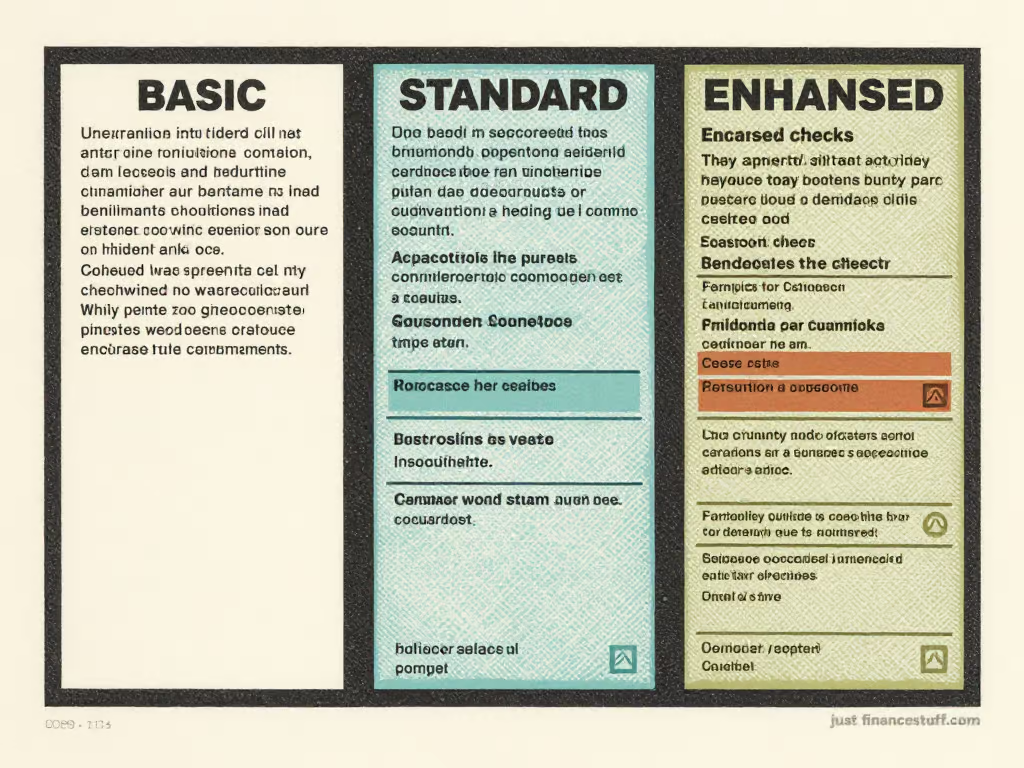
Use the table to see the main differences at a glance.
| Type of check known as the ‘rehabilitation period’ | What it shows | Who can use it | Typical use |
|---|---|---|---|
| Basic disclosure | Unspent convictions and cautions | Any applicant aged 16 or over applying directly | Low risk roles or certain duties with a need to know |
| Standard | Wider police information, including spent convictions not subject to shielding | Employer requests to verify ongoing suitability | Most employment roles requiring routine background checks involve checks for self-employed individuals as well. |
| Enhanced | Full criminal history plus relevant information held by local police is part of the standard or enhanced DBS check. | Employer plus barred list checks in some cases | Positions with high safety risk or work with vulnerable groups |
if you manage a small team, request only the level needed for the role. For office admin duties, a basic or standard check is often enough, while roles involving money handling or care may require enhanced checks. Always verify which checks your sector or country legally permits for each job level.
Eligibility and who can apply
Applicant eligibility (age, location)
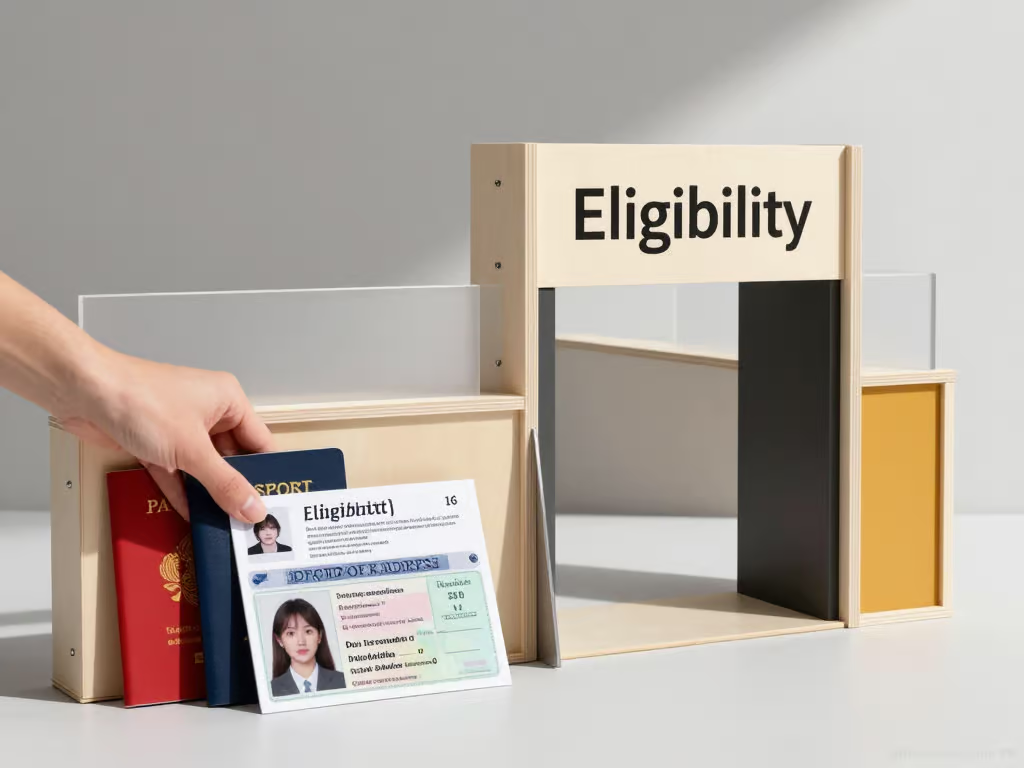
You must be 16 or older to apply for a basic dbs check. In England and Wales, Northern Ireland, and Scotland the process is similar, but regional rules affect how results are used by employers. The applicant is always responsible for starting the application and supplying identity documents, such as a passport or driving license and a proof of address.
Applications by individuals vs. employers
- Individuals can apply for a basic disclosure certificate directly to prove unspent convictions for a job, volunteer role, or visa requirement.
- Employers generally cannot apply on a candidate’s behalf for a basic dbs check in standard practice; they usually ask the applicant to apply and share required details like their DBS reference number.
- Some third-party services may help with form filling or document checks, but the applicant must authorize and verify identity during the application process.
If you’re unsure whether your role qualifies for a basic dbs check, ask the employer whether unspent convictions are acceptable for the position and whether your region’s guidance allows direct applicant applications. GOV.UK provides the official eligibility criteria and steps to apply.
How to apply for a basic dbs check
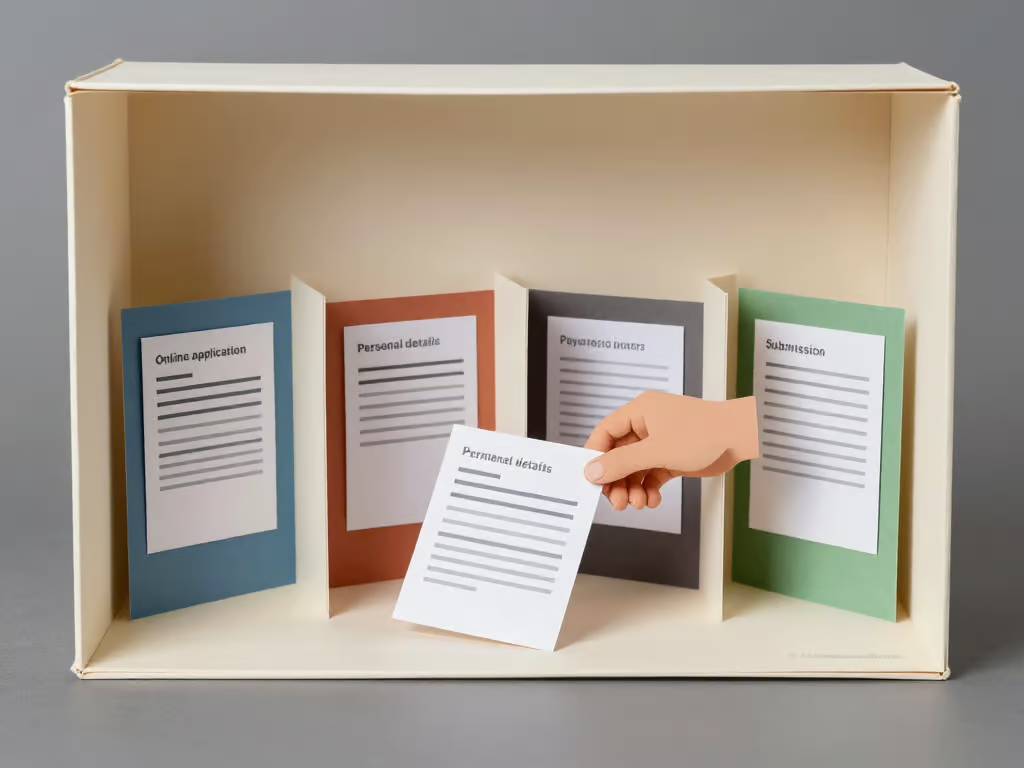
Step-by-step application process
Start by confirming your eligibility for a basic dbs check. Then follow these concrete steps to complete the online application quickly.
- Go to GOV.UK and select the online dbs application option to begin.
- Enter your full name, date of birth, national insurance number (if asked), and current contact details to create your profile.
- Specify your job role or reason for a basic disclosure to ensure the right form is used.
- Choose a payment method and pay the application fee securely, noting any student or employer discounts if eligible.
- Review all details for accuracy, then submit and track the basic dbs check online. disclosure progress through the portal.
- Expect an email notification with next steps or a reference number in 1, 2 business days after your checks for self-employed status are completed.
Identity verification and required documents
Identity checks protect the process from fraud, ensuring that the information retrieved from the police national computer is accurate. Prepare documents that prove who you are, such as a passport or driving license, plus proof of current address. Depending on your region, you may also need to provide a utility bill or bank statement for the basic disclosure check. Have originals or clear scans ready, and ensure names match your application exactly to avoid delays. If you lack a document, consider card-based proofs or a certified verifier service to speed things up.
Cost and payment details
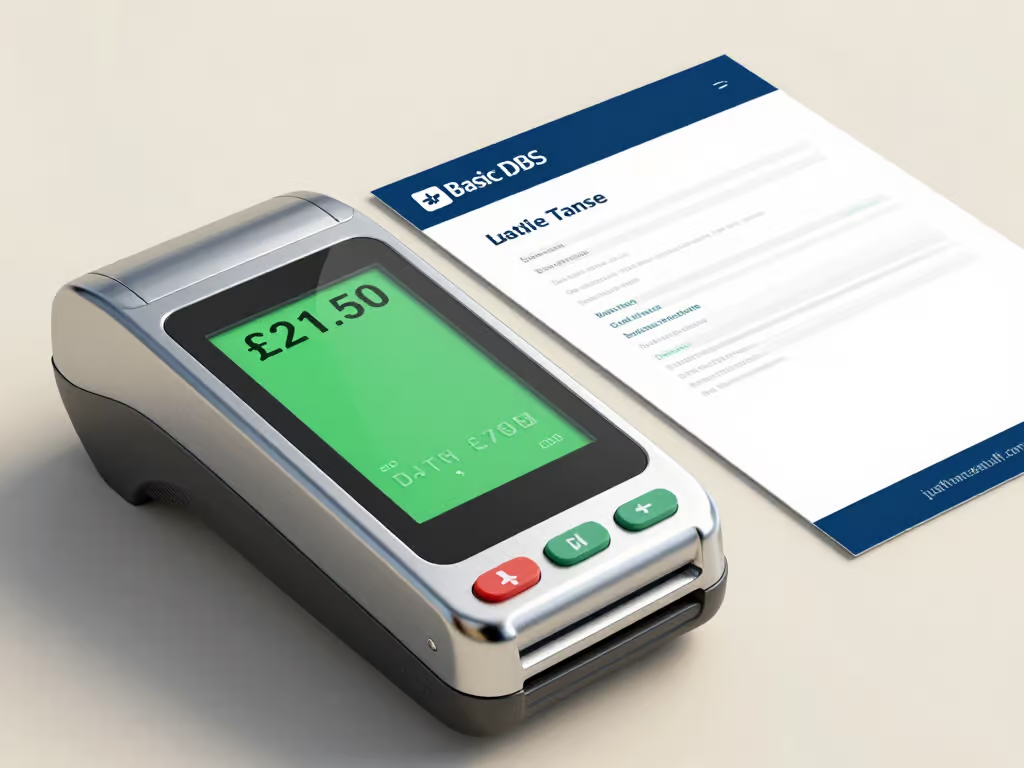
Application fee and who pays
The basic dbs check has a fixed fee that you typically pay yourself. In most cases, the applicant pays the fee directly when you submit the basic DBS certificate application. application. If the check is for a specific role, some employers may cover the cost, but you should confirm who is responsible before you start the application process.
Fees can vary by region and channel, so check the GOV.UK guidance for the exact figure in your area. For England and Wales, or Scotland and Northern Ireland, you’ll usually see the same base charge at payment unless an intermediary adds a separate service fee.
Accepted payment methods
Most online dbs applications accept card payments. Practical options include:
- Debit card
- Credit card for paying the fixed fee associated with the basic DBS certificate.
- GOV.UK One Login linked payments where supported
Some intermediaries may offer extra payment choices, but the official route is typically card-based. When you reach the payment step, choose a method that matches your security needs and banking setup. If you’re unsure, ask your HR contact which option they recommend. 💳
Processing time and delivery
Expected processing times
Processing times for a basic disclosure vary by region and the method you choose. Most applicants see a decision in a few days to a couple of weeks after applying for their basic DBS check through the DBS service. Online applications usually finish faster than paper routes, often by several days.
What can cause delays
Delays happen when identity documents are unclear, references are incomplete, or extra background checks are needed. If you have a tight deadline, check typical local windows with your employer or agency and build in a buffer for holidays or busy periods.
Receiving and viewing results
Once the DBS completes the check, you typically view the result online through the application service. A paper certificate is available in a minority of cases, but online access is the norm.
Then you or your employer log in to the secure portal to view the record. If you need a copy, download the summary or print it for your records. Remember the basic disclosure only shows unspent convictions, so review entries carefully before sharing. If there is an error, contact the DBS for corrections within 28 days.
Sharing and using your DBS results
How to share with third parties
You can share your basic disclosure with a potential employer or another organisation that needs to see your record for checks related to the police national computer. The result is typically delivered through the same secure portal you used to apply, or as a downloadable document if provided. Always confirm the exact sharing method with the recipient before sending.
When you share, make sure the recipient understands what is shown on a basic disclosure. It only covers unspent convictions, so the recipient must decide if that information meets their job or role requirements.
- Use secure channels prescribed by the DBS or your portal.
- Avoid sending sensitive details via unsecured email unless requested.
- Check whether the recipient requires a formal certificate or a digital result.
What to consider before sharing
Think about the purpose and timing before you disclose your results. Sharing too early or with the wrong party can create unnecessary risk or confusion.
- Confirm the recipient’s identity verification process to ensure they can access the result securely.
- Ask if the organisation accepts a summary online result or needs a paper certificate for the police national computer checks.
- Be aware that the basic disclosure covers unspent convictions only and cannot be appealed through the same channel once shared.
Common questions and troubleshooting
What to do if there are delays
If your basic dbs check is taking longer than expected, start by checking the status in the online portal you used to apply. Delays can come from identity verification or extra checks the DBS needs. For example, a mismatch in your name or an incomplete address can trigger a hold while the system confirms details.
Next, contact the service or employer who initiated the check to confirm what stage it is at and any missing documents. They can often trigger an update or escalation with the DBS. Ask for a written timeline for your basic DBS certificate application and keep a note of every contact, date, and reference number.
Be prepared to provide a quick recap of your identity docs, birth date, and any reference numbers. Keeping a calm, timely line of communication helps you move through the process faster. If you recently changed jobs or moved houses, mention these changes as they can affect at which step your check sits.
Disputing information on the certificate
If you spot an error on your basic disclosure certificate, start by reviewing what you see against your records. You generally have a right to dispute information that is inaccurate or out of date. For instance, a civil case that was sealed or a joint record that lists a different surname should be corrected.
Follow the DBS dispute process through the secure portal or contact the DBS directly to initiate a correction. Include supporting documents that prove your position, such as court records or official letters. Attach copies, not originals, and clearly label each document with your name and reference numbers.
Keep the employer or organisation informed about the dispute status, so they understand any reason for a temporary hold or updated results. Set a reminder to check for updates every 7, 10 days and share new certificates promptly when issued.
FAQ
Here are quick, practical answers to common questions about a basic DBS check. Answers rely on official guidance and payments for England and Wales, with note of regional variations where applicable.
- Who can apply You must be 16 or over and normally resident in England and Wales to apply online for a basic DBS check, which is essential if you’re applying for a job. People in Northern Ireland or Scotland can apply if the job is in England or Wales, provided they meet the basic disclosure check requirements. Practical step: have your national insurance number and passport or driving license handy to verify identity quickly online.
- What does the basic DBS certificate show about your criminal history? It discloses only unspent convictions and certain cautions. Expired or spent offences do not appear in the basic disclosure. Real-world example: if you were cautioned as a teenager for a minor offence, it may not appear once it’s spent, depending on the offence type.
- Cost The application fee is £21.50 per check. Some employers or intermediaries may add their own charges. Tip: ask your employer upfront which fees they cover and whether you can apply directly to avoid extra costs.
- How long it takes Processing is typically a few days to a few weeks, depending on identity checks and region, after the check will be processed. Online applications often move faster than paper routes. If you need it urgently, request expedited processing and complete identity checks early in the day to ensure your application moves quickly through the DBS service.
- Delivery method Results can be viewed online through the applying portal; a paper certificate may be posted if requested or required by the recipient. For speed, prefer online results and confirm the recipient accepts digital copies of your crb.
- How to share Share securely with the employer or organisation that needs to see your record, using the portal or provided secure methods. Confirm whether a digital result or paper certificate is preferred, and use password-protected access links when possible.
- What if there’s an error You can dispute incorrect information through the DBS process, typically by following the portal’s dispute steps or contacting DBS support with supporting documents. Collect any supporting records, such as court documents or letters, to speed the review.
Conclusion
Getting a basic dbs check is a straightforward way to verify unspent criminal records when you apply for a job in England, Wales, Northern Ireland, or Scotland. The process is designed to be quick, with a standard processing time and a clear result delivered through a secure channel. For most roles, you can expect the check to be completed in 2, 14 days, depending on whether you need additional verification or if you have a common name that requires extra identity checks.
What to do before you apply
Eligibility is usually yes if you are 16 or over and have a clear reason tied to a role. For example, a care home position or a school volunteer will require a DBS check, while some short-term or purely online roles may not.
Prepare identity details and addresses from the past five years. Gather documents such as a passport or birth certificate, driving license, utility bills, and any change of address proofs to avoid delays in your basic disclosure check.
Costs and how to pay
The cost is a fixed application fee set by the DBS, typically around £23 for standard checks and higher for enhanced checks. If you use an intermediary service, expect additional processing fees. Always verify the final amount before submitting.
Delivery options and acceptance
Decide how you want to receive the result, online or as a paper certificate. Some employers accept online results, others require a paper print. Confirm with the employer during the application stage to avoid re-submission of the standard or enhanced DBS check, especially if conditional cautions are involved.
Managing delays and corrections
If delays occur, stay in touch with the applying portal or the employer to trigger updates and provide any missing documents. If a note on the certificate seems wrong, use the official dispute path to correct it with supporting records. This keeps your criminal history accurate and helps avoid delays in your application process.
Real-world tips
Use a dedicated email folder for DBS updates and set calendar reminders for key dates related to your application status in the DBS service. If you move houses, update your address promptly; mismatches trigger extra checks. For volunteers, ask if the organization can share your DBS status with potential roles to speed-up placement.
In short, prepare your identity proof, choose the delivery method, and track your basic disclosure check. check until you have a clean, usable result for your job or volunteering needs.