Money is one of those things that quietly runs the world. You use it almost every day, probably without thinking twice. You earn it, spend it, save it, worry about it. And yet, when someone asks a simple question—what is money, really?—most people pause.
That pause makes sense. Money feels obvious, but its purpose isn’t. It’s not just paper. It’s not just numbers in an app. Money exists because humans needed a smarter way to live and trade together. To understand it, you have to step back to a time before money existed at all.
Life Before Money: When Trading Was Complicated
What Barter Looked Like
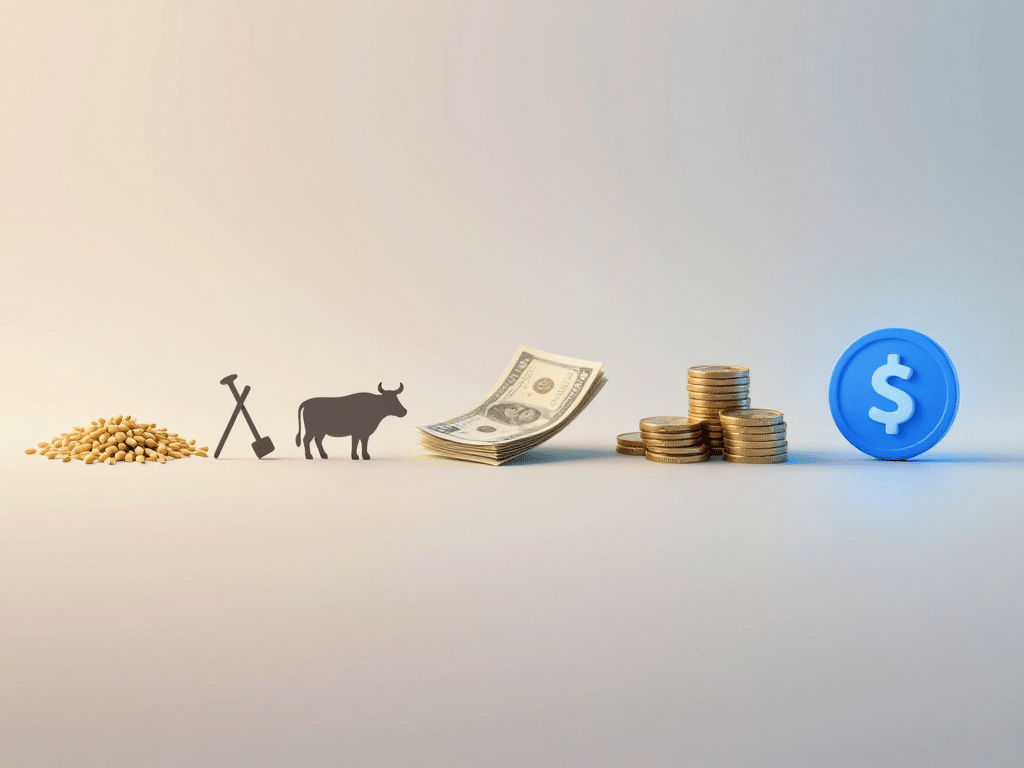
Before money, people relied on barter. You traded what you had for what you needed. Chickens for grain. Tools for clothing. Services for food.
On the surface, barter feels fair and simple. In reality, it was exhausting.
Why Barter Didn’t Work for Long
Barter only works when both people want exactly what the other is offering at the same time. That’s rare. A farmer might need shoes, but the shoemaker might not want food. No match, no deal.
Other problems piled up quickly:
- There was no standard value for goods
- Many items couldn’t be stored long-term
- Large or living items couldn’t be divided easily
As communities grew larger, barter became a bottleneck. People needed something more flexible. Something everyone would accept.

How Money Came Into Existence
The First “Money” Wasn’t Coins
Early societies began using objects that most people agreed were valuable. Shells. Beads. Salt. Livestock. These items weren’t magical—they worked because everyone trusted them.
That shared belief was the real breakthrough.
Why Gold and Silver Took Over
Eventually, precious metals won out. Gold and silver were durable, rare, easy to carry, and easy to divide. Most importantly, they held value over time.
Metal coins solved several problems at once:
- Prices became easier to compare
- Trade became faster
- Wealth could be stored safely
Money was no longer about survival—it was about efficiency.
The Move From Coins to Paper
Why Paper Money Made Sense
Metal coins were heavy, dangerous to carry, and inconvenient for large transactions. Paper money began as a simple promise: a note that represented stored value, often gold.
Over time, the promise changed.
Trust Replaced Gold
Modern paper money is no longer backed by gold or silver. Instead, it’s backed by trust. Governments declare it legal tender. Businesses accept it. People believe it will still have value tomorrow.
This system is called fiat money, and it works because society agrees it works.
How Money Works in the Modern World
Money Is Mostly Invisible Now
Today, most money doesn’t exist physically. It lives in databases. When you swipe a card or send a payment, nothing tangible moves. Numbers update.
And yet, the system functions smoothly because trust remains intact.
The Role of Banks
Banks don’t store piles of cash with your name on them. They track balances. This allows money to move instantly, power businesses, and support global trade.
Money flows because people believe the system will keep flowing.
Why Money Still Matters
Money isn’t wealth. It’s a tool. It allows people to specialize, plan, save, and build. Without money, modern life would slow to a crawl.
Money makes large societies possible. It coordinates effort, rewards contribution, and simplifies exchange. When trust in money is strong, economies grow. When trust weakens, problems appear quickly.
For a complete beginner overview, see Money Basics for Beginners.
Questions Beginners Often Ask About Money
Is Money Real or Just Paper?
Money is real because people agree it is. Its value doesn’t come from the material—it comes from shared belief and consistent use.
Why Can’t Governments Just Print More?
When too much money enters circulation, each unit becomes worth less. Prices rise. This is inflation. Money works best when supply is controlled.
Is Digital Money Still Money?
Yes. If people accept it, trust it, and use it, it functions exactly like physical cash.
Products / Tools / Resources
- Beginner finance books that explain money, banking, and value in plain language
- Educational videos and courses focused on money basics and economic history
- Budgeting and money-tracking apps to understand how money flows in daily life
- Introductory economics podcasts designed for non-experts
- Online simulations and games that demonstrate how money and trade work
Money isn’t mysterious once you see it clearly. It’s not about paper or screens—it’s about trust, coordination, and the quiet agreements that hold society together.