
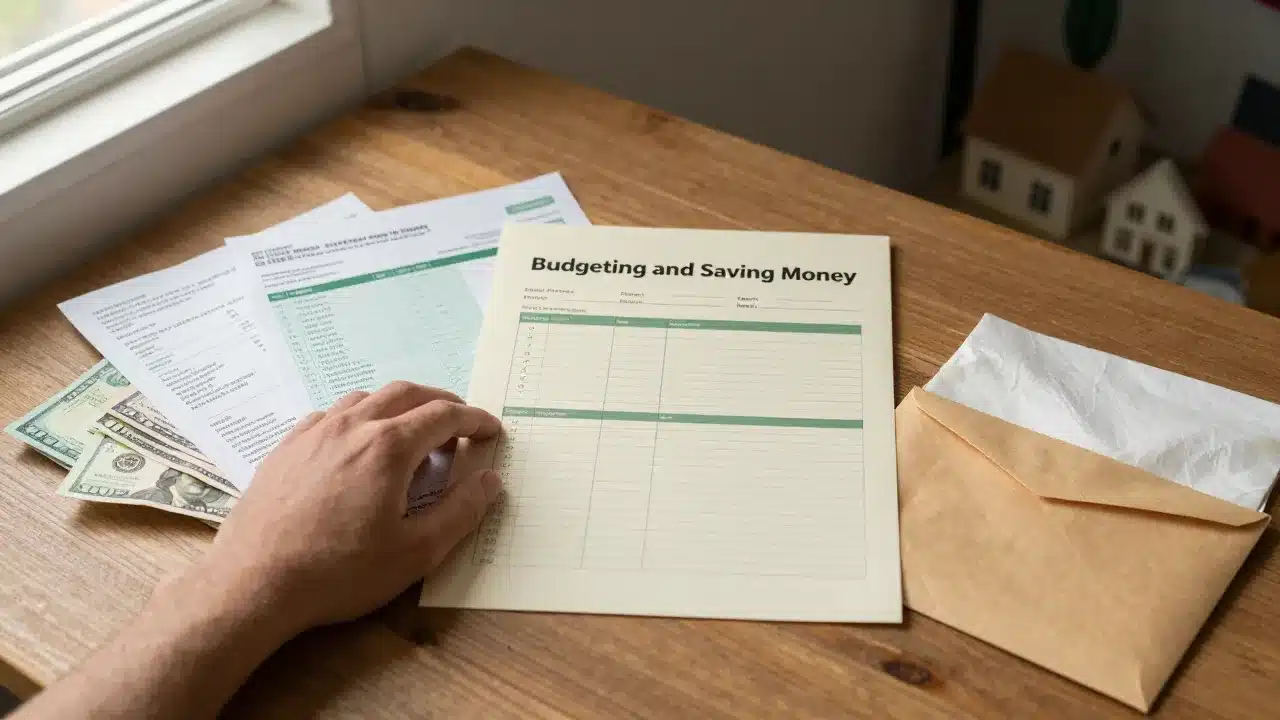
Financial illiteracy and saving money costs American adults an average of $948 annually in 2025- 2026, a steep price to pay for not knowing where your money goes. You can stop this drain on your bank account by following Budgeting and Saving Money: The Complete Guide to Managing Your Money, which provides the exact steps to track spending, build an emergency fund, and invest for your future. Mastering your cash flow is the only way to ensure you are part of the 63% of adults who can actually cover a $400 emergency without panicking.
Living paycheck to paycheck has become the norm for nearly 24% of U.S. households in 2025, but it does not have to be your reality. True financial freedom is not about how much you earn; it is about how wisely you manage every single dollar you have. I have seen people with six-figure salaries go broke because they lacked a plan, while others on modest incomes built wealth through simple, consistent habits. You need to ditch the fancy jargon and get real about your spending habits if you want to see your balance grow.
The national cost of financial illiteracy reached $246 billion in 2025. This massive figure represents missed opportunities, high-interest debt, and lack of savings that keep people stuck in a cycle of stress. This guide breaks down everything from the 50/30/20 rule to grocery saving strategies and the best budgeting apps available today. You will learn how to set up a spreadsheet that actually works and how to use the envelope method to stop overspending on “wants” before you cover your “needs.”
| Financial Milestone | 2025 Target/Stat |
|---|---|
| Emergency Fund Goal | 3 to 6 months of living expenses |
| 401(k) Contribution Limit | $23,500 (under age 50) |
| Avg. savings can significantly impact your retirement savings over time. Financial Literacy Score | 50% (8-year stagnant trend) |
Every small decision you make at the grocery store or when paying monthly bills builds toward big results over time. According to a 2023 Pew Research Center survey, only 54% of adults feel they know a “fair amount” about personal finance, which means nearly half the population is guessing. You are going to stop guessing and start using proven methods like zero-based budgeting and automated savings to take back control. Whether you are managing a low income or looking to bridge the gap between saving and investing, these foundations will change your financial trajectory.
65% of consumers were living paycheck-to-paycheck as of February 2024. This startling reality highlights why mastering the basics in Budgeting and Saving Money: The Complete Guide to Managing Your Money is your most effective defense against financial instability. You do not need a math degree to take control; you simply need a system that accounts for every cent before it leaves your hand. Establishing this foundation is the only way to stop wondering where your money went at the end of the month and start telling it exactly where to go.
Essential Budgeting Methods for Beginners
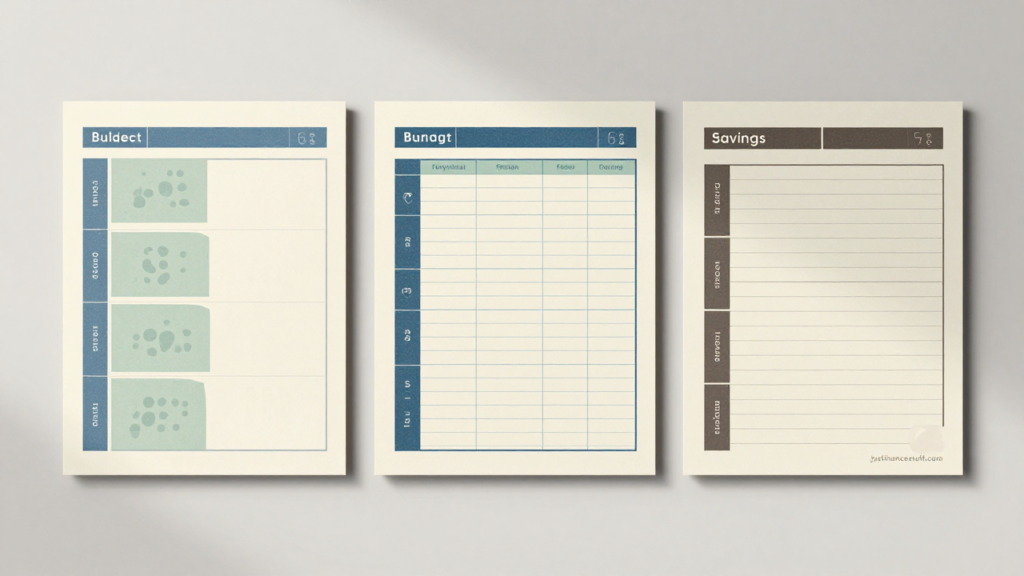
One of the most accessible starting points is the The 50/30/20 Budget Rule is an effective savings plan for managing your finances.. This framework directs 50% of your after-tax income toward “needs” like housing and groceries, 30% toward “wants” such as dining out or hobbies, and 20% toward savings and debt repayment. While I personally find the 30% for “wants” a bit generous if you are digging out of a hole, it provides a sustainable balance that prevents the burnout associated with overly restrictive diets-financial or otherwise.
If you prefer total precision, the Zero-Based Budget is my top recommendation. With this method, you assign every single dollar to a specific category-rent, gas, savings, or even a “fun money” fund-until your income minus your expenses equals exactly zero. It forces you to acknowledge the opportunity cost of your choices; every dollar spent on a streaming service you don’t watch is a dollar that could have been earning interest in a high-yield account.
Needs vs. Wants: The Brutal Honest Truth

The biggest hurdle you will face is distinguishing between a genuine necessity and a well-disguised luxury. In 2025, nearly 24% of U.S. households spent over 95% of their income just on essentials, leaving almost no room for error. To avoid this trap, you must audit your spending ruthlessly.
A “need” is something required for your health, safety, or ability to work-think shelter, basic utilities, and transportation. Most other things, including that daily artisanal coffee or the third subscription service, are “wants” that should be on the chopping block if your savings goals aren’t being met.
| Budgeting Method | Best For… | Core Concept |
|---|---|---|
| 50/30/20 Rule | Simplicity seekers | Percentage-based allocation |
| Zero-Based | Detail-oriented people | Every dollar has a job |
| Pay Yourself First | Automators | Prioritizes savings immediately |
Tracking your spending manually for thirty days is a wake-up call most people avoid because they are afraid of what they will find. You might discover that “small” impulse buys are actually the reason your emergency fund is stagnant. While manual tracking builds discipline, many people eventually find that the right external resources make the habit much easier to maintain over the long term.
Best Books on Budgeting

You might find yourself staring at your bank balance, wondering where the money went, only to realize that financial literacy in the U.S. has remained stagnant at roughly 50% for eight consecutive years. This lack of knowledge isn’t just frustrating; it is expensive, especially when it comes to ways to save and manage your finances effectively. According to 2025 data, a lack of financial understanding costs American adults an average of $948 annually. While basic tips are a great start, diving into a dedicated book allows you to rewire your brain against common hurdles like loss aversion or the anchoring bias that keep you overspending.
The generational gap in money knowledge is particularly stark. In 2025, Gen Z answered only 38% of financial questions correctly on the P-Fin Index, while Boomers scored significantly higher at 55%. Reading the right books can bridge this gap, moving you from a state of “guessing” to a state of mastery. These resources don’t just give you a template; they provide a philosophy for how to value your time and labor.
Here are several highly-rated books that provide a robust foundation for your financial journey:
- The Total Money Makeover by Dave Ramsey: This book focuses on the “Baby Steps” method, emphasizing a strict debt-snowball approach and the psychological win of paying off small balances first to build momentum.
- I Will Teach You to Be Rich by Ramit Sethi: Sethi argues against skipping your daily latte and instead focuses on “Big Wins,” like automating your accounts and negotiating your salary to fund a “Rich Life.”
- Your Money or Your Life by Vicki Robin: This classic treats money as “life energy,” helping you calculate exactly how many hours of your life a new purchase truly costs you.
- The Psychology of Money by Morgan Housel: Rather than technical formulas, Housel explores how your ego and emotions dictate your spending habits more than any spreadsheet ever will.
- Broke Millennial by Erin Lowry provides saving tips that can guide you in creating a budget for your finances. This is an excellent entry point for beginners that tackles awkward situations like managing finances with friends or talking about debt with a partner.
I remember early in my career when I thought I was “good with money” simply because I wasn’t in debt, but I had no actual plan for my future. Reading The Psychology of Money changed my perspective entirely; it taught me that doing well with money has little to do with how smart you are and a lot to do with how you behave. Many of these authors emphasize that consistent habits are more important than a high income, especially since the national cost of financial illiteracy reached a staggering $246 billion in 2025.
Mastering the concepts in these books helps you move beyond the “paycheck-to-paycheck” cycle that currently affects 65% of consumers. Once you understand the theory of how to allocate your income, you will likely want a more hands-on way to see those numbers move in real-time. While a book provides the mindset, a customized tracking tool can provide the daily accountability needed to ensure you are actually following through on your new financial goals and making a budget.
Budget and Savings Spreadsheet Tips

Spreadsheets are the ultimate “no-nonsense” tool for anyone who finds automated apps too restrictive or invasive. While reading books on money management helps you build a philosophy, a spreadsheet forces you to confront the raw data of your life. In 2024, the average US household spent $6,545 each month on total expenditures, yet many people cannot tell you where a single thousand of those dollars actually went. Using a tool like Microsoft Excel or Google Sheets gives you total control over every cell, allowing you to build a system that mirrors your specific life rather than a generic template.
Setting Up Your Basic Budget Framework
To start, you must reconcile your total income against your output and review your budget regularly to identify areas for improvement. The average household income before taxes was $104,207 in 2024, which breaks down to roughly $8,684 monthly. Your spreadsheet should begin with a “Source of Income” column and a “Fixed Expenses” column.
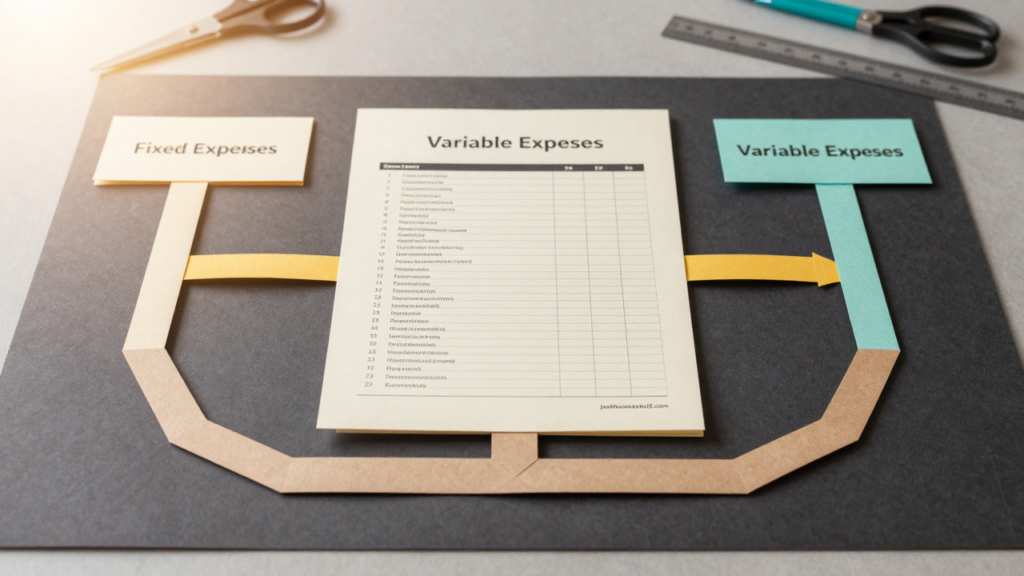
Since housing and transportation are the largest portions of a typical monthly budget, list these first to see how much “breathing room” remains for variable costs. I once tried to track my spending by memory alone; I was off by nearly $400 because I ignored small, recurring digital subscriptions that a spreadsheet would have caught instantly.
| Category | Average Monthly Cost (2024) | Typical % of Budget |
|---|---|---|
| Housing | $2,100 – $2,500 | 30-35% |
| Transportation | $900 – $1,100 | 12-15% |
| Food/Groceries | $700 – $900 | 10-12% |
| Healthcare | $500 – $600 | 7-9% |
Using Formulas and Tracking Savings Goals
The real power of a spreadsheet lies in simple formulas that do the heavy lifting for you. Use the =SUM() function to total your spending and subtract it from your income to find your “net” remainder. You can also create a dedicated “Savings Goal” tab where you track progress toward a specific number, such as a three-month emergency fund. If you struggle with the manual entry aspect, you might eventually find automated budgeting apps more your speed, but the manual process of typing in a $15 lunch helps build the “spending friction” necessary to change your habits.
Common Spreadsheet Mistakes to Avoid
The biggest trap is over-complication. You do not need complex macros or pivot tables to manage a household budget. Avoid these frequent errors to keep your tracker functional:
- Categorizing too broadly: Labeling everything as “Miscellaneous” hides waste.
- Forgetting annual bills: Divide your yearly car registration or insurance by 12 so it doesn’t surprise you in July.
- Ignoring the “Cash Gap”: If your spreadsheet says you have $500 left but your bank account says $50, you are missing transactions.
- Hard-coding numbers: Always use cells for variables so you can update your rent or salary in one place without breaking your formulas.
A well-maintained spreadsheet acts as a mirror for your priorities. If you see that your “wants” column is consistently larger than your “savings” column, the data is telling you that your current lifestyle is actively delaying your future security. There is no algorithm to blame when you are the one entering the numbers.
Best Budgeting and Saving Apps

Digital tools have revolutionized how we track our finances, offering a faster alternative to manual entry. While 54% of US adults believe they have a solid grasp of personal finance according to a Pew Research Center 2023 survey, many still struggle with the daily execution of a plan. Using the right software can bridge that gap by automating the boring parts of money management, like categorizing your morning coffee or calculating your remaining “fun money” for the month.
Selecting the right platform depends entirely on your personality. Some people want a “set it and forget it” system that tracks investments, while others need a hands-on approach to curb overspending. I once tried an app that automated everything so well I forgot to check it for three months-only to realize I’d spent my entire car repair fund on takeout.
Automation is a tool, not a replacement for your brain. In Budgeting and Saving Money: The Complete Guide to Managing Your Money, we look at how these apps turn abstract goals into daily habits.
| App Name | Core Focus on cutting back unnecessary expenses is essential for effective budgeting. | Cost Structure | Best For |
|---|---|---|---|
| YNAB (You Need A Budget) | Zero-based budgeting | Paid (Monthly/Annual) | Aggressive savers |
| Empower (Personal Capital) | Investment tracking | Free version available | High net worth |
| Goodbudget | Digital envelopes | Free & Paid tiers | Visual budgeters |
| PocketGuard | Spending limits | Free & Paid tiers | Simple tracking |
Comparing Popular Budgeting Tools
You Need A Budget (YNAB) is the heavy hitter for those who want to give every dollar a job. It forces you to budget only the money you currently have, which is a wake-up call if you’re used to spending “future” income. While it has a steeper learning curve and a subscription fee, its fans swear by the spending discipline it creates. It is the digital equivalent of the old-school envelope method, ensuring you don’t accidentally spend rent money on a new pair of shoes.
If you care more about your “big picture” wealth than your daily grocery bill, Empower (formerly Personal Capital) is a strong contender. It excels at investment tracking and net worth calculation, though its budgeting features are less granular than dedicated spending apps. For those who miss the now-defunct MintAs a result, many users have migrated to using a more structured personal budget. Credit Karma or Monarch Money to maintain that automated link to their bank accounts without the manual hassle of spreadsheets.
The real power of these apps lies in their ability to highlight where your money actually goes, rather than where you think it goes. Most platforms now include goal setting modules that let you visualize your progress toward an emergency fund or a house down payment. This visual feedback is vital because, as we will see, staying disciplined becomes significantly harder when you are working with a very tight margin or a low income.
Budgeting on a Low Income

Zero-based budgeting is often touted as the gold standard for high earners, but for those managing a tighter wallet, it is a survival mechanism that ensures every cent has a job. When you are operating with limited resources, the margin for error disappears, making it essential to prioritize non-discretionary expenses Prioritize essential expenses like rent and utilities before a single dollar goes toward “wants” to help you start saving effectively. In Budgeting and Saving Money: The Complete Guide to Managing Your Money, we focus on the reality that smart management is more about discipline than the size of your paycheck.
Nearly 24% of US households lived paycheck to paycheck in 2025. This means nearly a quarter of the population is spending over 95% of their income just to cover the basics. While the average US household spent $6,545 each month on total expenditures in 2024, many families are getting by on significantly less. The challenge is compounded by the fact that wage growth for higher-income households has accelerated, according to Bank of America 2025 data, leaving lower-income earners to fight harder against the rising costs of staples.
“When your income is low, your budget isn’t just a spreadsheet; it’s a defensive strategy. You have to be more creative and more aggressive about finding value than someone with a six-figure cushion.”- Financial Planning Expert
To gain traction, you must first attack your fixed costs. Contact your utility providers to ask about ways to save on your bills. budget billing, which averages your payments across the year to prevent seasonal spikes in heating or cooling costs. Look for community resources like local food pantries or “Buy Nothing” groups to offset variable costs. I once spent a year scouring thrift stores and library sales instead of buying anything new, and that “low-spend” mindset is what eventually allowed me to start investing for the long term.
- Audit your subscriptions: Cancel any service you haven’t used in the last 30 days immediately.
- Negotiate your bills: Call your internet or phone provider and ask for the retention department to secure a lower rate.
- Build a mini emergency fund: Aim for a $500 goal first to cover small car repairs or medical co-pays.
- Identify side income: Look for micro-tasking apps or local odd jobs that can bring in an extra $20 a week.
- Use cash for groceries: This creates a physical limit that prevents overspending at the checkout line.
Even with a small income, the goal is to move from a defensive posture to an offensive one. This starts with building that tiny cushion so a flat tire doesn’t result in a high-interest payday loan. Once you have stabilized your daily spending, the next step in your journey is learning how to transition those small wins into wealth-building habits that outpace inflation.
| Expense Category | Low-Income Strategy | Potential Impact |
|---|---|---|
| Housing/Utilities | Budget Billing & Energy Audits | High Stability |
| Food/Groceries | Meal Planning & Bulk Staples | Moderate Savings are crucial for building a solid retirement savings plan. |
| Transportation | Carpooling & Preventative Care | Avoids Crisis Costs |
Moving from a survival mindset to wealth creation requires more than just tracking every cent; it demands a shift from defensive management to offensive strategy. Budgeting and Saving Money: The Complete Guide to Managing Your Money is not just about avoiding debt, but about using your surplus to buy back your future time. While the average American has $8,000 in savings according to the Federal Reserve, that number varies wildly by age and stage of life.
| Age Group | Average Savings Balance |
|---|---|
| Under 35 | $20,540 |
| 35–44 | $41,540 |
| 45–54 | $71,130 |
| 55–64 | $72,520 |
You cannot effectively invest until you have established a launchpad of stability within your personal budget. This means your budget must first fund an emergency reserve to protect you from high-interest debt when life gets messy. Once you have that cushion, you can exploit the power of compound interest, which is interest earned on both your original principal and the accumulated interest from previous periods. This creates a snowball effect where your money eventually works harder than you do.
Transitioning into the market often starts with employer-sponsored accounts. In 2025, individuals under age 50 can contribute up to $23,500 to a retirement account as part of their savings plan. 401(k), while those 50 and older are eligible for an additional $7,500 catch-up contribution. If you ignore these options, you face a massive opportunity cost-the potential value you lose by choosing one path over another. For example, skipping a company match is essentially turning down a 100% guaranteed return on your investment.
“The biggest barrier to wealth isn’t a lack of math skills; it’s the psychological traps we set for ourselves.”- Financial Planner Perspective
Your brain is often your wallet’s worst enemy due to built-in cognitive biases. You might suffer from loss aversion, where the pain of losing $100 feels twice as intense as the joy of gaining $100, leading you to be too conservative with your savings. Others fall for anchoring bias, fixating on the first price or stock value they saw rather than current market reality. Recognizing these mental shortcuts allows you to make analytical decisions rather than emotional ones.
Overconfidence bias can lead to disaster. I have seen far too many people think they can “beat the market” with a hot tip, only to wipe out years of disciplined budgeting in a single afternoon. True wealth building is usually boring. It involves steady contributions to a 401(k) or an IRA while keeping your everyday expenses, like your grocery bill, under strict observation to maximize your investable surplus.
Applying a proactive strategy to your finances transforms a budget from a mere list of past mistakes into a forward-looking roadmap for your life. In this Budgeting and Saving Money: The Complete Guide to Managing Your Money, you will learn that successful planning is less about restriction and more about intentionality. A lack of financial knowledge costs American adults an estimated $948 annually on average in 2025, often because they react to bills rather than anticipating them. By shifting to a proactive model, you stop wondering where your money went and start telling it where to go.
Building a Resilient Emergency Reserve

Your first move toward stability is establishing a “break glass in case of emergency” fund to insulate your plan from life’s inevitable hiccups. Only 46% of US adults have enough emergency savings to cover three months of expenses, leaving the majority vulnerable to debt when a car breaks down or a medical bill arrives. While any start is good, most people should aim to save three to six months’ worth of living expenses. This isn’t just a suggestion; it is a statistical safety net that keeps you from raiding your long-term investments during a crisis.
55% of adults in 2024 had set aside money for three months of emergency expenses. This is a slight improvement from 54% in 2023, yet it remains significantly lower than the 59% recorded in 2021. To join the ranks of the prepared, you must treat your savings contribution like a non-negotiable utility bill. If you wait until the end of the month to see what is left over, you will likely find nothing but receipts and regret.
Strategies for Proactive Budget Management

Effective planning requires you to look months ahead rather than just days. Using a financial calendar allows you to plot out irregular expenses-like annual insurance premiums or holiday spending-so they don’t feel like “surprises” when they occur. You should also audit your accounts to identify and cut unnecessary expenses, such as dormant streaming subscriptions or “convenience” fees that add no real value to your life. Once you’ve trimmed the fat, use the table below to structure your ongoing maintenance.
| Action Item | Frequency | Benefit |
|---|---|---|
| Automate Transfers | Every Payday | Removes the “choice” to skip savings. |
| Budget Review | Weekly | Identifies spending leaks before they sink the month. |
| Goal Adjustment | Quarterly | Ensures your plan matches your current income and life changes. |
Setting realistic financial goals is the fuel for this entire process. Whether you are saving for a down payment or preparing to use the physical cash control of the envelope budgeting method, your goals must be specific and time-bound. Proactive planning means you are no longer a passenger in your financial life; you are the driver, and the budget is your GPS.
“The total national cost of financial illiteracy reached over $246 billion in 2025.”- National Financial Educators Council Survey
Consistency beats intensity every single time in the world of money management. You don’t need a massive windfall to change your trajectory; you need a system that functions even when you are tired or distracted. By automating your savings and reviewing your progress regularly, you build a financial fortress that can withstand inflation and economic shifts alike.
You can regain total control over your discretionary spending by physically limiting your access to cash through the envelope budgeting method. In “Budgeting and Saving Money: The Complete Guide to Managing Your Money,” we look at how moving away from plastic can curb the impulse to overspend. This tactile system requires you to divide your monthly income into paper envelopes labeled for specific categories, such as dining out, entertainment, or clothing. Once the cash in an envelope is gone, you simply stop spending in that category until the next month begins.
Financial literacy in the US has remained around 50% for eight consecutive years, and a major reason people struggle is the “invisible” nature of digital transactions. When you swipe a card, your brain doesn’t register the loss as sharply as it does when you physically hand over a twenty-dollar bill. By using cash for variable expenses, you create a hard boundary that software cannot always provide. It is an editorial stance of mine that beginners should start with physical envelopes for at least 90 days before trying a digital version; the “sting” of an empty envelope is the best teacher for discipline.
How to Implement the Envelope System
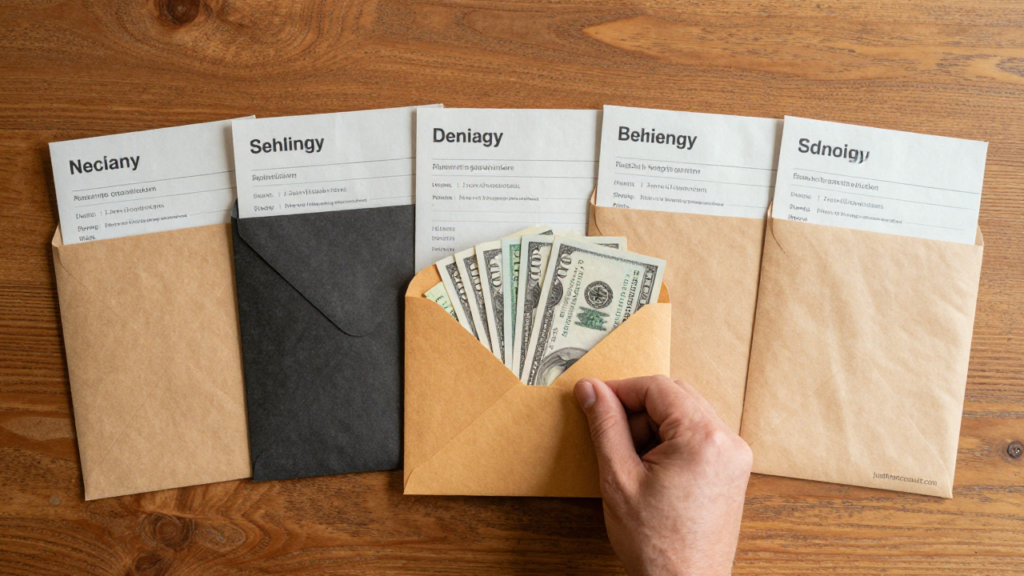
To start, you must first identify which categories are prone to leaks. While fixed costs like rent or insurance are best handled via bank transfers, variable costs are the primary targets for this method. You will withdraw the exact amount of cash needed for these categories at the start of your pay cycle. If you have allocated $300 for “Fun Money,” that cash goes into the envelope, and you leave your debit card at home when heading out for the night.
Financial illiteracy costs American adults an estimated $948 annually on average in 2025. Much of this waste comes from small, unrecorded purchases that “bleed” a budget dry. The envelope system stops this by forcing a pause. If you want a coffee but the “Dining” envelope is empty, you are forced to say no. This method builds a psychological bridge between your goals and your daily actions, ensuring that your money goes where you actually intended it to go.
Adapting to a Digital World
If carrying stacks of cash feels too risky or outdated, you can use budgeting apps that help you create a budget and track your spending. virtual envelopes through various banking apps. These tools allow you to “earmark” funds within a single savings account, effectively creating digital partitions for your money. However, the risk of “borrowing” from another envelope is much higher when it only takes a few taps on a screen. Success with digital envelopes requires the same rigid commitment as the physical ones: when the sub-balance hits zero, the spending must end.
| Feature | Physical Envelopes | Digital Envelopes |
|---|---|---|
| Ease of Use | High (No tech needed) | Medium (Requires app) |
| Overspend Risk | Very Low | Moderate |
| Safety | Low (Cash can be lost) | High (Bank security) |
One of the most common areas where the envelope method reveals massive overspending is the food budget. While it’s easy to track a single rent payment, the dozens of small trips to the store throughout the month often hide the true cost of what you eat.
Grocery Budgeting and Savings Tips

Comparing a meticulously planned shopping trip to a hungry, aimless wander through the aisles reveals why most people overspend on food. While the average US household spent $6,545 each month on total expenditures in 2024, groceries remain one of the few significant variable expenses you can slash immediately without moving houses or selling your car. In Budgeting and Saving Money: The Complete Guide to Managing Your Money, mastering this category is a non-negotiable step toward total financial control.
Housing and transportation take the biggest bites out of your income. However, because grocery costs fluctuate based on your choices, they represent your best opportunity for “found money” each month. I once spent $200 on a single trip because I went in without a plan and let my stomach do the talking-a classic mistake that ignores the opportunity cost of those dollars. Every dollar saved on cereal is a dollar that can go toward your emergency fund or long-term wealth.
Strategic Shopping and Meal Planning
Effective management starts before you leave the house. Meal planning is the primary defense against the “what’s for dinner” panic that leads to expensive takeout. By checking your pantry first, you avoid buying a third jar of paprika you don’t need. This leads naturally into broader grocery savings strategies, such as building a smart shopping list organized by store layout to prevent unnecessary laps through the snack aisle.
“The grocery store is designed like a maze to keep you inside longer. The more time you spend there, the more likely you are to fall victim to impulse buys that derail your monthly targets.”- Financial Planner Perspective
Understanding unit pricing is a vital skill for any serious budgeter. Retailers often hide the true cost of an item by highlighting the total price rather than the price per ounce or pound. A larger “family size” box isn’t always the better deal; sometimes two smaller items on sale actually cost less per unit. Use your phone’s calculator to verify these numbers before tossing items into the cart.
Maximizing Value and Reducing Waste
Loyalty programs and digital coupons offer easy wins, but only if they apply to things you actually need. Buying in bulk is highly effective for non-perishables like rice or toilet paper, but it is a trap for fresh produce that might rot before you eat it. Food waste is essentially throwing cash directly into the trash. Aim to use “first-in, first-out” inventory management in your fridge to ensure nothing expires unnoticed.
- ✅ Shop the perimeter: Fresh produce, meat, and dairy are usually on the edges; processed (and pricier) goods hide in the middle.
- ✅ Generic over name brand: Most store brands have the exact same ingredients for 30% less.
- ✅ Eat before you shop: Hunger ruins your discipline and makes frozen pizzas look like a necessity.
- ✅ Track your totals: Use a calculator as you shop to stay under your specific limit.
Reducing these recurring costs allows you to pivot toward other monthly savings approaches. When you stop bleeding money at the checkout counter, you gain the breathing room needed to tackle larger financial goals. It is not about deprivation; it is about ensuring your money goes where you actually want it to go in your savings plan.
Advanced Grocery Savings Strategies
Switching from a standard shopping list to a tactical food plan can slash your monthly spending by hundreds of dollars without forcing you to survive on instant noodles. While basic habits like avoiding hunger-driven shopping help, true mastery of Budgeting and Saving Money: The Complete Guide to Managing Your Money requires looking at the grocery store as a battlefield of psychological marketing. By moving beyond simple coupons and embracing structural changes in how you source food, you can insulate your bank account against the persistent erosion of inflation.
Inflation significantly reduces the purchasing power of your money over time. If the interest you earn on your savings fails to keep pace with rising food costs, the real value of your hard-earned cash effectively shrinks. To combat this, you must treat grocery savings as a form of active income. High-yield savings accounts are excellent for parking the money you save, as they help offset some of that loss in purchasing power during high-inflation periods by offering better returns than traditional accounts.
Maximizing Every Food Dollar

Deepening your savings requires stepping outside the traditional supermarket aisles. Discount grocers like Aldi or Lidl often provide the same quality of staples for 30% to 50% less than name-brand competitors because they stock fewer items and use efficient staffing models. For fresh produce, farmers’ markets near the end of the day often offer steep discounts on seasonal produce as vendors try to clear their inventory before heading home.
Technology should also be part of your arsenal. Price comparison apps allow you to scan barcodes to see if a nearby competitor has a better deal, while cash-back apps like Ibotta or Fetch Rewards give you a small percentage of your spending back in the form of gift cards or deposits. If you have the discipline to pay your balance in full every month, using a credit card that offers 3% to 6% rewards on groceries can further subsidize your food costs.
- ✅ Batch cooking: Prepare large meals on Sundays to prevent expensive mid-week takeout orders.
- ✅ Pantry staples: Make your own bread, stock, or salad dressings to avoid the high markup on processed versions.
- ✅ Generic brands: Opt for store-label canned goods and spices, which are often identical to brand-name versions.
- ✅ Unit pricing: Always check the small price-per-ounce number on the shelf tag rather than the total price.
Strategic decisions in everyday categories like food are the primary drivers of long-term financial stability. When you master these advanced tactics, you aren’t just cutting a bill; you are actively managing your money with the same precision a business uses to ensure its survival. This discipline serves as the foundation for the overarching goal of mastering budgeting for better savings, turning your kitchen into a engine for wealth rather than a drain on your future.
“The goal isn’t just to spend less; it’s to ensure that every dollar you do spend is working toward your long-term security rather than just satisfying a temporary craving.”- Financial Planner Perspective
A 2025 analysis suggests that Americans who actively use price-tracking tools and loyalty programs save an average of $75 per month compared to those who shop without a plan. Over a year, that is nearly $1,000 that could be redirected into an investment account or a high-yield savings vehicle.
How to Master Budgeting for Better Savings

Relying on willpower alone to manage your finances is a recipe for failure because your brain is hardwired to prefer instant gratification over long-term security. To truly succeed with the Budgeting and Saving Money: The Complete Guide to Managing Your Money framework, you must view budgeting as a dynamic skill that requires regular maintenance rather than a static document you set and forget. Mastering this process is the only way to reverse the trend of financial illiteracy that currently costs American adults an average of $948 annually as of 2025.
The mindset of a master budgeter involves shifting from a defensive posture-just trying to pay bills-to an offensive strategy where every dollar is a tool for wealth creation. This requires a commitment to continuous improvement, where you analyze your spending patterns every month and adjust for upcoming life changes. I once thought I had my finances solved until an unexpected car repair wiped me out, proving that a budget without an active adaptation phase is just a list of wishes. You need to leverage every digital tool and physical method previously discussed to ensure your plan survives real-world friction.
| Financial Metric | 2024/2025 US Data Point |
|---|---|
| Average Cost of Financial Illiteracy | $948 per year |
| Adults with 3-Month Emergency Fund | 46% |
| Ability to Cover a $400 Emergency | 63% |
Setting ambitious savings goals is the fuel that keeps this system running when your motivation dips, serving as key saving tips to stay on track. While the 50/30/20 rule provides a solid baseline, a master budgeter pushes beyond standard benchmarks to hit specific milestones, such as fully funding an emergency reserve. Current data shows that only 46% of US adults have enough emergency savings to cover three months of expenses, a gap that leaves the majority of the population one bad break away from debt. By treating your savings goal as a non-negotiable “bill” you owe your future self, you move from the 63% who can barely scrape together $400 for a crisis into the tier of people with genuine financial autonomy.
“Budgeting isn’t about limiting your freedom; it’s about giving yourself permission to spend on what actually matters by eliminating the waste you don’t even notice.”- Seasoned Financial Planner Perspective
Maintaining momentum requires celebrating small wins, like hitting your first $1,000 in a high-yield account or successfully navigating a “no-spend” week. These milestones prove that your system works and reinforce the habit of Intentional spending can be a part of creating a budget that allows for both necessities and savings.. As you become more proficient, you will find that the stress of checking your bank balance disappears, replaced by the confidence of knowing exactly where your money is going. This high-level mastery naturally leads to more aggressive tactics for growing your wealth through specific monthly savings strategies.
Monthly Savings Strategies
Deciding how much to siphon off into your savings before you pay your rent is the most important choice you will make this month. While the Federal Reserve reports that the average American has $8,000 in savings, this figure is often skewed by high earners, leaving many households vulnerable to the slightest financial hiccup. In Budgeting and Saving Money: The Complete Guide to Managing Your Money, we emphasize that moving from a defensive posture to an offensive one requires more than just “trying” to save; it requires a systematic drain of your checking account into protected assets.

Current data shows a massive disparity in how different age groups accumulate wealth. While you might feel behind, understanding the benchmarks can help you set realistic, aggressive targets for your specific life stage. According to recent 2024 data, savings balances tend to scale significantly as workers hit their peak earning years.
| Age Group | Average Savings Balance | Emergency Fund Coverage (3 Months) |
|---|---|---|
| Under 35 | $20,540 | 42% of group |
| 35-44 | $41,540 | 51% of group |
| 45-54 | $71,130 | 58% of group |
| 55-64 | $72,520 | 62% of group |
To join the 55% of adults who successfully maintained a three-month emergency fund in 2024, you must treat your savings like a predatory bill collector. I recommend automating savings transfers to occur the exact hour your direct deposit hits. If you wait until the end of the month to see what is left, you will find exactly zero dollars every single time. My own “money oops” involved thinking I could manually transfer funds, only to realize I’d spent my “savings” on a series of overpriced artisanal sandwiches.
Beyond automation, you should implement these specific tactics to accelerate your balance growth:
- Execute Savings Challenges: Start a 52-week challenge where you save $1 the first week, $2 the second, and so on, resulting in $1,378 by year-end, is one of the clever ways to save money.
- Harvest Windfalls: Commit to 100% of tax refunds, work bonuses, or cash gifts going directly into retirement accounts rather than lifestyle upgrades.
- Audit Bank Statements: Review your last 30 days of transactions to identify “zombie subscriptions” that can be killed immediately.
- Monetize Side Hustles: Use platforms like Upwork or TaskRabbit to generate income specifically earmarked for your emergency fund.
Building this cushion isn’t just about survival; it provides the psychological safety net needed to plan for future rewards. This discipline is what eventually allows you to pivot from basic security to funding life’s highlights, such as the strategic planning required for guilt-free travel and saving for retirement. Financial security is a cumulative result of these small, monthly victories.
“The goal of a monthly savings strategy is to remove the element of human choice. When you automate your progress, you stop negotiating with yourself and start building a fortress.”- Financial Planning Expert Opinion
Every dollar you divert today is a brick in that fortress. While the average household spent $6,545 monthly in 2024, those who actively seek out side income or aggressively cut recurring costs find they can reach their goals years ahead of their peers. Consistency beats intensity every time.
Vacation Budgeting Hacks
Book your flights on a Tuesday or Wednesday and clear your browser cookies before you hit “purchase” to avoid price hikes based on your search history. In our guide, Budgeting and Saving Money: The Complete Guide to Managing Your Money, we emphasize that financial planning is the engine that drives your best life experiences rather than a tool for deprivation. When you treat travel as a planned expense, you stop viewing it as a “financial emergency” that requires a credit card and start seeing it as a reward for your discipline.
Effective vacation planning requires you to confront opportunity cost, which is the value of what you give up by choosing one path over another. If you spend $2,000 on a week-long luxury stay, that is $2,000 you cannot put toward a home down payment or a new car. I once blew an entire tax refund on a last-minute trip to Mexico because I ignored this principle; I had a great tan but spent the next six months stressing over a car repair that the refund should have covered. You must also account for how much money you make when creating a budget. inflation erodes your purchasing power over time, meaning that a trip that cost $3,000 in 2023 will likely require a larger budget in 2025 for the same level of comfort.
To keep your costs manageable without feeling like a miser, focus on these tactical steps in your savings plan:
- The 10% Buffer is a great way to save for unexpected expenses without derailing your budget. Always add 10% to your total estimated cost for “unseen” expenses like baggage fees, city taxes, or that overpriced airport sandwich you’ll inevitably buy.
- Grocery Store Souvenirs: Skip the tourist traps and buy local snacks or coffee at a neighborhood supermarket; it is cheaper and often more authentic.
- Mid-Week Transitions: If your schedule allows, travel from Thursday to Thursday rather than the standard weekend-to-weekend block to secure lower accommodation rates.
- Reward Point Optimization: Use your accumulated credit card points specifically for high-cost items like international airfare where the cent-per-point value is highest.
- Free Activity Days: Research museums and galleries in your destination, as many offer free admission on specific weekdays or the first Sunday of the month, which are great ways to save money while enjoying culture.
Overspending traps often hide in “convenience” costs, such as taking an Uber from the airport instead of using a $5 rail link. While these small choices seem minor, they compound quickly over a ten-day trip. By setting a hard daily limit for food and entertainment, you create a framework that allows for guilt-free indulgence when you find something truly special. Sticking to a budget during your trip ensures that the “post-vacation blues” aren’t worsened by a mountain of debt when the statement arrives next month.
| Expense Category | The “Trap” Price | The “Hack” Price |
|---|---|---|
| Airport Transport | $60 (Ride Share) could be a part of your budget helps to manage transportation costs efficiently. | $5 – $12 (Public Transit) |
| Daily Meals | $100 (Sit-down) | $45 (Market + 1 Meal) |
| Mobile Data | $10/day (Roaming) | $15 total (Local eSIM) |
Ultimately, a successful vacation budget is about making intentional trades. You might choose to stay in a modest Airbnb so you can afford a once-in-a-lifetime guided tour or a high-end dinner. This approach proves that wise money management isn’t about saying “no” to fun, but about saying “yes” to the experiences that actually matter to you while ignoring the expensive fluff that doesn’t.
Conclusion
Financial freedom is rarely about the size of your paycheck and almost always about how you direct the dollars you already have. By applying the strategies in Budgeting and Saving Money: The Complete Guide to Managing Your Money, you stop guessing where your cash went and start telling it where to go. You cannot ignore the math: a lack of financial knowledge costs the average American adult $948 every year. That is a “literacy tax” you simply do not have to pay if you stay disciplined with your tracking and spending habits.
Managing your money is a skill you build through boring, repetitive actions rather than one-time strokes of luck. Only 46% of US adults have enough emergency savings to cover three months of expenses. You avoid being part of that statistic by automating your savings and treating your emergency fund like a mandatory bill. Whether you use a high-tech app or a simple paper envelope, the tool matters less than your willingness to look at your bank statement without flinching.
- Assign every dollar a job: Use zero-based budgeting to ensure your income minus your expenses equals zero, leaving no room for “mystery spending.”
- Build a $400 buffer immediately: Since 37% of adults cannot cover a small emergency with cash, reaching this first milestone protects you from high-interest credit card debt.
- Automate your growth: Set up a recurring transfer to a high-yield savings account on payday so you never have the chance to spend your future wealth on current “wants.”
- Cap your housing and transport: These are the largest monthly drains on the average US budget, so keeping these fixed costs low provides the most significant boost to your savings rate.
Log into your bank portal right now and set up an automatic transfer for $25 to a separate savings account. Open a spreadsheet or a budgeting app like YNAB or Rocket Money to categorize your last ten purchases. Seeing the hard data is the only way to kill the habits that keep you broke.
Stop overthinking the perfect strategy and start moving your money. Your future self is not going to thank you for your intentions, only for your balance.
Mastering your money is a choice you make every morning. editEditdownload