

Want to know a secret about saving money effectively? You don’t need to wait until your kid gets a job to start financial education. You can teach your kids about money at any age, even with simple games like sorting coins. Early money lessons build real Teaching children about money early helps them develop strong financial habits that will benefit them in the future. that stick for life. This guide shows easy ways to teach kids about money and help your child learn skills for a brighter financial future.
Can we talk about why starting early is actually key?
Kids start forming habits way before you think they’re ready, and money is no different. Even young children can understand basic ideas about how money works – like trading coins for a treat or saving up for something they want. Waiting until the teen years to teach money management skills means missing years of easy, low-stakes practice. Starting young is a great place to start building real understanding, and it puts your kid ahead of the game before bigger money decisions even show up.
My take on why toddlers can handle the basics
Toddlers won’t grasp interest rates, but they absolutely get “this many coins buys one cookie.” That’s basic understanding, and it counts. Young children can understand cause and effect long before they can count past ten, so simple exchanges – trading, sharing, saving a few coins in a jar – actually click. Starting here isn’t rushing things. It’s just meeting kids where they already are.
Getting them used to how cash actually flows

Handing over a dollar bill for ice cream teaches more than any lecture ever could. Letting your child pay the cashier, count change, or drop coins into a jar shows them money moves – it comes in, it goes out, and choices matter. This hands-on flow is how kids start connecting actions to outcomes, which is the real foundation for every money management skill that comes later.
Real money for real kids: Why the piggy bank is honestly a win
A piggy bank seems old-fashioned, but that’s kind of the point. Giving your kid actual money they can hold, instead of some number on a screen, teaches them more than any app ever could. They get to count the money, stack the coins, and watch the pile grow week after week. It’s a simple, fun way to show them money is used for things they actually want, not just an abstract idea grown-ups talk about.
Honestly, there’s nothing like the sound of clinking coins
Kids learn through their senses, and that jingly sound coins make hitting the bottom of a jar? That’s basically a tiny reward system built right in. Every clink tells them their savings are growing, no screen required. Watching money grows in a see-through jar or bank gives them a reason to keep adding more, and that habit sticks a lot longer than you’d think.
Why I think physical cash is the way to go
Cash just makes sense to a kid in a way digital numbers don’t. They can touch it, lose it, count it twice to make sure, and feel the weight of it in their hand, reinforcing their understanding of saving money. That’s how they really see money as something real with actual value. A piggy A jar full of coins teaches basic budgeting principles way before they’re ready for a debit card or banking app.
Is paying for chores a good idea or what?
Parents argue about this one all the time, and honestly, there’s no single right answer. Paying kids for chores can work great, as long as you’re clear on what counts as “extra” and what’s just being part of the family. The goal isn’t to turn your kid into a tiny employee. It’s to show them that money is a tool connected to effort, so they walk into adulthood already money smart instead of totally clueless.
Why taking out the trash should totally earn ’em a buck
Taking out the trash, sweeping the porch, washing the car – these little jobs are perfect for teaching that earn money actually means something. When you give kids a buck for a specific chore, you’re showing them a direct line between work and reward. That’s a lesson no lecture can teach as well as cold, hard cash can. Just keep the tasks simple and age appropriate.
Giving them some skin in the game with an allowance
An allowance works a bit differently than per chore pay, and both can live together just fine. Giving a weekly allowance tied to basic responsibilities gives your child to make real choices about spending, saving, or saving up for something bigger. That’s skin in the game in action. Once their own money’s involved, kids pay way more attention to where it goes.
Needs vs. wants: The struggle is seriously real

Teaching your child the difference between needs and wants might be one of the toughest money lessons out there. A need is something you can’t live without, like food or a winter coat. A want is that A pair of expensive sneakers can become a financial goal if they save for it over time. or the newest video game everyone’s talking about. Once your kid starts to understand that money goes toward needs first, they’ll begin to spend money more thoughtfully instead of grabbing whatever looks shiny at the store.
Dealing with the “I want that video game” meltdown
Meltdowns happen, especially when a video game hits the shelves and all their friends already have it. Instead of giving in, ask your child to explain why they want it and where the money would come from, helping them learn about money management. This helps your child understand that just because an item can be purchased doesn’t mean it should be bought right now. Sometimes waiting a week cools things down fast.
My real deal on why we don’t buy every shiny thing
Here’s my honest take: buying every shiny thing teaches zero patience and zero value. I want my kid to spend money responsibly, not impulsively. When we skip that pair of expensive sneakers, I explain it’s not punishment, it’s a choice. That choice shows them exactly understand that money is limited, and every dollar spent on a want is a dollar not saved for something bigger.
Saving up for those big-ticket items without losing your mind
That game console or bike isn’t getting any cheaper, so a clear plan beats whining every single time. Big purchases teach kids more about financial concepts than small ones ever will, because the wait actually means something. A savings goal with a real number attached, like $60 for a scooter, gives kids something to work toward instead of just wishing. Setting money aside weekly turns an impossible-sounding price tag into bite-sized chunks a kid can actually wrap their head around, making saving money feel achievable.
Helping them pick a goal and stick to it
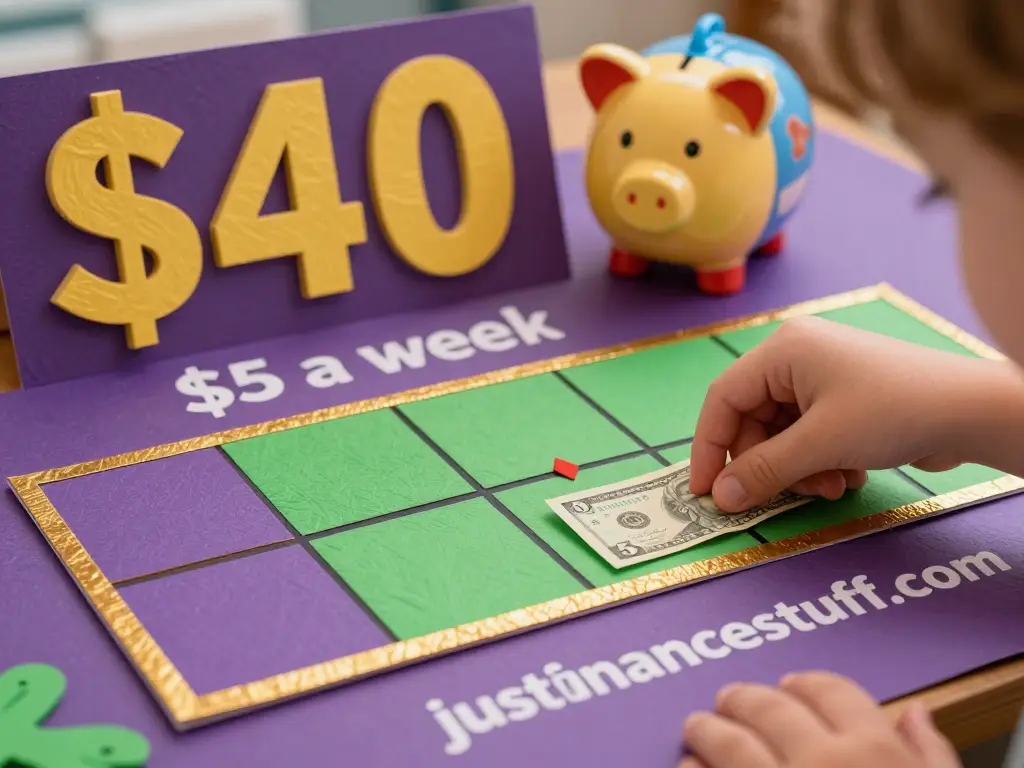
Picking the goal is half the battle. Sit down together and write down what they want, how much it costs, and how much they can realistically save each week. A $40 toy saved at $5 a week takes eight weeks, making it a great financial goal that is nice and visible on a chart or jar. Kids stick with savings goals help children understand the importance of saving money for future purchases. way better when they can see progress, not just hear about it.
The real deal on teaching patience through saving
Nobody loves waiting, kids especially. But this is where the value of money actually clicks for them, usually around week three when the excitement wears thin. Let them feel that itch to quit and talk them through it instead of caving. Making it through teaches patience way better than any lecture, and future financial decisions get easier once they’ve proven to themselves they can manage money and wait things out.
Time to hit the bank: Leveling up their skills for the teen years
Piggy banks and chore charts are great, but as kids get older, their money skills need to grow up too. The teen years are when it’s time to teach bigger lessons: how to create a budget and understand financial habits. savings account works, what a bank or credit union actually does, and how Explaining how interest works can help children learn about money and the importance of saving for their financial goals. in their favor. Teens handle more cash and more choices around money, so this is the stage where things get real.
Why I think older children need a real bank account
Older children benefit hugely from an actual savings account instead of a jar on a shelf. Once you open a bank account With them, they see deposits, balances, and statements, which helps children learn about money in a tangible way, making it feel less abstract. Most financial services offer youth accounts with no fees, and some even pay a small amount of interest, giving kids a real reason to save instead of spend.

Seriously, don’t wait to teach them about credit
Credit confuses plenty of adults, so don’t wait until your kid’s eighteen to explain it. Teens need to understand that a bank or credit card isn’t free money, it’s borrowed money with rules attached. Walk them through how interest works and why a good credit history matters later for renting an apartment or buying a car, teaching your children about money management. Teach them about credit early, and they’ll thank you at twenty.
Final words
Teaching basic money management isn’t about one big lesson – it’s small moments stacked over time. Every time you let your child make a budget, handle real cash, or choose between needs and wants, you’re building financial literacy that sticks. You won’t get it perfect, and that’s okay. The goal is simple: help kids understand money management early, so responsible money habits feel normal, not forced, by the time they’re teens. 💰
FAQ
What age should you start teaching kids about money?
You can start as early as age three or four, once a child can count and understands that items cost something, laying the groundwork for teaching children about money. At this age, keep it simple with coins, a piggy bank and basic sorting games. The real goal isn’t math skills, it’s building the habit of thinking about money before they’re teens.
How much allowance should you give a child?
There’s no fixed amount that works for every family, it depends on your budget, your child’s age and what the allowance is meant to cover. Some parents give a dollar or two per year of age weekly. What matters more than the number is being consistent, so your kid learns to plan around it.
Is it a mistake to pay kids for every chore?
Paying for every single task can backfire, since kids may start expecting cash for things like brushing their teeth or helping a sibling. A better approach ties payment to extra chores beyond basic family responsibilities. That way, kids still learn that some work is just part of being in a household.