
Private Debt and Private Credit
This article explains how private credit and private debt Private credit refers to how these lending methods relate, where they differ, and what that means for investors and borrowers. You will get a clear, practical view you can use in real life. For example, a family office evaluating a private debt fund might compare yields, fees, and liquidity against a direct loan to a growth company.
Key terms: private debt vs private credit
Private credit is a broad term for lending outside the public markets, often provided by non-bank lenders or private funds. It includes structures like unitranche, mezzanine, and senior secured loans, with varying targeting of risk and return. Private debt is a more specific label for debt instruments used to finance private companies, such as term loans or subordinated notes. In practice, people mix the terms, but the difference matters when evaluating covenants, leverage, and seniority in a deal.
Why the distinction matters to investors and borrowers
- Investors should compare credit quality, liquidity windows, and risk premia across a broad private credit sleeve versus a single private debt instrument. For instance, a fund may offer quarterly liquidity but lower average yield than a bespoke direct loan with tighter covenants.
- Borrowers weigh options between direct lending and traditional bank loans by looking at the characteristics of private credit, including terms, covenants, and the impact on capital structure, including recourse and prepayment penalties. A fast-growing startup might prefer a private credit facility with milestone-based tranches to preserve equity.
Private credit and private debt: definitions and overlaps
What is private credit?
Private credit Private credit refers to a broad category of lending outside traditional banks. It covers loans and debt instruments arranged by non‑bank lenders or private equity firms to finance private companies, often with bespoke terms.
What is private debt?
Private debt refers to the specific debt instruments used to fund private companies. It is usually a subset of private credit, focusing on the actual loans, notes, or bonds created for borrowing and repayment.
How the terms are used interchangeably

People often swap the terms in everyday talk. The difference matters for risk, structure, and liquidity, the broad category versus the individual debt instruments within it.
Common structures and instruments
- Direct lending agreements between a private lender and a private company
- Senior secured loans with collateral are a common feature in private credit investing.
- Subordinated or mezzanine debt with higher risk and returns
- Unitranche financing and other specialty debt formats
Market participants and roles
Non-bank lenders and fund managers
Non-bank lenders provide private credit through dedicated vehicles such as private credit funds and business development companies. They offer tailored loans and take on bespoke risk in exchange for higher yields. Private credit managers select borrowers, structure deals, and monitor performance to pursue steady income and capital preservation within a private market portfolio. For example, a manager might fund a niche software company with a bespoke term loan that includes a step-up interest rate tied to revenue milestones.
Borrowers: middle-market and mid-cap companies
Borrowers in this space are typically private mid-market or mid-cap firms seeking growth, acquisitions, or working capital. They often face tighter bank loan supply and use private lending to fill funding gaps. In practice, a mid-sized manufacturer might use private debt to finance a new production line, while covenants are tailored to protect cash flow. Terms are negotiated to fit the specific needs of the borrower and the investment strategy of the private credit lenders, highlighting the importance of understanding private credit. capital structure Private credit typically emphasizes scalability needs, with an emphasis on cash flow coverage and covenants aligned with quarterly earnings volatility.
Direct lending versus syndication
Direct lending is a bilateral loan between one borrower and a single lender or a tight group. Syndication pools several lenders to share risk and increase loan size. In a real deal, a private equity backed growth company might obtain a $100 million direct loan with bespoke covenants or opt for a $150 million syndicated facility to diversify lenders, showcasing the versatility of private credit investment. Direct lending usually closes faster and offers bespoke terms, while syndication provides broader distribution and risk dispersion, plus potential pricing improvements from competition among lenders.
Regulatory and capital implications
Non-bank lenders operate under different capital requirements than traditional banks, which affects leverage, liquidity, and reporting. For instance, a private credit fund may maintain liquidity buffers to honor redemptions, influencing loan pricing and hold periods. Private credit funds balance funding needs with regulatory constraints, guiding deal terms, transparency, and the speed of capital deployment. A common pitfall is underestimating run-rate covenants during volatile markets, which can tighten liquidity suddenly.
Key characteristics and risk profiles
Seniorities, security, and covenants
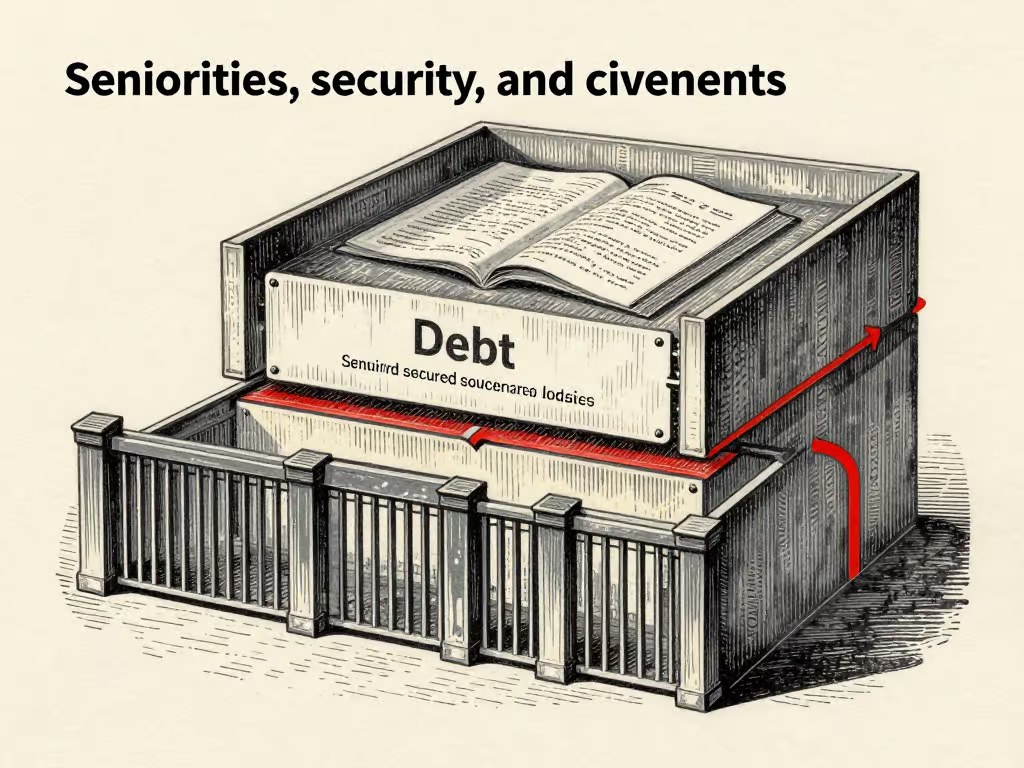
Private credit loans sit higher in the capital stack, often secured by assets or collateral, making them an attractive option for private capital investors. For example, a private loan to a mid‑market manufacturer might be backed by equipment liens and a first‑priority claim on receivables. Senior debt usually has the strongest protection, while subordinated layers carry more risk but offer higher potential yields. Covenants are tailored to each borrower, such as leverage limits, capex approvals, and restricted payments, all designed to guard cash flow and prevent actions that could threaten repayment.
Floating rate structures and yield premia
Many private credit loans are floating rate, helping investors keep pace with rising rates. These loans reset quarterly to a reference rate plus a spread that reflects credit quality and structure. For instance, a $20 million facility might reset from a 3‑month SOFR plus a 2.5% spread, adjusting as SOFR changes. The premia reflect borrower risk, liquidity, and bespoke terms that public markets rarely offer, such as step‑down protections or prepayment penalties.
Liquidity and valuation considerations

Private credit is typically illiquid until maturity or a planned exit, like a negotiated sale or refinancing, making it a unique asset class. Valuation uses cash flow projections and covenant monitoring. In practice, price discovery is slower: a loan may trade at a discount during stress, say 5%, 15%, until a cleaner exit is available. Regular model‑led updates help manage expectations between reports, particularly in private credit investing.
Risks: credit, liquidity, and concentration
Credit risk comes from default or cash‑flow disruption, factors that are crucial when investing in private credit. Liquidity risk stems from long holding periods and thinner secondary markets, making timely exits harder. Concentration risk appears when a single borrower or sector dominates a portfolio, which can amplify losses during idiosyncratic events.
Use cases and financing purpose

Growth financing and acquisitions
Private credit is often used to fuel expansion or acquisitions when banks are hesitant. A mid market company might fund a 20 million dollar acquisition with a senior secured loan that aligns with its cash flow, including covenants tied to EBITDA and debt service coverage. This approach can speed up growth by closing deals faster than traditional routes.
Refinancing and maturity management
Borrowers turn to private credit to extend debt tenor or improve leverage metrics. For example, a firm might refinance a 4 year term with a 6 year facility at a fixed rate, potentially lowering annual interest and smoothing amortization. This can reduce near term refinancing risk when maturities cluster in the next 12, 18 months.
Working capital and special situations
Private lenders provide working capital facilities to support seasonality or inventory buildup. A manufacturer might draw on a 12 month revolver during peak output, then repay as cash flow returns, demonstrating the utility of alternative investment strategies. In special situations, lenders can fund restructuring, asset sales, or temporary liquidity gaps to keep operations running during turbulence, often involving distressed debt in the private credit space.
Impact on borrowers’ capital structure
Private credit sits alongside existing debt in the capital stack and can affect covenants and collateral needs. For a growth company, adding private credit may tighten leverage tests but enable faster closing and a larger total capacity, supporting strategic exits or higher valuations if cash flow coverage stays solid.
| Financing purpose in private credit typically focuses on specific projects or operational needs. | Typical structure | Key consideration in private credit is the balance between risk and return, especially when investing in subordinated debt compared to traditional bank lending. |
|---|---|---|
| Growth or acquisitions | Senior secured loan with covenants | Cash flow coverage and collateral scope |
| Refinancing | Extended tenor, potential rate adjustments | Leverage and maturity profile are key differences between private credit and public credit. |
| Working capital | Revolving or facility-based lending is often utilized by private credit lenders to provide flexible financing solutions, particularly in comparison to public credit. | Liquidity runway and utilization patterns |
| Special situations | Bespoke financing, potential interim solutions | Flexibility and speed of execution |
How private credit differs from private equity

Ownership vs debt position
Private credit provides debt financing, not ownership. Lenders earn interest and possibly a structured fee, but they do not take equity stakes in the borrower, which is a common aspect of private credit investment. This preserves the founders’ and existing shareholders’ control. For example, a 5 year term loan to a mid‑market software company leaves management in charge while the loan amortizes over time.
Return profiles and risk transfer
Private credit targets steady income with built‑in protections like seniority, collateral, and covenants. Returns come from interest, fees, and these protections, particularly when investors choose to invest in private debt. A secured loan might yield 8, 12% annually, with default risk mitigated by first‑lien status. Private equity seeks equity upside from growth or exits, which comes with higher risk and potential losses, particularly when investing in distressed debt. Picture a PE investor funding a growth round and later cashing in on an IPO, while debt investors receive regular coupons even if the business stalls temporarily.
Control and governance implications
Lenders in private credit generally hold limited governance rights beyond covenant enforcement and default remedies. They often require financial reporting and compliance with debt terms, but they typically cannot block strategic pivots. Private equity investors may gain board seats and influence major moves to push value realization, such as leadership changes or cost optimization programs aimed at growth milestones.
Exit dynamics
Private credit exits usually occur at maturity or via refinancing, sometimes with a secondary sale of the loan. A borrower might refinance when rates fall or after balance sheet improvements, giving lenders a clean exit. Private equity exits rely on selling the company, an IPO, or recapitalization to realize upside multiples, not steady cash flow alone. In practice, PE exits hinge on market appetite for a strategic sale or a successful public listing that unlocks higher multiples.
Industry trends and evidence
Growth of private credit markets
Non‑bank lenders and private funds are expanding the funding options for mid‑market firms, often delivering faster closings and more flexible terms than traditional banks, particularly in the realm of private credit investment. This momentum reflects demand for bespoke structures, speed, and portfolio diversification beyond public debt. In practice, a typical deal might involve a $75 million unitranche facility that closes quicker than a bank loan, highlighting the appeal of private credit as a growth enabler.
Typical borrower profiles and EBITDA ranges
Deals generally target profitable private companies with solid cash flow, providing exposure to private equity in the capital structure. A representative borrower might show EBITDA in the tens to low hundreds of millions, such as a manufacturing business with $20, 80 million EBITDA and clear catalysts for expansion. Lenders weigh stability, cash flow coverage, and covenant design to align risk with return. Sectors like software, healthcare services, and fragmented industrials frequently secure facilities tied to milestone goals such as new contracts or cost optimization.
Cyclicality and interest‑rate sensitivity
Private credit responds to the broader cycle and funding conditions. Rising rates help floating‑rate loans preserve yield, but higher debt service costs can stress cash flow for seasonally or cyclically exposed borrowers. During downturns, underwriting tends to tighten with stronger collateral, tighter covenants, and stricter leverage tests; secondary markets may show slower price updates and occasional liquidity gaps.
Quality of underwriting and documentation
Underwriting quality varies across managers. Strong deals rely on detailed cash flow models, explicit covenants, and clear repayment waterfalls with milestone‑based releases. Weak documentation can lead to mispricing or misalignment between borrower needs and protections, especially if cash flows come under stress or refinancing options are limited.
Practical considerations for investors and regulators

Due diligence and transparency
Before investing, verify the lender’s track record, underwriting standards, and portfolio concentration. Look for clear cash flow projections, collateral descriptions, and covenant details. Transparency about deal terms helps compare opportunities across private credit managers.
Due-to-default monitoring and risk management
Maintain a disciplined monitoring process for each loan and overall portfolio. Track default probabilities, loan-to-value metrics, and covenant compliance. Regular scenario analyses help detect stress points before they materialize and protect capital.
Liquidity management and portfolio construction
Private credit can be illiquid. Plan liquidity buffers and define redemption horizons within the fund’s structure. Diversify across borrowers, sectors, and deal types to avoid single name risk, while balancing income predictability with potential returns.
Regulatory perspective and reporting
Understand local rules on disclosure, risk weights, and capital requirements. Ensure consistent reporting on credit quality, covenant losses, and stress test outcomes. Clear, standardized reporting supports accountability for both investors and supervisors.
FAQ
What does private debt mean?
Private debt refers to loans and other credit instruments provided by non-bank lenders to private companies. These are not traded on public markets and are typically arranged directly with the borrower or through a private credit fund. The goal is to fund growth, acquisitions, or working capital, often with terms that differ from traditional bank loans.
Real-world example: a mid-sized manufacturer may borrow 15 million from a private credit fund to finance a new plant upgrade, with a customized repayment schedule and covenants that reflect its production cycle. Another example: a tech startup uses private debt to bridge a revenue shortfall while awaiting a Series A round, avoiding aggressive equity dilution and accessing private credit options.
What is the difference between debt and credit?
In everyday finance, debt is money a company owes, while credit describes the arrangement that lets them borrow. In private markets, private credit is the method of extending that borrowing outside banks, whereas private credit may offer alternative financing options. private debt is the actual debt instrument within private credit structures.
Practical nuance: a private credit agreement may include warrants or step-up interest, affecting the total cost of borrowing beyond the headline rate. For borrowers, this means weighing not just monthly payments but long-term ownership or cost of capital.
Why is private credit attractive?
Private credit can offer attractive yields and more flexible terms than public debt. Investors diversify their portfolio Private credit typically operates beyond banks and public markets, while borrowers gain faster access to funding and tailored covenants that fit their needs. capital structure.
Data point: private credit funds often target yields in the 8, 12% range, depending on risk and leverage, compared with traditional senior bank loans in the 4, 7% band. Caveat: higher yields come with higher illiquidity and tighter covenants that limit cash management flexibility.
When should a borrower choose private credit over traditional financing?
Choose private credit when a borrower needs speed, bespoke terms, or access outside traditional banks, especially when considering the differences between private credit and private equity. It can be a good fit for middle-market firms pursuing acquisitions or working capital, especially if public markets or bank options are limited or too slow.
Action steps: 1) Map your timing, private deals can close in 45, 90 days versus 60, 180 days for banks. 2) Prepare a concise use-case memo outlining growth ROI and debt service coverage. 3) Run a scenario: what happens if interest resets or covenants tightens during a downturn.
Conclusion
Summary of distinctions
Private debt and private credit Private credit and public credit are related but not identical. Private debt refers to the actual debt instruments inside private markets, while private credit describes the broader category that includes these instruments and the lending practices of non‑bank lenders and private funds. In practice, private debt is the asset you own when you invest in a private credit strategy, which is often compared to public credit. Loans are typically secured and senior, with covenants that guide repayment and risk control. For example, a private credit fund might hold senior secured term loans to a mid‑market manufacturer, with a 1.0x debt service coverage covenant and a cash sweep on excess cash flow, demonstrating the principles of private credit work.
Implications for strategy and decision-making
Investors should align choices with their risk tolerance, liquidity needs, and return goals when considering private credit or private debt investments. Consider:
- Diversification across borrowers, sectors, and deal types to reduce single-name risk is crucial in private credit or private debt strategies. Practical step: target 15, 25 names and mix light‑industrial, services, and technology borrowers.
- Understanding commitment periods, fees, and liquidity constraints in private credit funds is essential for successful investment. Actionable tip: map your expected horizon to fund lockups and plan for quarterly or annual capital calls.
- Assessing credit risk, collateral quality, and covenant strength to protect capital. Benchmark idea: prefer at least a 1st lien position with either a tangible collateral pool or a well defined cash flow cushion, especially in private credit compared to public credit.
Future outlook
The private credit market is likely to stay active as non‑bank lenders fill funding gaps for mid‑market companies, demonstrating how private credit has grown in recent years. Expect continued growth in direct lending and senior secured loans, with more emphasis on robust underwriting and transparent reporting to address rising scrutiny from regulators and investors. Regulators may push for clearer loss‑given‑default estimates and more frequent quarterly disclosures, so expect fund managers to publish granular portfolio dashboards and default metrics that highlight the differences between private credit and traditional bank lending.