What is the envelope budget method
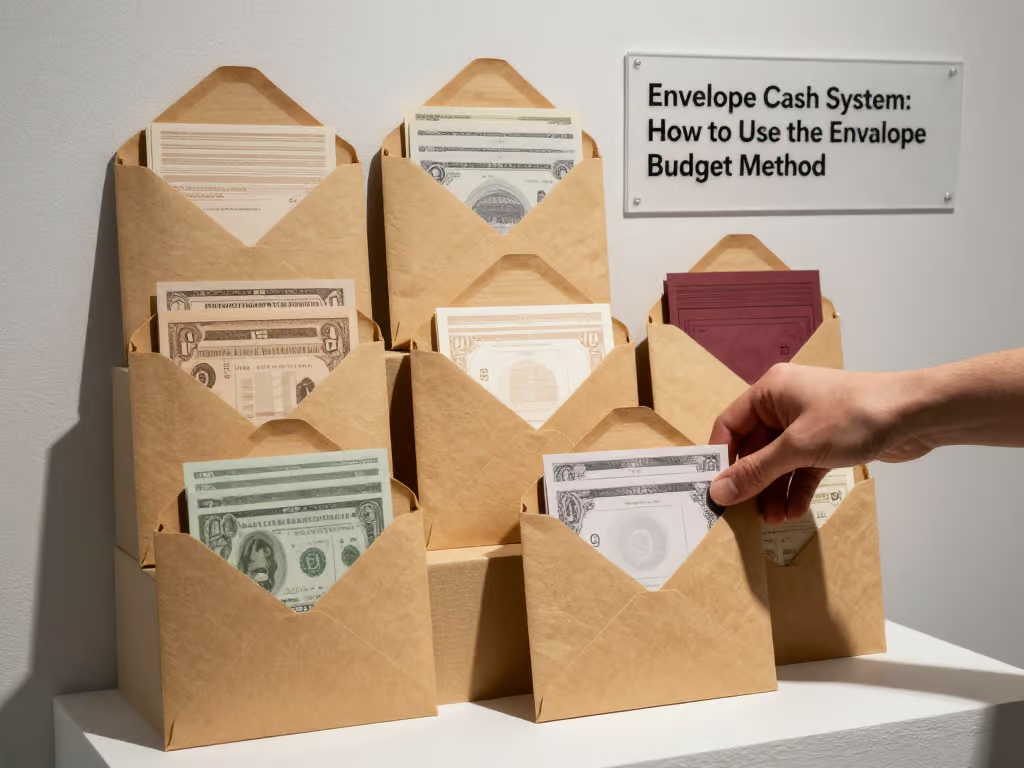
The envelope budget method, also known as envelope budgeting, uses physical or digital envelopes to allocate parts of your monthly income to specific expenses. Each envelope represents a category like groceries, utilities, or savings. You spend only the cash in each envelope, or the digital amount in that category, and once it runs out, you stop spending in that area until next month.
Why it remains effective in modern budgeting
It creates clear spending awareness, especially when you portion out your monthly income into envelopes for spend and save. By assigning a fixed amount to each category, you see exactly how much you have left for the rest of the month in your savings account and can adjust your grocery budget as needed.
- Zero-sum approach: Every dollar has a job, either spent or saved, especially when using the cash envelope system to physically divide your funds.
- Reduced impulse buys can be achieved by using the cash envelope system to physically divide your funds. money is earmarked for a purpose and not freely available.
- Accessible for many budgets: works with cash, debit, or digital envelopes.
As a result, the cash envelope budgeting system helps you control spending, hit savings goals, and stay aligned with your monthly budget goals.
Traditional vs. digital envelope budgeting
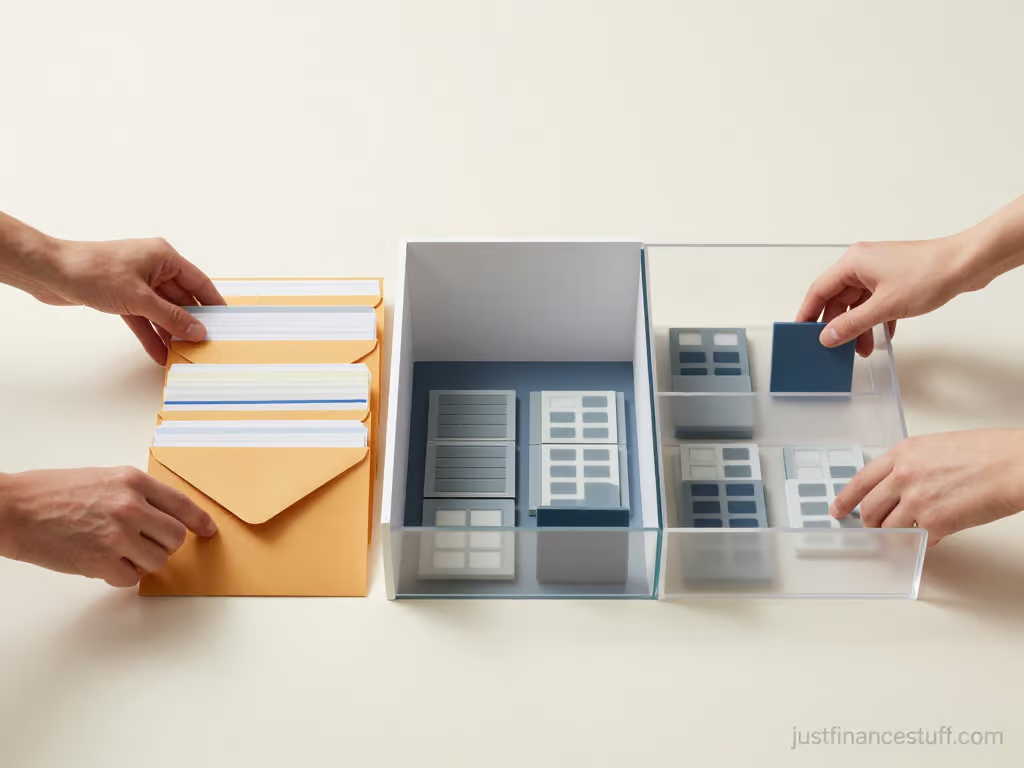
Overview of physical envelopes
The classic envelope budget system can help you manage expenses by using physical envelopes for each envelope category. You place a planned amount of cash into envelopes labeled for groceries, transportation, or entertainment. When you spend, you take cash from the corresponding envelope. The goal is to spend only what you have allocated for that category each month.
Benefits include immediate spending awareness and a tactile reminder of your budget amount to stay within limits, especially for impulse spenders. It also helps you see how much cash you have left visually, which can curb overspend and impulse purchases. One drawback is that carrying cash can be inconvenient or risky if envelopes are lost or stolen, especially when using cash stuffing.
Transitioning to virtual envelopes in apps and spreadsheets
Digital envelope budgeting mirrors the same idea but uses virtual envelopes inside apps, spreadsheets, or budgeting software. You allocate portions of your income to each category using a debit card without handling cash. Transactions update balances in real time, and you can set automatic transfers for fixed expenses, ensuring you never miss a deposit.
Key advantages include convenience, safer tracking, and easy adjustments. You can create an envelope for each category like groceries or utility bills, then monitor balances on a dashboard to ensure you can pay bills effectively. The main caveat is the shift from a physical reminder to a mental discipline; you must still guard against overspending just because the envelope shows room left.
Setting up your envelope budget system
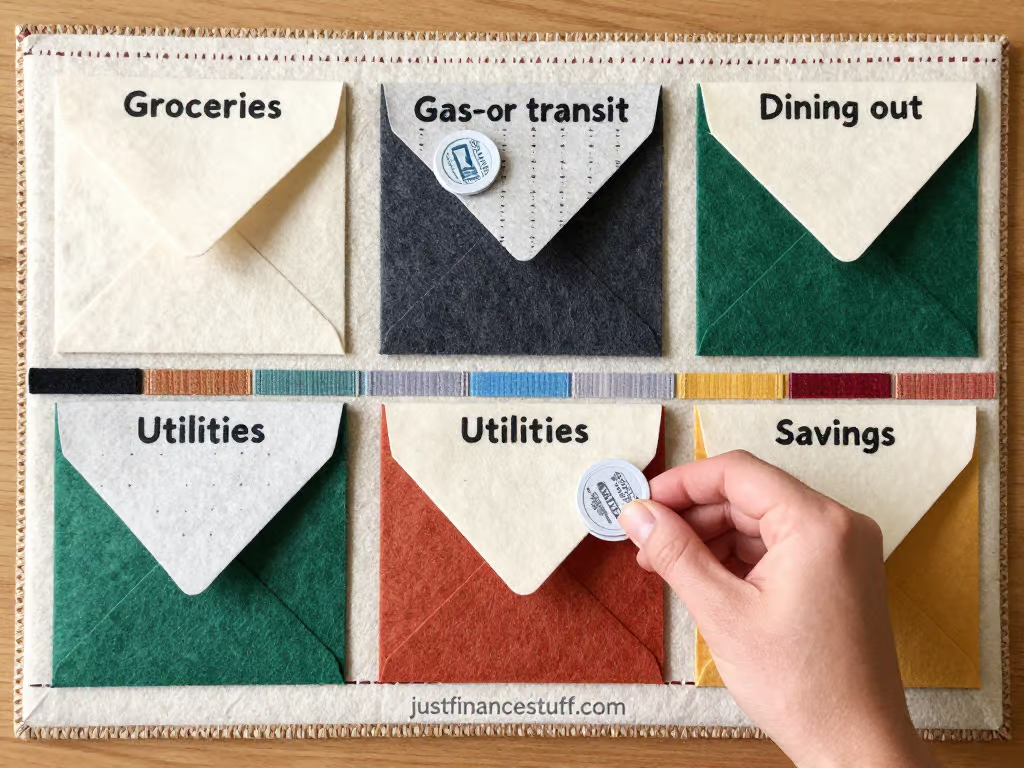
Choosing spending categories
Start with the categories where your money actually goes each month. Common picks include groceries, transportation, dining out, utilities, and savings. Tailor them to your life and goals.
Label each envelope clearly so you can see at a glance where funds are allocated. Include a category for irregular expenses if you want to smooth out months with uneven spending.
- Grocery envelope for weekly shopping helps manage your cash stuffing effectively.
- Gas or transit envelope for travel can be part of your grocery budget.
- Dining out envelope to curb impulse meals
- Utilities envelope for bills like water and electricity
- Savings envelope for an emergency fund or big goals
Determining monthly income and targets
Know your take-home pay after taxes to ensure you can allocate funds to each envelope category appropriately. This becomes your starting point for the budget. If you have multiple paychecks, add them up to get a clean monthly figure that can be divided among your envelope categories.
Set targets for each envelope so you know the maximum you can spend. A simple approach is to assign a fixed amount to needs, wants, and savings, then adjust as the month unfolds.
Creating fixed vs. variable expense envelopes
Split envelopes into fixed and variable groups. Fixed covers payments that stay the same, like rent or loan payments, which you handle with automatic transfers. Variable covers categories that change month to month.
This separation helps you prevent overspending in flexible areas while keeping essential bills steady, allowing for better management of your paycheck. If a category runs low, consider trimming others or shifting funds before the month ends.
Implementing a zero-sum envelope budget
Allocating every dollar to a category
Zero-sum budgeting is a method that aligns with the cash envelope system by ensuring every dollar has a purpose. means every dollar of your monthly income has a job. Start with your fixed expenses like rent or mortgage and utilities, then assign amounts to variable categories such as groceries, gas, and entertainment. The total of all envelopes should equal your take-home pay for the month.
Write the exact spend for each category on its envelope or in the digital note so nothing is left unassigned. This discipline helps you see how much you actually have to work with each day and avoids drifting into free funds you can spend later.
Handling surplus or deficit in envelopes
If an envelope finishes early, rebalance by trimming other categories or moving funds from a surplus envelope to a category that needs it. The goal is to keep the overall total intact while considering the pros and cons of each spending category.
When you have extra cash at month end, decide whether to roll it into savings, hold it for next month, or allocate it to a savings goal. Consistent adjustments sustain the zero-sum approach and keep you aligned with your budget goals.
Tracking and adjusting envelopes throughout the month

Monitoring envelope balances
Keep a quick read on each envelope to know how much you have left for spending, ensuring you stay within your envelope categories. A simple method is to log receipts and update the remaining cash or digital balance after every purchase. This helps you see at a glance how much you spend without waiting for month-end statements.
Regular checks prevent surprises. If you notice a category dipping early, you can react before it runs dry. The key is consistency, not perfection, so small daily updates beat big end-of-month audits.
Tips for staying within limits and making mid-month tweaks
- Reassign funds when a category underperforms in a month and a different one needs a boost using the YNAB system.
- Use a small buffer envelope for incidental costs that pop up, like unexpected fees or timing gaps.
- Delay nonessential purchases if you see a risk categories will overshoot.
- Move any leftover from a committed category into a savings envelope or roll it into next month after reviewing goals, similar to a back of the envelope calculation.
| What to track includes your spending your money across various envelopes for better management. | Understanding why it helps can motivate you to stick to the cash envelope system. | When to adjust |
|---|---|---|
| Using actual envelopes helps you maintain an envelope balance. | Shows remaining funds for the month | Daily or every few days |
| Spending pace | Indicates if you’re ahead or behind on your monthly expenses. | Mid-month if pace deviates |
| Unplanned costs | Reveals where you need flexibility in your budgeting system to accommodate unexpected expenses. | As they occur |
Digital tools for envelope budgeting
Apps and software that support envelope budgeting
Digital envelope budgeting preserves the core idea of allocating money to categories, but you work with virtual envelopes instead of loose cash. Choose apps that let you create envelopes or digital equivalents, link them to your monthly income, and show balances in real time. A good option also supports a month ahead plan and a Pay Yourself First setup so you can save without derailing essential spending.
Key features to look for include:
- Templates for fixed and variable expenses
- Real-time balance updates after each transaction can help you manage your checking and savings effectively.
- Automatic transfers or card controls to curb overspending
- Exportable reports that match your bank statements can help you analyze your spending and saving habits.
Comparing digital vs. cash envelope approaches
| Aspect | Digital envelope | Cash envelope |
|---|---|---|
| Accessibility of the envelope system can help manage your finances effectively. | Always accessible on your device | Physical envelopes in one place |
| Tracking | Automatic logging and reports | Manual receipts and updates |
| Spending awareness | Visible balances inside the app help you manage your cash envelope system more efficiently and track your deposits. | Tangible cash cues |
| Flexibility in your budget can be achieved by physically dividing your funds into different envelopes. | Easier mid-month adjustments allow for better control of your money. | Requires moving cash between envelopes |
| Security | Digital safeguards; data risk possible | No digital risk if cash is lost, as using the cash envelope system provides a tangible way to manage your finances. |
Common challenges and how to overcome them
Fixing overspending in one category
Overspending often happens when a category drains early. Tactics that help:
- Track daily totals to spot drift before it becomes a problem.
- Introduce a smaller secondary envelope for impulse spends within the same category.
- Rebalance by trimming nonessential categories rather than cutting essential needs.
Addressing cash flow gaps and irregular income
Irregular pay periods can throw off your monthly plan and affect your cash envelope budgeting, making it essential to adjust your envelope categories accordingly to maintain control of your money. Try these approaches to sort them into categories for better financial management:
- Use a month ahead envelope to cushion months with late paychecks.
- Build a mini emergency buffer within savings goals to cover gaps in your cash envelope system.
- Schedule automatic transfers when you know the typical income rhythm to keep fixed expenses covered and to facilitate paying cash for discretionary spending.
FAQ
Can I use the envelope system without cash?
Yes. The envelope system adapts to digital or hybrid formats. Create digital envelopes that hold a monthly budget for each category and track balances in real time. This keeps the core idea of allocating money to categories without heavy cash handling.
Is the envelope method compatible with debt payoff strategies?
Absolutely. You can dedicate a portion of your monthly income to debt payments within a specific envelope while using the rest for living expenses. Some people pair it with a zero-sum mindset, making sure every dollar has a clear purpose, whether it goes toward debt, savings, or expenses.
Do envelope systems work for families or households?
Yes. For households, create envelopes for shared expenses like groceries, utilities, and rent or mortgage. Each member can contribute to the relevant envelopes or adjust within agreed rules. Clear categories and agreed contributions help prevent overspend and align with family financial goals.
Conclusion
Recap of the envelope budget method benefits
The envelope budgeting approach helps you gain financial control by tying spending to visible envelopes, whether physical or digital. It builds spending awareness and helps prevent overspending by making you use cash or track balances for each category. The method supports fixed and variable expenses, keeps monthly income top of mind, and aligns with practical goals like building an emergency fund or saving for a bigger purchase.
Next steps to start implementing
- List your trips to the ATM to ensure you are tracking your cash flow accurately. expense categories such as groceries, utilities, and debt payments.
- Choose a method: using cash and envelopes or digital tracking like YNAB to budget your money effectively. cash envelopes or a digital envelope app, then set a monthly income and targets.
- Allocate the budget amount for each category and label envelopes clearly.
- Track balances as you go and adjust mid-month if needed to stay within limits.
- Review bank statements and savings goals to ensure the system supports long-term financial goals.