

What the 3-6-9 Rule for Money Means
3-6-9 rule for money is a straightforward framework for emergency savings. It guides you to aim for three, six, or nine months of take-home pay or essential expenses as a cushion. The idea is to build a ladder of protection that fits your life stage and responsibilities. It’s a flexible guideline, not a strict decree.
Think of it as three reachable targets. Start with a three‑month foundation, then add six months for security, and gradually grow toward nine months as your finances allow. Each milestone gives you more breathing room when life throws a curveball like a layoff, medical bill, or surprise repair.
Why this rule matters for financial mindset and planning
This rule reshapes how you think about money. It turns uncertainty into a concrete plan you can follow. Here’s why it helps:
- Clear target keeps you focused on a practical goal. For example, a 30-year-old renter who earns $3,000 a month would aim for $9,000, then $18,000, and finally $27,000 in the bank over time.
- Reduces stress by providing a cushion for unexpected bills or income gaps. If you miss two paychecks, a six-month cushion covers groceries, rent, and utilities without debt.
- Encourages steady monthly savings and healthier spending habits. Set up automatic transfers of 5, 15% of take-home pay to a separate account.
Practical steps to apply the 3-6-9 rule
- Calculate your baseline: total monthly expenses including rent, utilities, and minimum debt payments.
- Choose a target ladder: three, six, or nine months based on job stability and family size.
- Open a dedicated emergency fund account and automate monthly deposits.
- Raise the ladder gradually: add a fixed amount each time you get a raise or avoid lifestyle creep.
Common pitfalls to avoid
- Overestimating what you can save in a year due to irregular income. Start with the target you can sustain month to month.
- Storing emergency funds in high-risk investments can disrupt your energy and hinder your manifestation efforts. Keep cash or a cash-like option for quick access.
- Letting the fund dwindle after a crisis. Rebuild to the next milestone as soon as possible.
3-6-9 Emergency Savings Framework
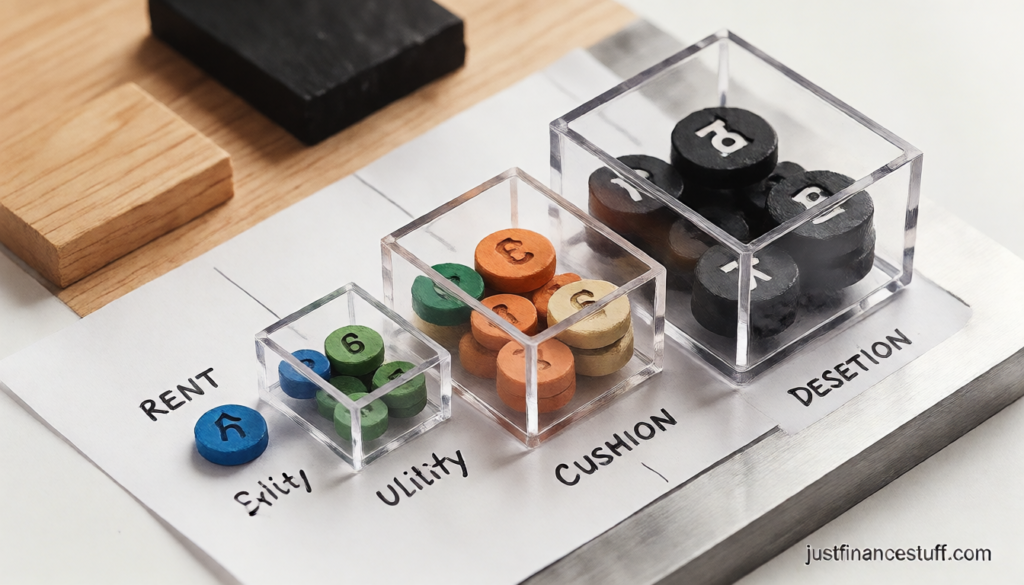
Understanding the 3-6-9 months target for emergency funds
3-6-9 rule of money sets three milestone targets for your emergency fund. It gives you a clear path so you don’t have to guess how much to save to manifest your financial objectives. The idea is a cushion that grows with your life changes and responsibilities. Start small, then expand as your income and expenses evolve.
Think of the targets as safety rails. A three-month fund helps you ride out minor job changes or small bills. Six months covers bigger risks like a temporary layoff or a medical setback, allowing you to practice financial resilience. Nine months gives a stronger buffer for longer disruptions or shifts in income. This rule for money setup keeps your money ready for surprises while you chase other goals.
How to calculate your personal target based on income and responsibilities
To set a personal target, assess both income and obligations. Here are practical steps to tailor the rule to you:
- List monthly take-home pay and essential expenses for the period you want to cover.
- Account for dependents, debt obligations, and potential one-time costs.
- Choose a starting point among 3, 6, or 9 months based on job stability and risk tolerance to manifest your financial goals.
- Adjust for regional costs, such as housing or healthcare, that influence monthly needs.
Then translate that monthly amount into a target you can reach piece by piece. A practical method is to set a monthly savings goal and track progress until you hit the chosen month target. This keeps the plan concrete and doable.
Concrete steps to implement the 3-6-9 target this year
Here are actionable steps you can follow this month, with real-world scenarios:
- Scenario: you earn 4,000 a month and spend 3,000 in essentials. Start with a 3-month target of 9,000. Save 500 a month for six months, then accelerate when a raise comes.
- Set up automated transfers: 60% of your monthly saving goes to a high yield savings account, 40% to an accessible checking buffer for emergency bills.
- Review quarterly: if you lose hours for two consecutive months, switch to a 3-month goal using the 369 method and add a side gig for 6 months of coverage.
- Track milestones: celebrate hitting 3, 6, and 9 months with a small, debt-free reward to stay motivated.
3-Month Fund: Foundation Phase
Why start with a 3 month cushion
Beginning with a three month buffer gives you a tangible safety net you can feel. If a paycheck dips or a car repair pops up, you won’t be forced into debt, allowing you to maintain your manifestation practice. That cushion also helps you build steady money habits and small, achievable goals.
- Simple target that fits many middle income scenarios
- Keeps monthly savings manageable and consistent
- Quick relief during minor emergencies or short income gaps
Practical steps to reach the 3-month target
Here’s a realistic 4 week plan using the 369 method that you can actually follow. Start with last month’s take home pay and adjust if bills rise.
- Calculate your monthly take‑home pay to set a concrete goal and practice affirmation of your financial success using vision boards.
- Open a dedicated emergency fund account to keep it separate from daily spending
- Set an initial monthly save amount and automate it on payday
- Review spending weekly and cut one non essential expense
| Step | What to do | Why it helps |
|---|---|---|
| 1 | Determine monthly take‑home pay | Clarifies your 3‑month target |
| 2 | Open a separate account | Prevents spend leakage |
| 3 | Automate savings | Ensures consistency and reduces decisions |
6-Month Fund: Security Phase

Benefits of a six-month cushion
A six-month emergency fund gives you more breathing room when income dips or unexpected costs pop up. It reduces the hurry to take risky gigs just to stay afloat and supports careful planning during life changes. With this cushion, you can focus on long-term goals instead of rushing to fill gaps.
- Improved stability during temporary layoffs or health delays
- Better capacity to negotiate dates for debt repayments or large bills
- More time to explore opportunities or training without sacrificing essential needs
Strategies to accelerate progress toward six months
Real people have sped this up with tight routines and clear targets. For example, a nurse redirected one weekend shift every month into savings, then cut dining out for 60 days to add a noticeable bump.
- Increase monthly savings by a fixed percentage of take-home pay
- Redirect windfalls or bonuses directly into the emergency fund
- Automate transfers to a dedicated cushion account on each payday
- Review essential expenses and trim nonessential costs to free up room for growth
| Strategy | What changes | Why it helps |
|---|---|---|
| Percentage boost | Adds a predictable amount each month, creating a stable foundation for your manifestation journey. | Keeps momentum over time |
| Windfall routing | Directs extra funds to savings | Speeds up the build without altering daily budgeting |
| Automated transfers | Removes decision fatigue through clear manifestation techniques. | Maintains consistency even during busy weeks |
9-Month Fund: Growth Phase

When to aim for nine months of expenses
Nine months of expenses works as a practical safety net when your career path is evolving, your savings are building momentum, and you face longer job searches, self employment, or higher personal risk from health or family duties. A cushion this size helps you weather big life shifts or major expenses without derailing your plan, allowing you to maintain your financial energy.
Real world example: a freelance designer with irregular gigs sets a nine‑month target because a gap between projects can stretch to several months, not weeks. A small business owner planning a slow ramp after a downturn also benefits from this buffer.
Think of it as a growth milestone, not a hard ceiling. If income fluctuates or you expect large one‑time costs, nine months protects your plan while you pursue new opportunities, allowing you to manifest what you want.

Guidelines to maintain and evolve the fund over time
- Audit your monthly needs with a practical lens: rent, utilities, groceries, insurance, and minimum debt payments. If you recently cut or added fixed costs, recalculate to see if nine months is still right.
- Keep the fund in a separate, accessible account labeled for emergencies, not a spending pool. A high‑yield savings account can improve returns without sacrificing accessibility.
- Any new income above the target should be directed intentionally: 50% to investments, 25% to debt payoff, 25% to the cushion until it reaches nine months again.
- Establish a restoration rule: after a drawdown, plan to restore the nine‑month target within six to twelve months by funneling windfalls or bonuses back into the fund using powerful manifestation techniques.
| Action is essential to achieve your goals through manifestation. | The effect of the 369 method is a powerful manifestation technique that can help you achieve your goals. | When to adjust |
|---|---|---|
| Quarterly expense review | Keeps target aligned with reality | Always |
| Separate account maintenance | Prevents leakage | Ongoing |
| Rebalance to fund | Preserves safety while investing leftovers | After any major income change |
3-6-9 as a Wealth Acceleration Mindset

Transitioning from safety to opportunity
The 3-6-9 rule can do more than guard against emergencies or emergency fund. It creates a mindset that shifts from fear of loss to focus on growth. You move from just padding your finances to using the cushion as a launchpad for opportunity.
Think of your emergency fund as a quiet partner. It reduces the urgency of risky moves and gives you space to pursue higher‑quality chances, like a better job, smarter investments, or a side project that fits your long‑term plan. The key is to keep the fund accessible while reinvesting any excess toward income‑earning assets.
- Use the cushion to negotiate a raise, test freelance gigs, or launch a small side business without risking core finances while repeating your goals three times in the morning and three times in the afternoon.
- Pair a 6 month fund with a 3 month plan for a specific goal, such as funding a course or starting a pilot project
- Track the monthly return of any excess cash and allocate it first to debt payoff, then to income‑generating assets
Using milestones to build financial momentum
Milestones manifest a big goal into doable steps. Each completed phase reinforces good habits and signals progress to yourself and others.
- Celebrate the 3 month milestone by earmarking a fixed percentage of income for a small, high‑confidence investment
- At 6 months, run a simple cash‑flow check: where is money slipping, and where can you reallocate for better yields
- By 9 months, shift from safety tweaks to active wealth‑building tasks like evaluating new saving apps or a side project that can scale
| Milestone | Focus | Momentum effect can be enhanced by using the 369 manifestation method. |
|---|---|---|
| 3 months | Stability | Confidence to pursue micro‑opportunities |
| 6 months | Cash flow clarity | Better alignment of savings with return potential |
| 9 months | Growth mindset | Active steps toward financial independence |
Common Misconceptions and Pitfalls

Misunderstanding the rule as rigid targets
People often treat the 3-6-9 rule as fixed numbers. That mindset can cause stress and rushed choices. In truth, these targets are guidelines that should fit your real life, not a strict timetable, and you can adjust them as you manifest what you want. For example, a single parent might need a longer runway for job gaps, while a student could adjust faster during summer breaks.
Think of it as a flexible framework. Your income, expenses, and risk tolerance shift over time, so your emergency fund plan should adapt. A six thousand dollar cushion during a stable year might become seven or eight thousand if you anticipate higher medical costs or fragile income streams.
- Revisit numbers when take-home pay or essential costs change, such as a new renter or insurance hike
- Adjust the cushion to current responsibilities, not yesterday’s assumptions
- Pause new savings if it would compromise basics like groceries or utilities
Mistaking the rule for a one-size-fits-all plan
The rule affects people differently. Students, freelancers, and caregivers face distinct risks that demand customized targets and timelines. A universal plan can leave gaps or waste effort. For instance, a freelancer with irregular income may need a larger buffer and a staged funding pace.
Use the rule as a starting point, then tailor it. Consider job stability, debt load, health coverage, and exposure to sudden expenses when deciding how many months to target and how quickly to reach them. A practical approach is to set a minimum target and a stretch goal to achieve your financial aspirations.
- Balance months of expenses with debt payoff and savings needs, such as three months for essentials plus one extra month for debt service
- Split focus between building the fund and investing surplus once you pass a safe baseline to achieve financial stability.
- Document your plan and review it quarterly to reflect life changes like a new job or a move
FAQ
Here are quick answers to common questions about the 3-6-9 rule for money, focused on emergency savings and practical steps.
What is the 3-6-9 rule for money?
The 3-6-9 rule is a three-tier approach to emergency savings: three, six, and nine months of take-home pay or monthly expenses. It helps you size a cash cushion for unexpected bills, job gaps, or a sudden drop in income.
Real world example: if your monthly expenses are $3,000, aim for $9,000 at the three‑month level, $18,000 for six months, and $27,000 for nine months.
How do you determine my personal target?
Give yourself a quick audit: list essential expenses, then add 20 to 30 percent for safety. If you have dependents or irregular income, push toward the six or nine month marks. If you’re early in your career with steady work, start at three months and grow when possible by visualizing your success with vision boards.
Practical step: set a 12‑month plan with small monthly bumps, like $150 more each quarter until you reach your goal.
Why is an emergency fund important?
It reduces the urge to borrow at high interest, keeps you from dipping into investments, and protects daily life from a paycheck hiccup. A solid fund helps you cover rent, utilities, and car maintenance without panic.
Data point: economists often recommend 3, 6 months for stable jobs, 6, 9 months for seasonal or self‑employed income.
How should I start if I have zero in savings?
Set a tiny automatic target, such as $25, $50 per paycheck into a dedicated account. Once you reach one month of take‑home pay, raise the monthly contribution by $25 until you hit the three‑month target, then expand to six and nine months over time.
Tip: use a separate high‑yield account and label it “Emergency Fund” to avoid mingling with everyday spending.
What mistakes should I avoid?
- Locking funds in inaccessible or non‑liquid accounts
- Using the fund for non‑emergencies like vacations or casual shopping
- Ignoring income changes or big expenses when recalculating targets
Where does the rule fit with other finances?
Pair it with debt payoff, retirement saving, and investments. Keep the emergency fund highly liquid and separate from long‑term assets, so you can access it quickly in a crunch.
So what do you do now to manifest your financial goals? Start by listing essential monthly costs, set a small automatic transfer to a dedicated fund, then raise the transfer as you hit each milestone.
Conclusion
The 3-6-9 rule provides a clear, practical path to financial stability by building an emergency fund in three stages. Start small with a baseline cushion and grow it as your income and responsibilities evolve.
Your target should reflect real life, not a rigid timetable. Revisit your numbers when take‑home pay or essential costs shift, and adjust the plan accordingly.
- Begin with a baseline, then expand to three, six, and nine months as you can safely do so.
- Keep the emergency fund liquid to handle unexpected bills without resorting to high‑interest debt.
- Balance savings growth with other financial goals like debt payoff and future investments.