

Do you feel a little bit of dread when you hear the word budget? You are definitely not alone. Many people hate budgeting because it feels like a chore that stops all the fun. But what if I told you that money management doesn’t have to be a headache?
The world is moving faster than ever, and you don’t need a complex financial system to keep your finances in check. If you want to save money without spending hours on a spreadsheet, there are simple ways to make it happen. Let’s look at how you can manage your cash without the stress.
What is a Budget Anyway?
Think of a budget as a roadmap for your cash. It isn’t about restricting your life; it’s about giving yourself permission to spend on the things that actually matter to you. It lets you decide where your money goes before you even spend it.
And guess what? You don’t need to be a math whiz! Having a written plan just makes you more aware of your habits. When you see your goals on paper, staying on track feels way easier, doesn’t it? It shifts the power from your bank account back to you.
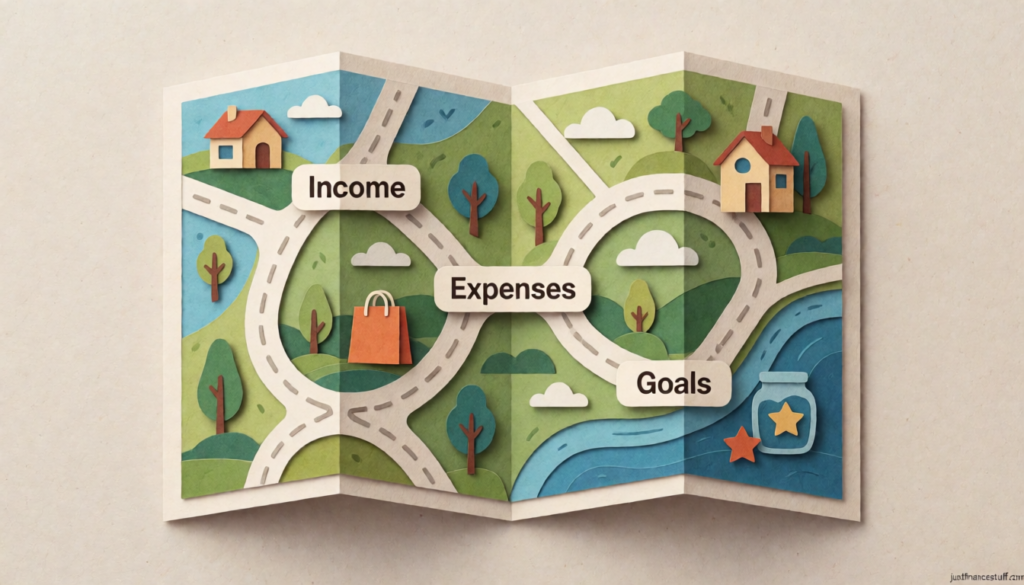
| Term | Simple Meaning |
|---|---|
| Income | Money you earn. |
| Expense | Money you spend. |
| Surplus | Your leftover cash. |
Steps to Making a Budget for Beginners
Once you understand the lingo, you’re ready to take control. Start by looking at your net pay, that’s the actual amount that hits your bank account after taxes. From there, you can begin to visualize how much room you have for your various lifestyle choices while focusing on your long-term financial goals.
I recommend using a simple digital sheet or a dedicated app to stay organized. This bird’s-eye view helps you spot potential “money leaks” before they happen, ensuring you stick to a budget. It’s the best way to ensure you’re building a safety net while still enjoying your daily life!
- Calculate your total monthly net pay.
- Identify your recurring monthly obligations.
- Allocate funds for future emergencies.
- Assign a specific purpose to every remaining dollar.
Track Your Income and Expenses Easily
Now that you have a plan, you need to see it in action. Ever wonder where your money actually goes? You might think you’re a light spender, but your bank statements often tell a different story! Tracking isn’t about guilt; it’s about gathering data so you can make better choices next month.
Try looking back at your recent transaction history to identify patterns. Whether you use Monarch Money for automation or prefer the tactile feel of a simple notebook, seeing every cent in black and white is a total game-changer. It gives you the clarity needed to stop accidentally wasting cash on subscriptions or fees you forgot existed.

Categorize Your Spending to Stay Calm
To make sense of all those tracked transactions, try grouping your costs into logical buckets. This is where the 50/30/20 rule often comes in handy, helping you balance your obligations with your aspirations. Your needs cover the must-haves like housing, while your “wants” are the fun extras that make life sweet.
Categorizing helps you spot exactly where to trim the fat without feeling deprived. Want to save for a dream vacation or a new home purchase while focusing on your financial goals? Shifting just a small percentage from your “wants” category into your savings is the fastest way to reach your goals without a total lifestyle overhaul.
| Category Type is essential for organizing your personal finance and ensuring you stick to a budget. | Examples |
|---|---|
| Fixed Expenses | Rent, Insurance, Car Payment |
| Variable Expenses | Groceries, Gas, Electricity |
| Wants | Streaming Services, Dining Out, Hobbies |
Set Spending Limits to Stop the Stress
Once you know your numbers, the secret to staying consistent is making sure you don’t have to think about them every single day. Automation is your best friend here, it handles the heavy lifting by moving money before you even have a chance to spend it. If you never see the cash in your checking account, you won’t miss it!
- Schedule an automatic transfer to savings on payday.
- Set a “no-questions-asked” weekly allowance for coffee and takeout to help you stick to a budget and focus on your financial goals.
- Use banking alerts to notify you when your balance hits a certain level.
| Strategy | Benefit |
|---|---|
| Pay Yourself First | Ensures your future self is taken care of before the bills hit. |
| 50/30/20 Rule is a simple yet effective method to help people stick to a budget. | A balanced framework of 50% needs, 30% wants, and 20% savings. |
Whether you use a high-tech app or a simple spreadsheet, the goal is to keep it low-friction. You aren’t trying to become an accountant; you’re just trying to buy yourself some peace of mind in your personal finance journey.
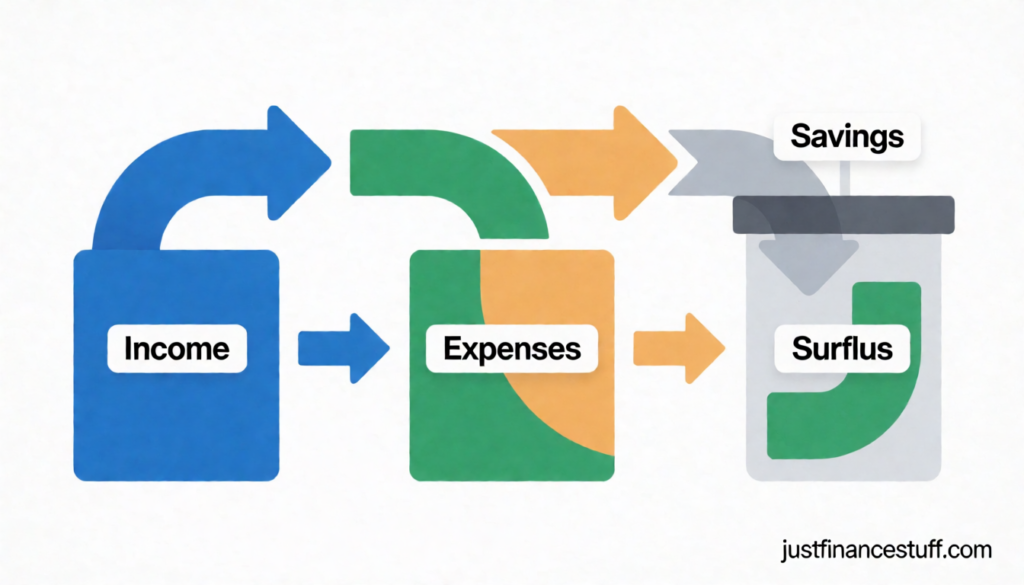
Setting Spending Limits and Calculating Your Surplus
After you’ve categorized your history, it’s time to look forward. A great benchmark to aim for is the 50/30/20 rule, which helps you balance your lifestyle with your long-term financial goals. If your “needs” are eating up 70% of your check, don’t sweat it, this is just a baseline to help you identify where you might need to pivot or negotiate better rates on your bills.
| Category | Example Limit | Goal |
|---|---|---|
| Essentials are crucial in personal finance to ensure you stick to a budget. | 50% of income | Stability & Security |
| Lifestyle | 30% of income | Enjoyment & Balance |
| Future You | 20% of income | Wealth & Safety Net |
Subtracting your total expected costs from your take-home pay reveals your “surplus.” This is your most powerful tool for crushing debt or finally booking that vacation. If the surplus is smaller than you’d like, you now have a roadmap showing exactly which categories have room for a little “trimming” without ruining your quality of life.
Calculating Your Surplus or Deficit
With your categories organized, it’s time for the moment of truth. Don’t worry, we aren’t doing high-level calculus here, it’s just simple subtraction. Take your total income and subtract every single expense you just categorized to see exactly where you land at the end of the month.
If the number is positive, you’ve got a surplus, which is essentially “future-you” money for your retirement. If it’s zero, you’re living exactly at your means. But if you’re hitting a negative number, don’t panic! It just means your current lifestyle is being subsidized by debt, and we can fix that by adjusting those discretionary buckets we just identified.
| Scenario | Income | Expenses | Result |
|---|---|---|---|
| Surplus | $3,000 in your personal finance plan can help you achieve your financial goals. | $2,700 | $300 for goals |
| Balanced | $3,000 | $3,000 | Living paycheck to paycheck |
| Deficit | $3,000 | $3,200 | -$200 (Action required) |
Tools to Make Money Management Easier
Now that you know where your money is going, you need a place to keep that information organized without it becoming a second job. If you’re a visual person, an app that syncs with your bank account can categorize your spending automatically, making it easier for people who hate budgeting. If you’re a “pencil and paper” soul, a simple notebook on your nightstand works just as well.
The “best” tool is simply the one you will actually use. Don’t force yourself into a complex spreadsheet if you hate math; look for user-friendly interfaces that gamify the process. Beyond the tech, try the “cash envelope” method for your most tempting categories, like coffee or clothes. When the cash is gone, the spending stops, no math required! This helps you protect your fun money while ensuring those “peace of mind” goals stay on track.