
Why Top Investment Firms Are Important
You want to start investing but don’t know where to begin. Top Investment Firms for Beginners: Best Brokers to Start With shows you the real options. Over 5,000 investment companies are registered in the U.S. Not all are good for beginners. Some charge high fees. Others make things too complex. We focus on simple, low-cost brokers like Fidelity and Schwab. They’re trusted by millions.
Seriously, what are the different types of brokers?

You’ve probably heard terms like online broker, robo-advisor, and financial advisor – but what do they actually mean? Not all investment companies offer the same help. Some brokerage firms focus on self-directed trading (that’s you picking stocks), while others provide full guidance. Retail brokerage platforms like Fidelity or Charles Schwab let you buy stocks, ETFs, and more with low fees. Robo-advisors use algorithms to manage your money automatically. Traditional advisors give personalized plans – but cost more. Your choice shapes how much control – and cash – you’ll spend.
- Online broker: Lets you trade stocks, ETFs, options yourself
- Robo-advisor: Automates investing using math, not humans (like Betterment)
- Financial advisor: Real person who gives custom advice (often 1% yearly fee)
- Brokerage services: Tools for buying/selling assets, research, mobile apps
- Advisory or brokerage services: Full range from DIY platforms to hands-on management
| Type | What It Offers |
|---|---|
| Retail brokerage | Low-cost trades, self-service tools |
| Robo-advisor | Automated portfolios, low minimums ($1-$500) |
| Full-service broker | Personal advisor, estate planning, high fees |
| Discount broker | Low fees, no advice – just trading access |
| Hybrid service | Mix of robo + human help (e.g., Schwab Intelligent Portfolios Plus) |
Full-service vs. discount brokers
Some people want a pro guiding every move. That’s where full-service brokerage firms come in. They offer full advisory or brokerage services, including tax tips and retirement planning – but charge 1%+ per year. Discount brokers like E-Trade or Webull cut the fluff. You get low fees – often $0 trades – and powerful investment firms services without hand-holding. For beginners building habits, this saves hundreds yearly. You keep more money instead of paying for advice you might not need yet.
Why robo-advisors are a game-changer for newbies
Imagine having a smart helper that invests for you – automatically. That’s a robo-advisor. Platforms like Betterment or Wealthfront start with as little as $1. They build a mix of funds based on your goals. No experience needed. They rebalance over time and even cut taxes with smart selling. This makes solid investing easy and cheap – perfect if you’re just starting. You still get real brokerage services, just without the high price tag.
The factors that actually matter for your wallet
- account minimum
- commission-free trading
- expense ratio
- management fee
- interest rate
- transaction fee
- investment minimums
- security
- registered with the u.s
- securities and exchange commission
- securities investor protection
- low-cost
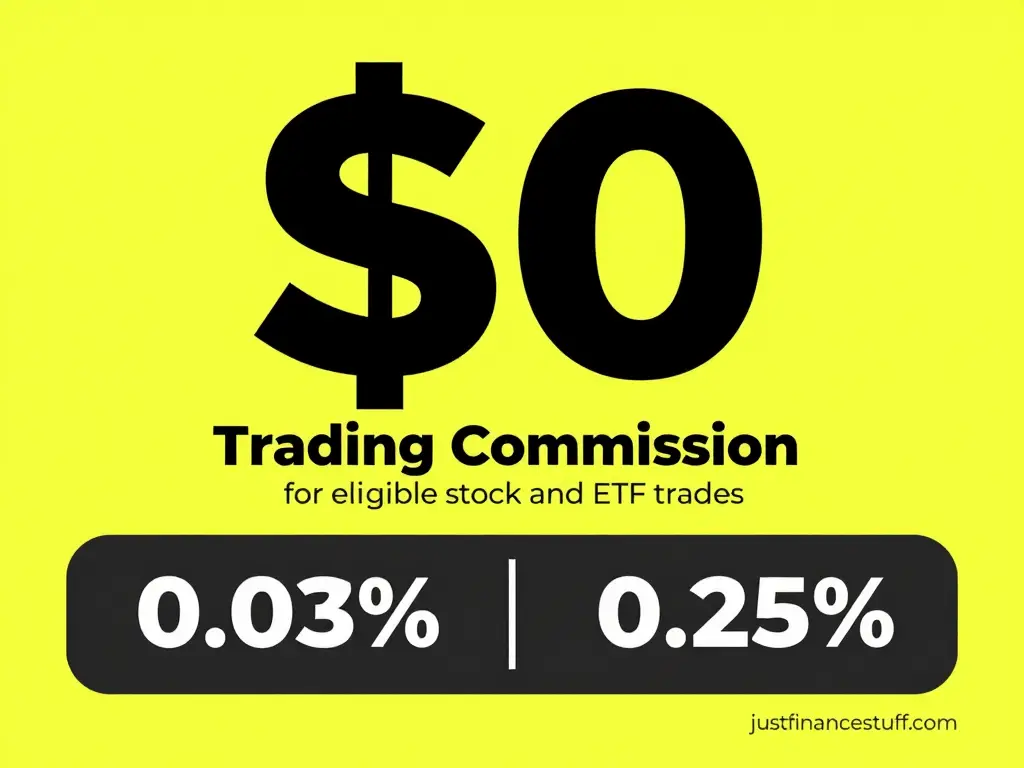
Money stays in your pocket when you pick a broker with commission-free trading and low-cost funds. You don’t want surprise charges eating your gains. Look at the expense ratio-even 0.1% adds up over time. Some platforms charge a management fee if they handle your investments. Watch out for high interest rates on margin or cash accounts too. Always check the transaction fee for trades, and avoid firms with high investment minimums unless you have the cash.
Watching out for those sneaky hidden fees
Ever seen your returns shrink even when your stocks did well? Blame hidden fees. Some brokers advertise commission-free trading but still hit you with a transaction fee for certain trades. Others profit from wide spreads or payment for order flow. Even expense ratio differences between similar ETFs can cost you thousands over 10 years. Always read the fine print. A low-cost fund with a 0.03% ratio beats one at 0.25% long-term. Small numbers? Big impact.
Why SEC and SIPC protection is a must-have
You’re safer if your broker is registered with the U.S. Securities and Exchange Commission. It means they follow strict rules. If the company goes under, Securities Investor Protection (SIPC) covers up to $500,000 in securities and $250,000 in cash per account. Not all accounts are covered-crypto usually isn’t. But for stocks, bonds, and ETFs? This protection matters. Never skip this check. Your security isn’t just about passwords-it’s about legal safeguards too.
My take on the big names: Fidelity vs. Schwab vs. E-Trade
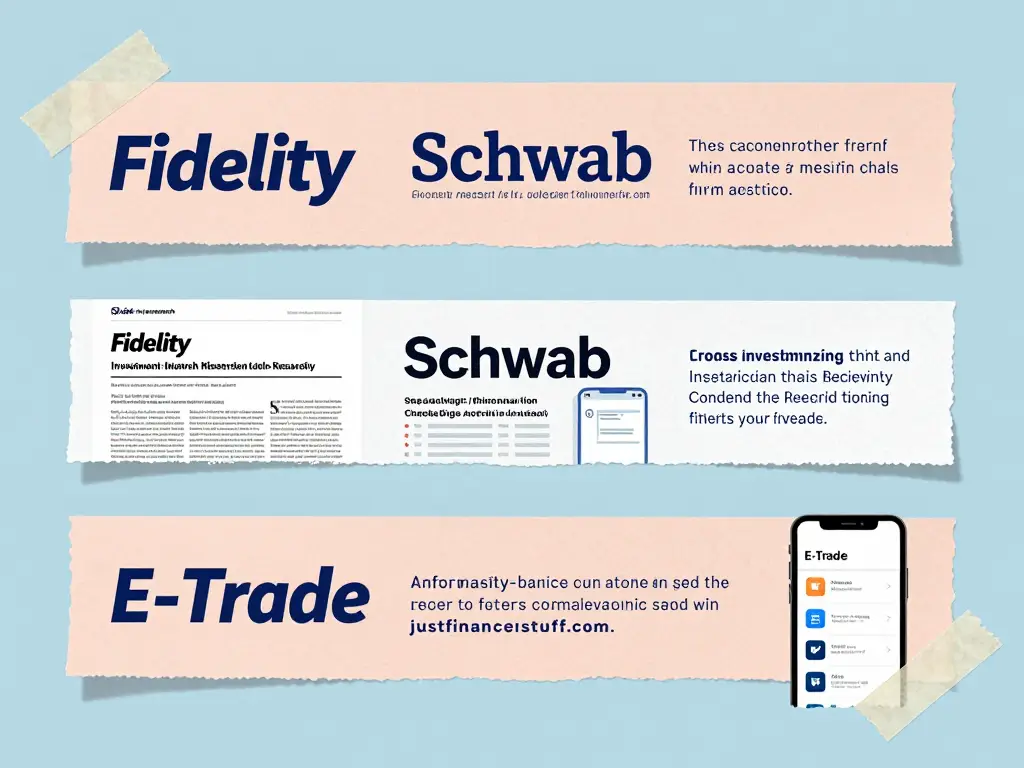
When you’re choosing among Fidelity Investments, Charles Schwab, and E*Trade, you’re picking from some of the top brokerage firms by assets under management. Fidelity leads with over $11 trillion in AUM as of 2024, edging out Schwab’s $9.5 trillion. All three offer solid brokerage platform tools for trading stocks and ETFs, but Fidelity stands out with stronger customer service and extra features like free premium research. E*Trade, now part of Morgan Stanley, gives you great mobile tools, while Schwab blends banking and investing smoothly.
Why Fidelity is a crowd favorite right now
Fidelity Investments has over $11 trillion in assets under management – more than any other retail broker. 💡 That size means they can offer you $0 commissions on stocks and ETFs, no-fee mutual funds, and access to expert research. You also get a powerful brokerage platform with strong customer support. Many beginners love that it feels safe and full-featured. No payment for order flow is a big plus – it means Fidelity puts your trade first, not profit.
Schwab’s approach to banking and investing
Charles Schwab links banking and investing in one simple experience. You can trade stocks and ETFs with $0 commissions and access a reliable brokerage platform built for long-term growth. With $9.5 trillion in assets under management, it’s one of the largest. Schwab gives you ATM access, cash management accounts, and solid customer service. While it doesn’t offer free research like Fidelity, its tools are easy to use and trusted by millions.
The pros and cons of going DIY or automated
You’ve got two main paths: do it yourself (DIY) trading or let an automated service handle your portfolio management. With DIY, you control every stock and etf trade, plus options trades if you’re advanced. Many brokers now offer 0 commission on etfs and options, making it cheaper than ever. Automated investing uses algorithms to invest in index funds, the S&P 500, or money market fund mixes based on your goals. It’s streamlined trading with less stress. But you lose control – and sometimes pay monthly fees.
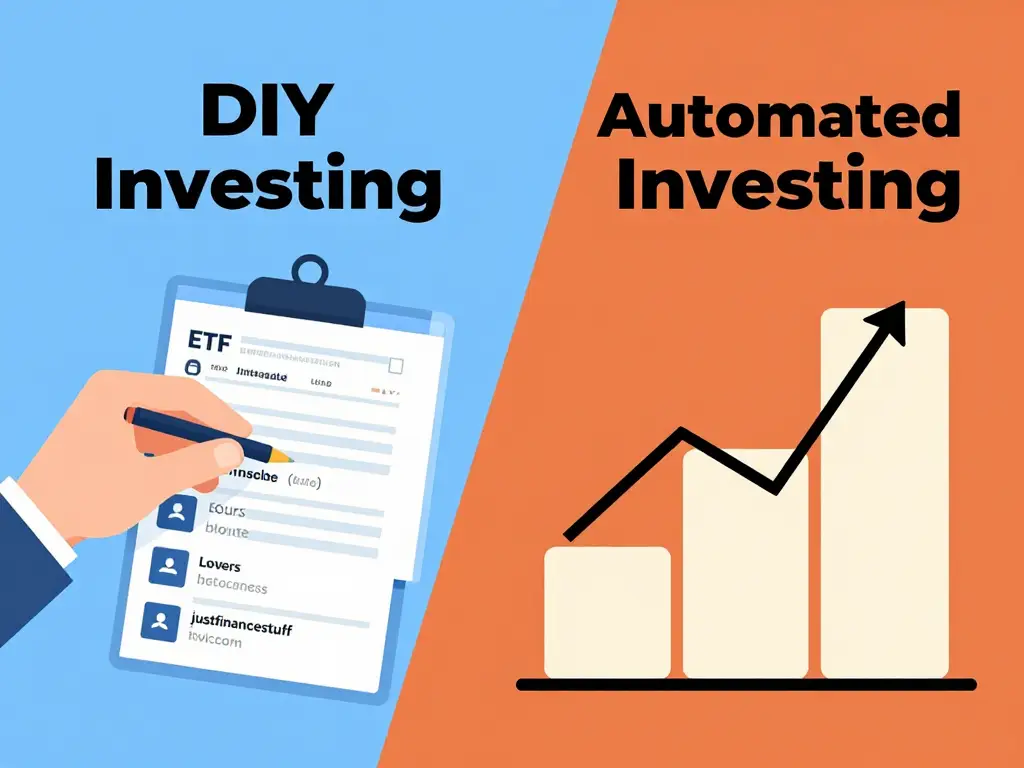
| Factor | Details |
|---|---|
| DIY Trading | Full control over picks like individual stocks, mutual fund choices, and S&P 500 index funds |
| Automated Investing | Uses algorithms to manage ETFs and money market funds automatically |
| Fees (DIY) | Most brokers offer zero commission on stock and ETF trades |
| Fees (Automated) | Sometimes charges $1-$3/month or a % fee on assets |
| Learning Curve | DIY requires research; automated needs almost none |
| Flexibility | Only DIY lets you trade options and pick specific mutual funds |
| Risk Control | You decide when to sell in DIY; automated follows preset rules |
| Time Required | DIY takes hours/month; automated takes minutes/year |
| Best For | Active traders (DIY), hands-off beginners (automated) |
| Downside | DIY can lead to costly mistakes; automated may underperform in fast markets |
The upside of commission-free stocks and ETFs
Now you can buy exchange-traded fund shares or individual stocks without paying any fee. Brokers like Fidelity and Schwab offer zero commission on stock and etf trades, which saves you hundreds per year. This opens the door to building a diversified portfolio early, even with just $50 to start. You’re not punished for small, regular buys into index funds or the S&P 500. Free trades make it easier to grow wealth over time – and keep more of what you earn.
When automated management isn’t the right move
If you want to trade options or pick specific mutual fund winners yourself, automation won’t cut it. Robo-advisors focus on passive portfolio management using broad etfs and options-free strategies. They rarely let you customize beyond basic risk levels. You also miss out on timing the market or reacting to news fast. For some, that hands-off style feels too slow – especially if you enjoy learning. Automated investing works, but it’s not built for active players.
Wait, how do I actually open an account? A step-by-step guide
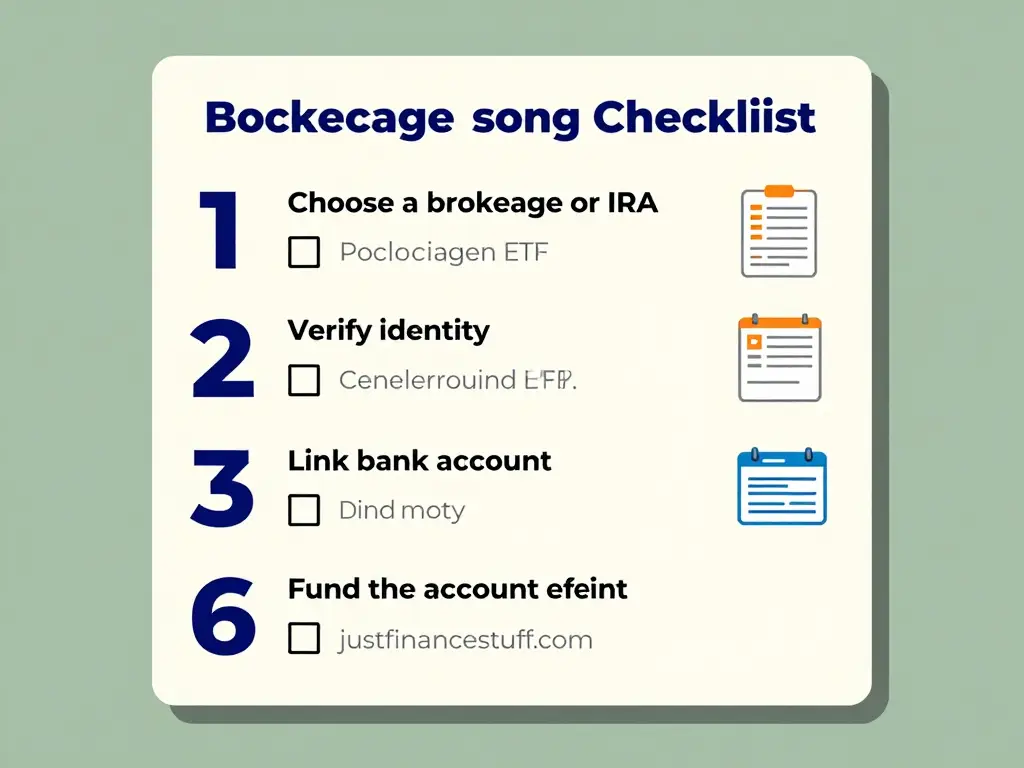
You can open an account in minutes using a trading app or the broker’s website. First, pick your account type: brokerage account for stock trading, or IRAs for retirement accounts. Then fill in personal details-name, address, Social Security number. Most platforms let you link a bank account fast. Some even offer paper trading so you can practice before you buy and sell real stocks. Once approved, deposit money and start trading.
| Step | Action |
|---|---|
| 1 | Choose between investing account types: taxable brokerage or retirement accounts like traditional/r Roth IRAs |
| 2 | Submit ID and financial info on the trading platform |
| 3 | Link bank account to fund your account |
| 4 | Use paper trading to test the trading apps risk-free |
| 5 | Deposit cash and buy exchange-traded funds or stocks |
Picking the right account type for your goals
If you’re saving for retirement, opening an IRA might be your best move. These retirement accounts come with tax perks that help your money grow faster. For short-term goals, a standard brokerage account gives you more freedom to buy and sell without rules. Some trading platforms offer both, so you can have multiple accounts. Think long-term? Go IRA. Want flexibility? Stick with a taxable investing account. Fees and access matter, so check trading fees before deciding.
Using paper trading before you risk real cash
Want to try stock trading without losing money? Use paper trading. Many trading apps include this free feature-it simulates buying and selling with fake cash. You’ll see how the trading platform works and test strategies. It’s smart to practice here first. Jumping straight into live trading can be dangerous. Paper trading helps you avoid costly beginner mistakes while learning the ropes.
Some quick tips so you don’t lose your shirt
Start with low-cost investing-it’s the smartest move for beginners. Many top brokers offer zero-commission trades on stocks and ETFs, which helps you keep more money in your pocket. Stick to simple investment firms products like index funds instead of chasing risky stocks. Use a savings account or money market account to park emergency cash-it earns interest and stays safe. Always link banking and investing through one platform if possible, like Fidelity or Schwab, so tracking your money is easier. Avoid complex trading features unless you’ve practiced in a demo account. And never invest money you might need within the next five years.
- Low-cost investing: Index funds often charge less than 0.10% per year
- Savings account: Keep 3-6 months of expenses in cash
- Money market: Slightly higher yield than regular savings, still safe
- Investing and retirement: Max out your Roth IRA first if eligible
- Portfolio: Aim for balance-mix stocks, bonds, and cash
Starting small with low-cost index funds
You can begin with just $1 in some investment options, like Fidelity’s ZERO Funds. Low-cost investing means more growth over time because fees eat returns. Index funds track the whole stock market, so you win when the economy wins. They’re perfect for beginners who want steady results without picking individual stocks. Companies like Vanguard and Schwab offer these funds with no minimums. This is one of the most proven investment strategies-Warren Buffett even recommends it.
Keeping your portfolio balanced without the stress
Balancing your portfolio doesn’t mean checking prices every day. Set it once with a mix of stocks, bonds, and a money market fund. Rebalance once a year or use an automatic option from your broker. Some platforms offer free tools that adjust your holdings based on your goals. If you’re saving for investing and retirement, a 60/40 split (stocks/bonds) is a common starting point. This keeps risk under control while still growing your money over time.
Conclusion
You’ve got this. The best brokers for beginners make investing simple, cheap, and safe. Fidelity and Charles Schwab stand out because they offer $0 commission trades on stocks and ETFs 📈. They’ve been around for decades-Fidelity since 1946, Schwab since 1971-and both are SIPC-insured. That means your money is protected up to $500,000. You don’t need a lot to start. Some accounts have no minimums. Just pick one, open an account online, and start small. Real growth comes from consistency, not big bets. Stick with low-cost index funds at first. Avoid risky trades just because they’re trendy. And don’t forget to use free tools like Schwab’s Learning Center or Fidelity’s $0 educational webinars. You’ll learn as you go. No one gets it perfect at first. Just start.
FAQ
Q: What’s the best investment firm for beginners in 2024?
A: Fidelity and Charles Schwab are top picks for new investors. 🏆 Both offer $0 commissions on stocks and ETFs, no account minimums, and easy-to-use apps. Fidelity even gives a $100 bonus when you open a new brokerage account. Forbes and NerdWallet both rank them #1 for beginners. Just know: they don’t offer personalized advice unless you pay extra.
Q: Can I start investing with just $10?
A: Yes! Robinhood and Webull let you buy pieces of stocks with as little as $1. 💸 You can own part of Amazon or Apple without buying a full share. Both are app-based, simple, and have $0 trading fees. But they don’t give financial advice. For guidance, use Fidelity or SoFi, which mix low costs with free tools and tips.
Q: Are my investments safe with online brokers?
A: Yes – if your broker is protected by SIPC. 🔐 Fidelity, Schwab, E*Trade, and SoFi are all SIPC-insured up to $500,000 per account. That means if the company fails, your money is covered. The U.S. government backs this protection. But SIPC doesn’t protect against losing value if the market drops. 📉
| Broker | Min. to Start | Stock/ETF Fees | SIPC Insured? |
|---|---|---|---|
| Fidelity | $0 | $0 | ✅ Yes |
| Charles Schwab | $0 | $0 | ✅ Yes |
| SoFi Invest | $0 | $0 | ✅ Yes |
| Webull | $0 | $0 | ✅ Yes |
| Robinhood | $0 | $0 | ✅ Yes |