 Skip to content
Money Basics: Income, Spending, and Saving 💰
Learning about money is a big step. It does not have to be hard. We will explain three key ideas: income, expenses, and savings.
These ideas work together. They are the core of personal finance. When you understand these parts, you gain control over your finances. 🎯
Our goal is to give you a simple plan. This plan helps you manage your saving and spending easily. You can reach financial stability this way. 🏠
Let’s learn how to track your money. This is the first step toward a smart budget.
Understanding Income: Where Your Money Comes From 🏡
Income is the money you earn. It is the starting point for your whole budget. Most people get their income from a job or a business.
You need to know exactly how much money you bring home. This number is key for any good budgeting guideline.
Pretax Income vs. Take Home Pay: What is the Difference?
When you look at your paycheck, you see two important numbers. It is important to learn what each one means.
1. Pretax Income 💰
Pretax income is the total amount you earned. It is the full amount of money before anything is removed.
This is the number before taxes are taken out. It is also before money for things like insurance or your retirement savings, such as a 401(k), is taken out of your budget plan for fixed expenses.
2. Take Home Pay (The Number to Use) ✅
After your employer removes taxes and other fees, the money left over is your Take home pay.
This is the actual cash you receive. This is the amount you can use for saving and spending.
You must use your Take home pay when you build your monthly budget. This is the amount you truly have to allocate pay for your living expenses and goals.
Tip: Focus on your Take home pay. This gives you better control over your personal finance plan.
Expert Insight
“While conventional budgeting guidelines are often based on gross income for stability, effective personal budgeting must focus on post-tax, take-home pay, because that is the only portion over which you have actual spending control.”Financial Planning Specialist
Tracking Your Expenses: Where Your Money Goes 🗺️
Expenses are everything you spend your money on. You need to know where your money goes. To build Financial stability, you must track your money carefully.
Expenses fall into two main groups. We call them needs and wants. 🔍
Essential Expenses Allocation (The Needs) ✅
Essential expenses are the things you must pay to live safely. You cannot skip these payments. They are necessary Living expenses.
This group is part of your Essential Expenses Allocation. A popular budgeting guideline is the 50-30-20 Budgeting Rule. This rule suggests that about 50% of your Take home pay should cover these needs.
Examples of essential needs are:
- Housing costs, like Mortgage rent or utilities.
- Basic food (groceries, not eating out).
- Transportation costs, like gas or bus fare.
- Health care costs, including doctor visits.
- Minimum required Debt payments, such as minimum fixed expenses that must be covered. Credit card payments or required Student loan payments.
Non-Essential Expenses (The Wants) 🎁
These are the things you want, but you do not need them to survive. They make life more fun. You choose to spend money on these items.
The 50-30-20 Budgeting Rule suggests that 30% of your money goes toward these wants, which can include variable expenses like entertainment and subscriptions.
Examples of non-essential wants are:
- Eating at restaurants or ordering delivery.
- New video games or extra clothes.
- Streaming services.
- Hobbies and extra entertainment.
This is where you can easily control your spending. If your budget is tight, you cut back on the wants first.
Budgeting Guidelines: How to Allocate Your Pay 💰
A Budgeting guideline is a simple plan. It helps you divide your money easily. This plan takes the guesswork out of how much to save and spend.
Learning to use a budget is key to Financial stability. We will look at two popular plans. These plans are recommended by groups like Fidelity and Bank of America.
The 50-30-20 Budgeting Rule 🌟
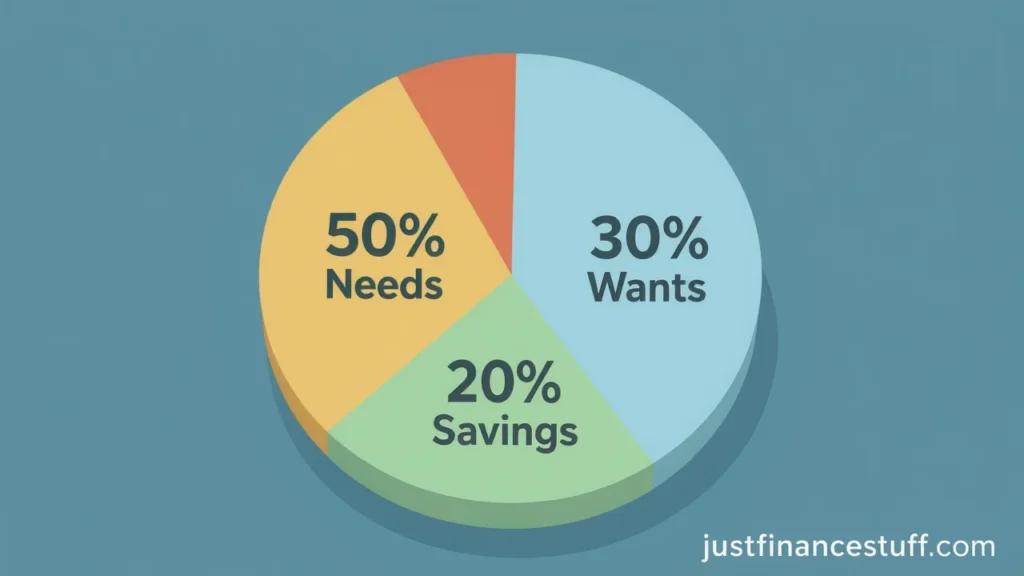
The 50-30-20 Budgeting Rule is a favorite way to start Personal finance. It is known for its simplicity. This plan uses 100% of your Take home pay.
- 50% Needs: This covers your Essential expenses. This includes Housing costs (like Mortgage rent), utilities, food, and Health care costs.
- 30% Wants: This is for things you enjoy, such as subscriptions or other variable expenses. Think entertainment, dining out, or hobbies.
- 20% Savings: This is for building wealth. Use this for Short term savings, Emergency savings, or paying extra Debt payments like Student loan payments or Credit card payments.
This is a great way to start your Financial Wellness Planning and gain control over your money.
The 50/15/5 Budgeting Rule (Fidelity Plan) 🎯
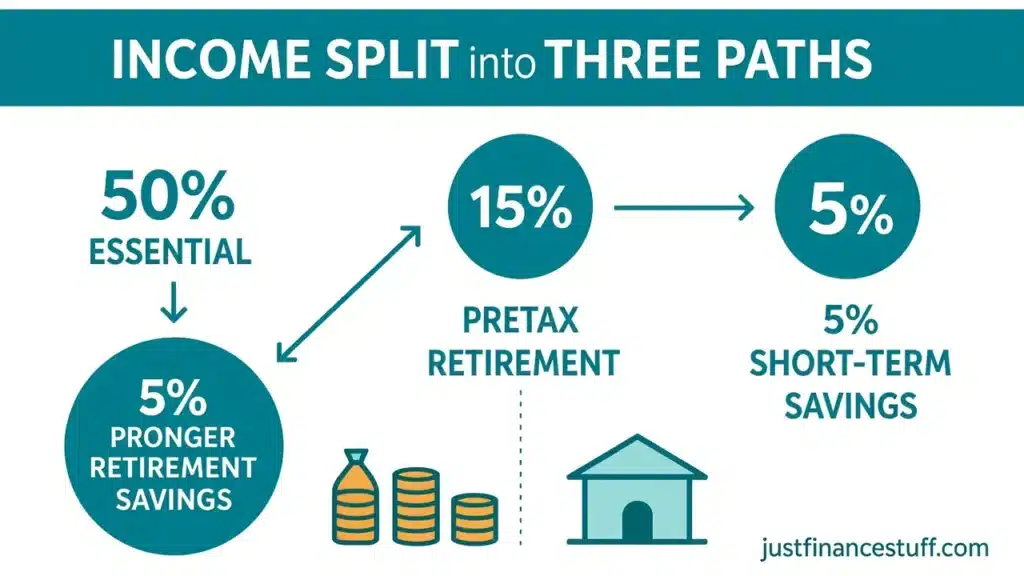
The 50/15/5 rule is a specific method promoted by Fidelity. This plan focuses heavily on long-term Retirement savings.
It helps ensure you Save for retirement while still covering your Living expenses. This is a strong Retirement Savings Strategy.
- 50% Essential Expenses: This is 50% of your Take home pay for needs. This includes your Transportation costs and other necessary bills.
- 15% Retirement Savings: This is 15% of your Pretax income. This is a crucial difference. This 15% includes Employer contributions to your 401(k), 403(b), or IRA accounts, which are important for your overall budget plan. This is called Pretax Income Contribution.
- 5% Short Term Savings: This is 5% of your Take home pay. Use this to build up Emergency Fund Accumulation in Savings Accounts or Share Certificates for Unplanned expenses, ensuring you have a balance for any liabilities.
The 50/15/5 Budgeting Rule is excellent if you want to maximize your future security and balance your fixed and variable expenses.
| Budget Rule Comparison | Main Focus | Needs (50%) Source, which typically includes fixed expenses. | Savings Target |
|---|---|---|---|
| 50-30-20 Rule | Simple Spending Control | From Take Home Pay | 20% of Take Home Pay (Savings & Debt) |
| 50/15/5 Rule | Retirement Priority | From Take Home Pay | 15% of Pretax Income + 5% Short Term Savings |
FAQ About Budgeting Rules
What is the biggest difference between the two rules?
The 50/15/5 rule prioritizes Retirement savings using Pretax income, while the 50-30-20 rule uses all Take home pay.
Should I use the 50-30-20 rule if I have a lot of debt?
Yes, the 20% savings portion can be used to pay off Debt payments, helping you Track your money and improve Financial stability.
What if I cannot meet the 50% Essential Expenses Allocation?
If your Living expenses are too high, you must first find ways to lower your Housing costs or other Essential expenses.
What is an HSA?
An HSA (Health Savings Account) is a special account for health costs often used with a High-Deductible Health Plan.
Building Your Savings Plan: How Much to Save 💰
Saving money gives you true Financial stability. You must have a strong plan to save. This plan helps you control your money.
You need two main types of savings. One is for goals you need soon, which could be related to your short-term liabilities. The other is for the far future.
Emergency Savings and Short Term Savings 🛡️
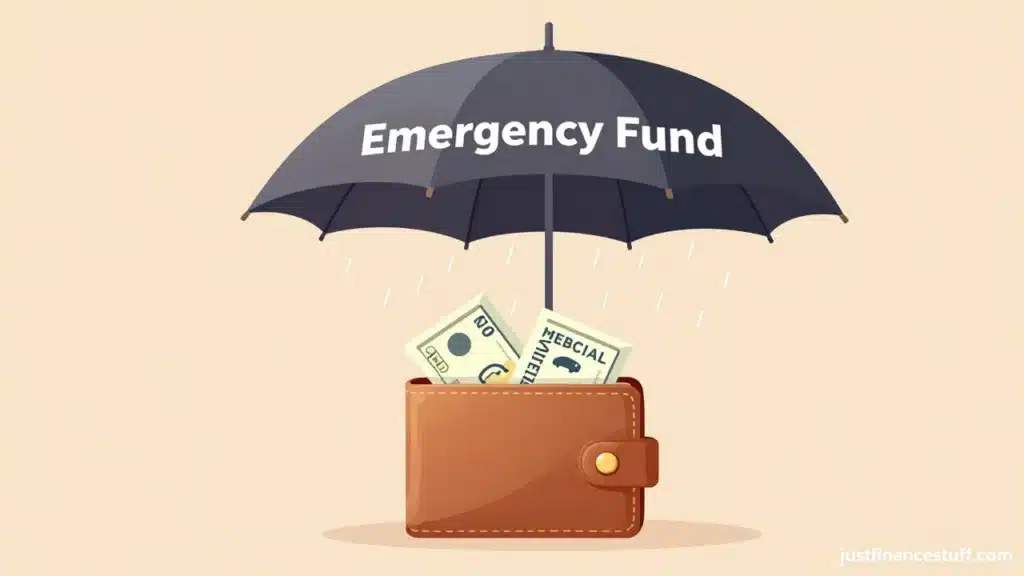
Emergency savings are your safety net. This money pays for unplanned expenses. Think of a sudden car repair or unexpected Health care costs.
You need to save enough to cover three to six months of your Living expenses, which is a critical part of any budget plan. This is called Emergency Fund Accumulation. This money keeps you stable if you lose work.
Keep this money safe and easy to access. Use simple Savings Accounts. Banks like Bank of America or credit unions like UNFCU offer these. Share Certificates are also a good option.
Short term savings are for goals that are coming up soon. Maybe you are saving for a vacation next year, which is a variable expense that can change over time. You need to plan for these Short term savings goals too.
Retirement Savings Strategy (Long Term) 📅
Retirement savings is money for the future. It is for when you decide to stop working later in life. This is a critical part of Personal finance.
Many experts, like those at Fidelity, recommend you Save for retirement by putting away 15% of your Pretax income. This is often called the 50/15/5 Budgeting Rule.
You should use special accounts to hold this money. They are called Tax-Advantaged Retirement Accounts. They help your money grow faster.
Common types include the 401(k) or 403(b). Your employer offers these. If your employer offers Employer Matching Contributions, always contribute enough to get the full match. This is free money for you.
You can also open an IRA on your own. If you have a High-Deductible Health Plan, an HSA (Health Savings Account) is a great tool. An HSA helps pay for future health costs.
Managing Debt and Planning for Wellness 🛡️
Debt is money that you owe to others. Managing this debt is a key part of your budgeting guideline.
If your debt is too high, it is hard to allocate funds toward savings and spending. You feel less control over your money.
Some types of debt, like certain Credit Cards, have very high interest. You need a strong plan to pay off this debt fast.
Focusing on debt payments helps you gain control quicker. When the debt is gone, you free up that money. 🥳
You can then move those old debt payments into your Retirement savings or your Short term savings instead.
Good Financial Wellness Planning means always trying to spend less money than you earn. This helps you build Financial stability for the future. You learn to control your money better. ⭐
Expert Insight
“While aggressively paying off high-interest debt is crucial for financial stability, focusing solely on paying down all debt instead of investing can create a negatively reinforced cycle of insufficient retirement savings.”Tyler Le, Certified Financial Planner
Key Steps for Financial Control and Stability 🎯
You have learned many things about your money. It is important to remember these helpful steps. Following a strong budgeting guideline helps you gain financial stability. You can take full control of your financial life. 🏠
Your Essential Money Takeaways ✔️
Remember these simple rules for personal finance:
- Know your Income: Understand the difference between your pretax income and your actual fixed expenses. take home pay.
- Track your money: You must identify all essential expenses every month, like housing costs.
- Make a Budget: Choose a simple rule, like the 50-30-20 Budgeting Rule, and stick to your plan for saving and spending.
- Save First: Prioritize Emergency savings (your short term savings). This helps cover unplanned expenses.
- Save for retirement: After your emergency fund, aggressively allocate pay to retirement savings using accounts like a 401(k) or IRA.
- Manage Debt: Make timely debt payments to improve your financial health faster.
- Control Your Future: When you learn these concepts, you gain true control over your money.

Questions People Ask About Money ❓
Here are quick answers to common questions about saving and spending. We want you to feel confident about your money plan.
Q: What is the 50/15/5 rule?
A: This is a Budgeting guideline from Fidelity. It tells you to put 50% toward needs, 15% toward Retirement savings, and 5% toward Short term savings.
Q: Should I use a 401(k) or an IRA?
A: Always get the Employer Matching Contributions first from your 401(k). Then you can use an IRA to Save for retirement.
Q: What are Unplanned expenses?
A: These are unexpected costs, like a sudden repair or medical bill. You cover them using your Emergency savings money.
Q: How can I reduce my Essential expenses?
A: Look for lower Housing costs (like rent or mortgage). You can also cut back on high variable expenses to create a budget that works for you. Transportation costs to lower your spending.
Q: What is Financial stability?
A: Financial stability means you have enough money saved. You can pay bills easily and cover any Unplanned expenses without stress.
Q: How much should I save?
A: The goal is to save at least 20% of your Take home pay. This helps you build wealth and control your money.
Expert Insight
“Do not save what is left after spending, but spend what is left after saving.”Warren Buffett